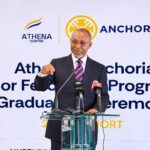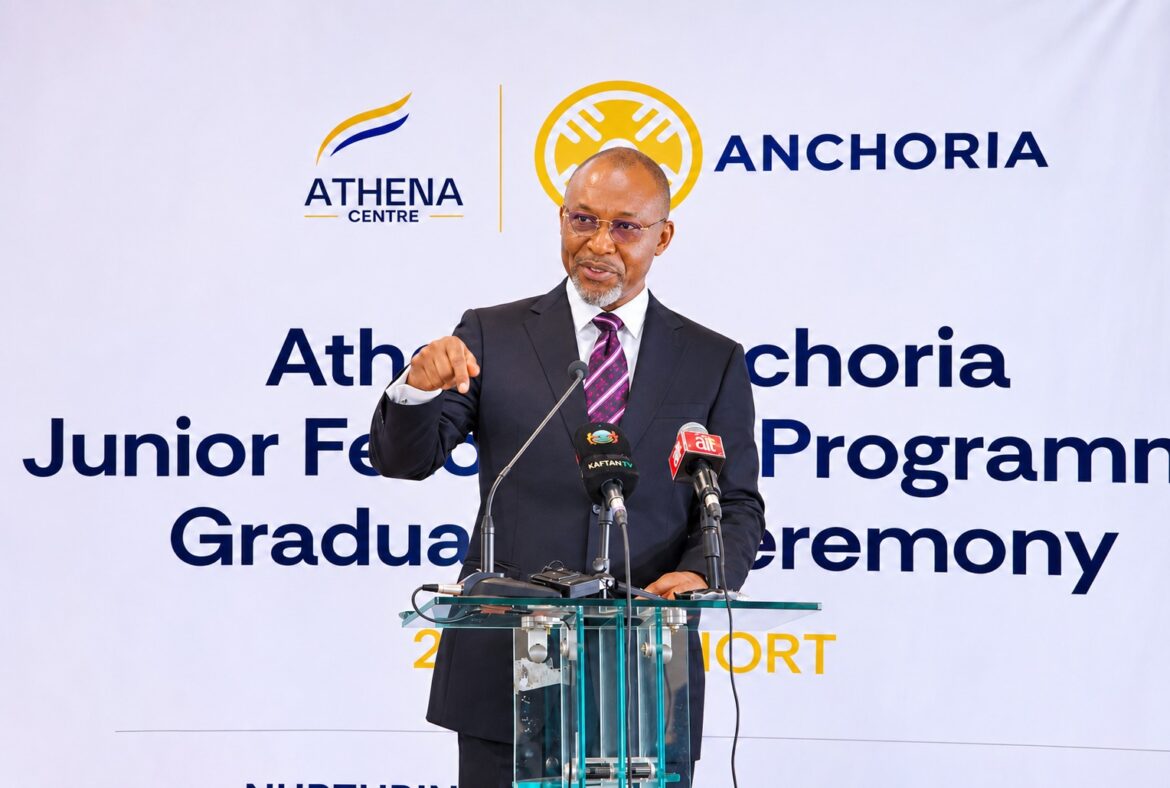
The Athena Centre for Policy and Leadership has graduated 13 pioneer fellows of its Junior Fellowship Programme, urging young Nigerians to embrace leadership responsibilities and contribute to building strong institutions for good governance and national development.
The six-month programme, implemented in partnership with Anchoria Group, brought together young Nigerians from the six geopolitical zones, 11 states, 11 universities and 11 academic disciplines to deepen their understanding of public policy, governance, institutional development and leadership.
The graduation ceremony, held in Abuja, also featured the unveiling of a collection of 13 civic essays written by the fellows, titled Though Tribe and Tongue May Differ: Young Nigerians on Belonging, Equal Citizenship and the Work of Nation-Building.
Published by Athena Press, the collection is the first volume in an annual series, The Republic We Are Building, designed to encourage young Nigerians to critically examine the country’s founding ideals against the realities of governance, citizenship and national development.
Speaking at the event, the Founder and Chancellor of the Centre, Osita Chidoka, said the fellowship was established on the conviction that building strong institutions required deliberate investment in the people who would eventually lead them.
“We cannot continue to demand better institutions without deliberately investing in the people who will lead them. Institutions do not build themselves. People build them,” he said.
Chidoka explained that the programme deliberately brought together young Nigerians from diverse geographical, educational and professional backgrounds to promote mutual understanding and strengthen their capacity to work across national differences.
According to him, the initiative provided a platform for participants who might otherwise never have met to learn, exchange ideas and develop a shared sense of national responsibility.
“If we are serious about building the Republic we all dream of, learning to live, think and work across our differences has to become a habit,” he said.
He disclosed that the fellows underwent intensive learning, mentorship and practical engagements with experienced professionals, including BudgIT’s Seun Onigbinde, Dr Sam Amadi and Dr Dakuku Peterside.
The programme featured six months of virtual learning and mentorship, with participants receiving monthly stipends, followed by a one-week residential session. Each graduate was also presented with an HP laptop to support continued research and writing.
Anchoria Group part-funded the initiative, which integrated public policy, governance, research and leadership development with financial literacy, investment and practical economic decision-making.
Chidoka said the fellows’ essays were inspired by the line in Nigeria’s National Anthem, “Though tribe and tongue may differ, in brotherhood we stand”, and explored critical issues surrounding national identity, belonging, equal citizenship and nation-building.
He described the National Anthem, the National Pledge and Chapter II of the Constitution as embodying what he termed “the promise of the Republic”.
He noted that these national symbols and constitutional provisions represented Nigeria’s aspirations for justice, equality, dignity, unity and opportunity, adding that successive generations had a responsibility to translate these ideals into tangible outcomes.
“Every generation inherits that promise, and every generation must convert the promise into performance through the institutions it builds, the standards it enforces and the everyday experience of the citizen,” he said.
He added that future cohorts of the fellowship would use the annual publication to assess the country’s progress in translating its national ideals into meaningful improvements in citizens’ lives.
The fellows also engaged with prominent figures in public policy and national development, including Patrick Okigbo, Founding Partner of Nextier, who discussed Nigeria’s national aspirations and the experiences of young people within the country.
Representatives of Nextier attended the graduation ceremony and interacted with the fellows on career opportunities in policy research and advisory services.
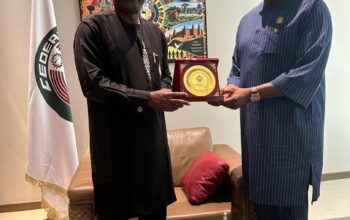
The participants were also received by the Coordinating Minister of Health and Social Welfare, Prof. Muhammad Ali Pate, who shared his experiences of international training, returning to Nigeria and contributing to national development.
Following the engagement, one of the fellows was invited to participate in the forthcoming Ministerial Conference on Antimicrobial Resistance.
In his valedictory address, the Overall Best Fellow, Ezekiel Adebisi, said the programme had equipped participants with the analytical skills, intellectual discipline and sense of responsibility required to contribute meaningfully to national development.
He observed that the fellows entered the programme as young professionals seeking answers but were graduating with a deeper understanding of the complexities of governance and the responsibilities that accompany knowledge.
Adebisi urged his colleagues to approach public institutions with courage, integrity and a commitment to evidence-based decision-making, cautioning that access to political power should not be mistaken for the ability to deliver meaningful institutional reforms.
“We came to learn how institutions shape nations. We leave committed to shaping institutions that serve nations,” he said.
The graduating fellows are Augustina Enuwa Abakpa, Rashida Bafashi Abubakar, Yahaya Abubakar, Ezekiel Adebisi, Afodun Muhammad Saheed, Adaobi Ayogu, Kosisochukwu Praise Bosah, Enegbuma Angelica Onagiekhuwemhe, Haruna Hassan Suleiman, Mohammed Baba Kale, Daniel Nnamani, Eunice Olasunkanmi and Shedrack Owen.
Chidoka urged the graduates to measure their success not merely by the knowledge acquired during the fellowship but by their contributions to the institutions and communities they would serve.
“The value of this Fellowship will be measured over years: in the institutions you serve, the decisions you influence and the people you, in turn, help to develop.
“Today, we celebrate what you have learnt. Tomorrow, Nigeria will judge what you do with it,” he said.
He reaffirmed the Centre’s commitment to sustaining the Junior Fellowship Programme through subsequent cohorts, as part of efforts to nurture a new generation of Nigerians committed to responsible leadership, institutional development and nation-building.