The Nigerian Army’s Operation HADIN KAI (OPHK) has partnered with the United Nations Office for the Coordination of Humanitarian Affairs (UN OCHA) to strengthen civilian protection and improve humanitarian access across Borno, Adamawa and Yobe states.
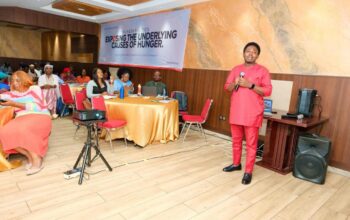
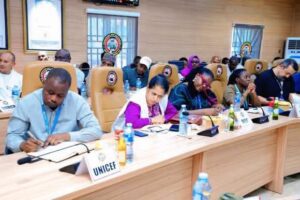
The partnership was reinforced on Thursday, August 13, 2026, when Headquarters Joint Task Force (North East), OPHK, hosted a Humanitarian/Civil-Military Coordination Roundtable in Maiduguri, bringing together representatives of humanitarian agencies, the Borno State Government and other key stakeholders.
The roundtable, co-chaired by the Theatre Commander, OPHK, Major General AE Abubakar, and UN OCHA Deputy Head of Office, North-East Nigeria, Patricia Mucheche, was designed to improve coordination and facilitate more effective delivery of humanitarian assistance to communities affected by armed conflict.
Participants received briefings on the humanitarian and stabilisation activities of Operation HADIN KAI before engaging in discussions on challenges affecting humanitarian operations, civilian protection and access to vulnerable communities.
Opening the meeting, Major General Abubakar described the engagement as timely and important for strengthening constructive dialogue between the military and humanitarian community.

He noted that the meeting, held four years after the last humanitarian roundtable, was in line with the directive of the Chief of Army Staff, Lieutenant General Waidi Shaibu, to reinforce the Armed Forces of Nigeria’s commitment to humanitarian support.
The Theatre Commander stressed that although kinetic operations remained essential to degrading the residual capabilities of terrorist groups, military action alone could not deliver lasting stability.
He identified the protection of civilians, safe return of internally displaced persons (IDPs), restoration of livelihoods and revival of socio-economic activities as equally critical components of the campaign.
Abubakar listed the protection of major humanitarian supply routes, recently relocated IDPs, farmers and livelihood activities among areas requiring stronger coordination between security forces and humanitarian organisations.
He also called for closer attention to alleged misconduct and improved relations between the Armed Forces and humanitarian partners.
The Theatre Commander acknowledged operational challenges confronting humanitarian organisations, including improvised explosive device (IED) threats, the movement of large volumes of cash, access restrictions, security of humanitarian personnel and assets, and funding shortages.
He called for open and respectful dialogue to resolve the challenges and commended UN OCHA, humanitarian partners and the International Committee of the Red Cross for their continued support to conflict-affected communities and capacity-building initiatives for OPHK personnel.
The engagement is part of the Nigerian Army’s broader efforts to facilitate safe and unhindered humanitarian access in conflict-affected areas.
The Chief of Army Staff had earlier reaffirmed the Army’s commitment to providing the security required for the movement of humanitarian personnel, relief materials and critical supplies, particularly along major operational corridors.
Shaibu stressed that safe humanitarian access was central to civilian protection, stabilisation and the safe and dignified return of displaced persons.
He called for innovative force-protection measures, effective convoy escorts and stronger operational coordination between military and humanitarian organisations, while urging UN OCHA to strengthen forward logistics planning to ensure uninterrupted assistance despite funding constraints.
Mucheche, in her remarks, acknowledged the military’s cooperation with humanitarian organisations, describing the partnership as vital to the safe delivery of assistance across the North-East.
She said the roundtable provided an important platform for practical engagement on programme implementation and humanitarian response.
She called for increased patrols along major supply routes and drew attention to the dangers posed by unexploded ordnance, particularly to communities receiving returning internally displaced persons.
Mucheche stressed that civilian protection must remain at the centre of humanitarian operations.
In his closing remarks, the Deputy Theatre Commander, OPHK, Air Vice Marshal OF Akinboyewa, said the issues discussed — including humanitarian access, freedom of movement along supply routes, protection of farmers, civilians and returning IDPs — were directly linked to the ability of affected communities to return home, rebuild their livelihoods and live without fear.
He said sustained military operations had continued to degrade the capabilities of Jama’atu Ahlis Sunna Lidda’awati wal-Jihad (JAS) and Islamic State West Africa Province (ISWAP), thereby creating greater security space for humanitarian action, stabilisation and the restoration of normal life.
Akinboyewa, however, said the ultimate measure of military success was the extent to which citizens could live, move and pursue their livelihoods safely.
He reaffirmed OPHK’s commitment to securing critical routes and population centres, protecting civilian livelihoods, strengthening oversight and discipline among hybrid forces, and maintaining a predictable coordination framework with humanitarian partners.
He said the recommendations arising from the roundtable would be carefully considered and followed through, stressing that the collective objective was to move communities from emergency assistance towards recovery, resilience and sustainable development.
Operation HADIN KAI, he added, would continue to deepen its partnership with the humanitarian community in pursuit of lasting stability, dignity and normalcy across the North-East.