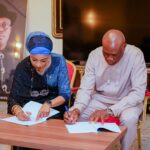
Lagos State has emerged as the leader in climate governance among Nigeria’s 36 states, according to the latest rankings released on Thursday. The rankings, announced at an event organized by the Department of Climate Change in the Federal Ministry of Environment in conjunction with the Society for Planet and Prosperity (SPP), place Gombe State second, followed by Ebonyi State in third. Borno and Ekiti States tied for fourth place.
Oyo, Kano, and Zamfara States were at the bottom of the list, ranked 34th, 35th, and 36th, respectively.
SPP President, Prof. Chukwumerije Okereke, highlighted Nigeria’s vulnerability to climate change despite its minimal contribution to global greenhouse gas emissions. He noted that factors such as complex agroecological zones, growing urban and rural populations, extensive coastlines susceptible to sea level rise, and weak climate governance systems exacerbate the country’s climate risks.
Okereke emphasized the importance of effective climate change governance at the subnational level, stating, “Climate action must be integrated into all aspects of government policy-making and development planning, with clear goals and methods for achieving them.”

He outlined a template for effective climate governance, which includes vision and objectives, political will, institutional arrangements, policy frameworks, legal and regulatory frameworks, climate action plans, financial mechanisms, stakeholder engagement, capacity building, monitoring and evaluation, communication and awareness, and integration with national and global efforts.
Minister of Environment, Balarabe Lawal, underscored the essential role of subnational governments in climate action, noting that they are often at the forefront of implementing policies affecting the grassroots level. “Climate governance at the subnational level is crucial, as it is where the impacts of climate change are most acutely felt,” he said.
Lawal added that the Sub-National Climate Governance Performance Ranking is a tool for motivation, collaboration, and accountability, designed to highlight best practices, identify areas for improvement, and foster healthy competition among states.
Minister of State for Environment, Dr. Iziaq Salako, highlighted the severe impacts of climate change across Nigeria, from intensified droughts to severe flooding. He stressed the importance of subnational governments in climate action, stating, “Today’s event is to celebrate the commitment of our 36 states and the FCT to climate governance and their strides in combating climate change.”
Salako concluded by urging a collaborative and inclusive approach to addressing climate change, emphasizing the need for states to share best practices, learn from one another, and work together to build resilience and ensure a sustainable future for all Nigerians.