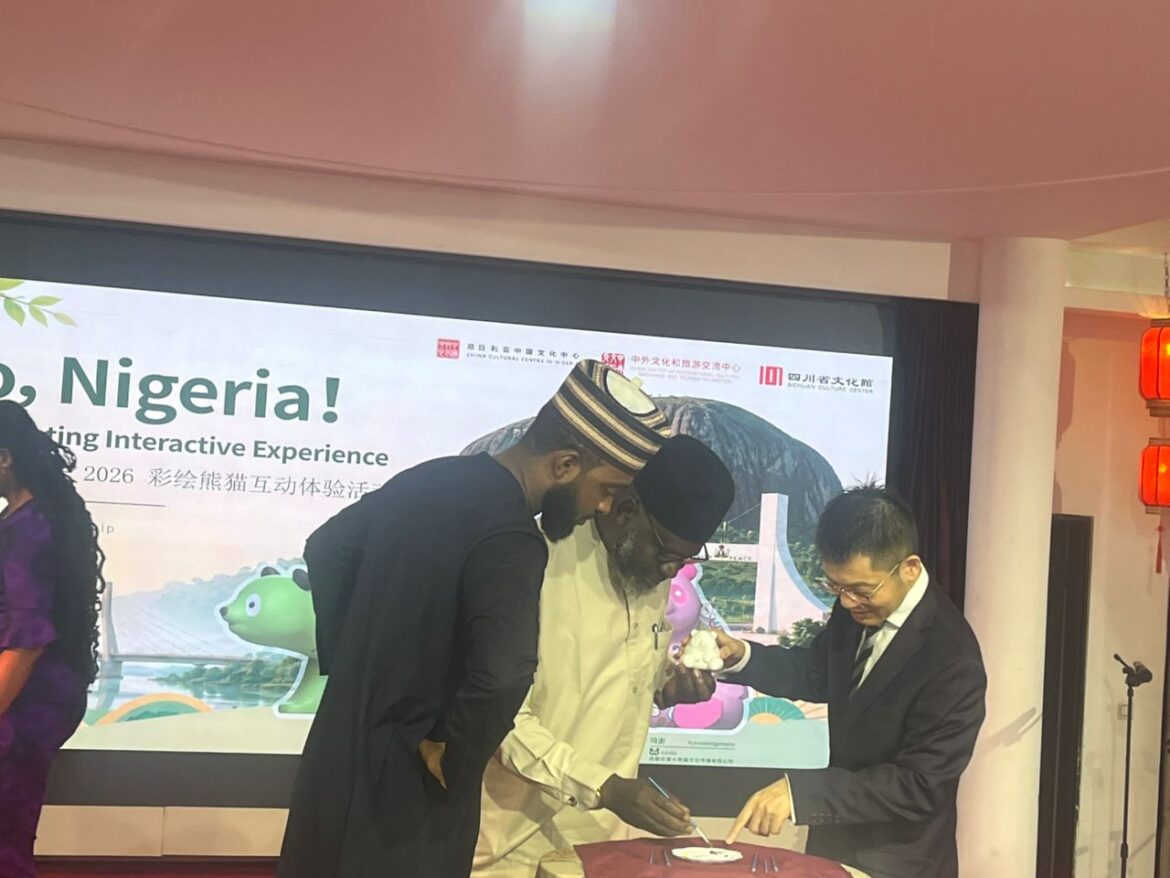
Nigeria and China have reaffirmed their commitment to strengthening cultural diplomacy and people-to-people relations through the launch of the “Hello Nigeria—2026 Panda Painting Interactive Experience” in Abuja.
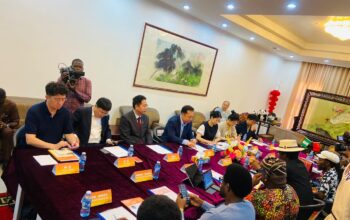
The event, held at the China Cultural Centre, brought together diplomats, government officials, artists, students, cultural practitioners and members of the diplomatic community to celebrate art as a vehicle for cultural exchange, friendship and international cooperation.
Speaking at the opening ceremony, Minister of the Chinese Embassy in Nigeria, Zhou Hongyou, described the giant panda as a global symbol of peace, harmony and inclusiveness, stressing that the initiative was designed to promote deeper understanding between Chinese and African cultures through creative engagement.
He explained that the programme blends the rich cultural heritage of China’s Sichuan Province—the natural habitat of the giant panda—with Africa’s vibrant artistic traditions, creating opportunities for meaningful interaction among young people and cultural enthusiasts.
“The panda transcends language and borders. Through art, creativity and cultural exchange, we hope to foster deeper understanding and friendship between our peoples,” Zhou said.
The diplomat noted that the event comes at a significant milestone in bilateral relations, as 2026 marks the 55th anniversary of diplomatic ties between Nigeria and China and has been designated as the China-Africa Year of People-to-People and Cultural Exchanges.
According to him, while economic cooperation remains important, enduring international partnerships are ultimately sustained by trust, mutual respect and appreciation of cultural diversity.
Zhou added that the Chinese Embassy and the China Cultural Centre would continue to expand cultural programmes, youth exchanges, language-learning opportunities and artistic collaborations to further strengthen ties between both countries.
Also speaking, Permanent Secretary of the Federal Ministry of Art, Culture and the Creative Economy, Abdulkarim Ozi Ibrahim, said the initiative underscores the power of art to unite people across linguistic, geographical and social boundaries.
He described the programme as a practical demonstration of cultural diplomacy, emphasizing that creative engagement promotes shared values, mutual respect and peaceful coexistence.
“The creative sector serves as a powerful platform for fostering peace, inclusion and sustainable development. Through culture, we are able to build bridges, strengthen relationships and celebrate our shared humanity,” Ibrahim said.
The Permanent Secretary reaffirmed the Federal Government’s commitment to supporting initiatives that encourage intercultural dialogue, artistic innovation, cultural tourism and international partnerships.
He noted that cultural exchanges complement diplomatic and economic relations by fostering stronger connections among citizens, particularly young people who will shape the future of bilateral relations.
In his goodwill message, Director-General of the National Gallery of Art, Ahmed Bashir Sodangi, highlighted the role of the arts in promoting understanding and friendship among diverse cultures.
He described the giant panda as an internationally recognised symbol of friendship and environmental awareness, whose message resonates across continents.
Sodangi said the event offered participants an opportunity not only to express artistic creativity but also to reflect on values such as unity, cultural diversity and environmental stewardship.
He commended the Chinese Embassy for its sustained investment in cultural diplomacy, noting that such initiatives continue to strengthen the longstanding relationship between Nigeria and China.
“The arts remain one of humanity’s most effective instruments for fostering understanding and building bridges across cultures. Programmes like this create opportunities for learning, collaboration and lasting friendship,” he said.
Participants at the event, including students from various international schools, engaged in panda-themed painting activities, while cultural displays highlighted the shared values of peace, creativity and cooperation that underpin Nigeria-China relations.
Speakers throughout the programme emphasized the importance of youth participation in cultural exchange initiatives, describing young people as the custodians of future relations between both nations.
The event also showcased growing collaboration between cultural institutions in Nigeria and China and reinforced the role of the creative economy in advancing diplomacy, tourism, education and international engagement.
As both countries commemorate 55 years of diplomatic relations, officials expressed optimism that initiatives such as the Panda Painting Interactive Experience would deepen mutual understanding, inspire new artistic collaborations and further strengthen the bonds of friendship between the peoples of Nigeria and China.