Nigeria is set to roll out a comprehensive National Carbon Market Policy, along with a Manual of Procedure and Regulation for carbon pricing mechanisms. These documents will establish the framework for carbon pricing across sectors, including telecommunications.
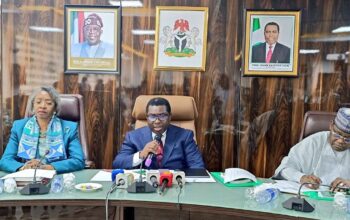
The National Council on Climate Change Secretariat (NCCCS) is spearheading the development of these policies. Special Presidential Envoy on Climate Change and NCCCS Director General, Dr. Nkiruka Maduekwe, announced the initiative at a Hybrid Stakeholders Consultation Workshop on Carbon Pricing in Nigeria’s Telecommunication Sector, held in Abuja.
Maduekwe emphasized that stakeholder input is critical to ensuring a robust and practical framework aligned with global best practices. “Your contributions will directly shape this national framework. We are exploring carbon pricing instruments such as emissions trading schemes and carbon taxes to incentivize emissions reduction and drive investments in clean technologies,” she stated.
The workshop examined the telecommunications sector’s carbon footprint, potential mitigation strategies, and the economic and social impacts of carbon pricing. Maduekwe highlighted the need for a tailored approach, recognizing the sector’s unique challenges and opportunities. “A collaborative effort is essential to develop a carbon pricing mechanism that is both effective and feasible,” she added.

She further noted that the mechanism will not only support Nigeria’s emissions reduction targets but also serve as a model for other industries. “The insights and best practices from this initiative will help scale up carbon pricing across various sectors, fostering innovation and sustainable economic growth,” she said.
The workshop is part of Nigeria’s broader strategy to ensure inclusive policy development. “We believe collaboration is key to effective climate action. Engaging stakeholders from the public and private sectors, academia, and civil society ensures inclusive and impactful policies,” Maduekwe stated.
Walter Tubua, Regional Lead of the UNFCCC Regional Collaboration Centre for West and Central Africa, urged stakeholders to ensure transparency in the formulation of a pilot carbon tax. He reaffirmed the UNFCCC’s commitment to aligning climate policies with the Sustainable Development Goals and poverty eradication.
UN Resident and Humanitarian Coordinator in Nigeria, Mohammed Fall, encouraged stakeholders to actively participate in shaping an equitable and effective carbon tax. “This initiative will lay the foundation for future climate policies and position Nigeria as a leader in emissions reduction,” he said. Fall reiterated the UN’s continued support for Nigeria’s transition to a low-carbon economy.

The UNFCCC, through its Regional Collaboration Centre for West Africa, has been instrumental in exploring innovative climate finance mechanisms, including carbon pricing. UNIDO is also working to drive industrial decarbonization and promote clean energy projects.
Dr. Beluchi Nwanisobi, Deputy Director and Head of Knowledge Management at the Nigerian Communications Commission (NCC), reaffirmed NCC’s commitment to collaborating with NCCCS to achieve its climate objectives.
The workshop was organized by NCCCS in partnership with the NCC, with support from the UNFCCC Secretariat and its Regional Collaboration Centre for West Africa.