The Independent National Electoral Commission (INEC) has defended its decision to appeal two recent Federal High Court judgments concerning its Timetable and Schedule of Activities for the 2027 General Election, warning that conflicting judicial pronouncements could undermine electoral coordination and constitutional responsibilities.
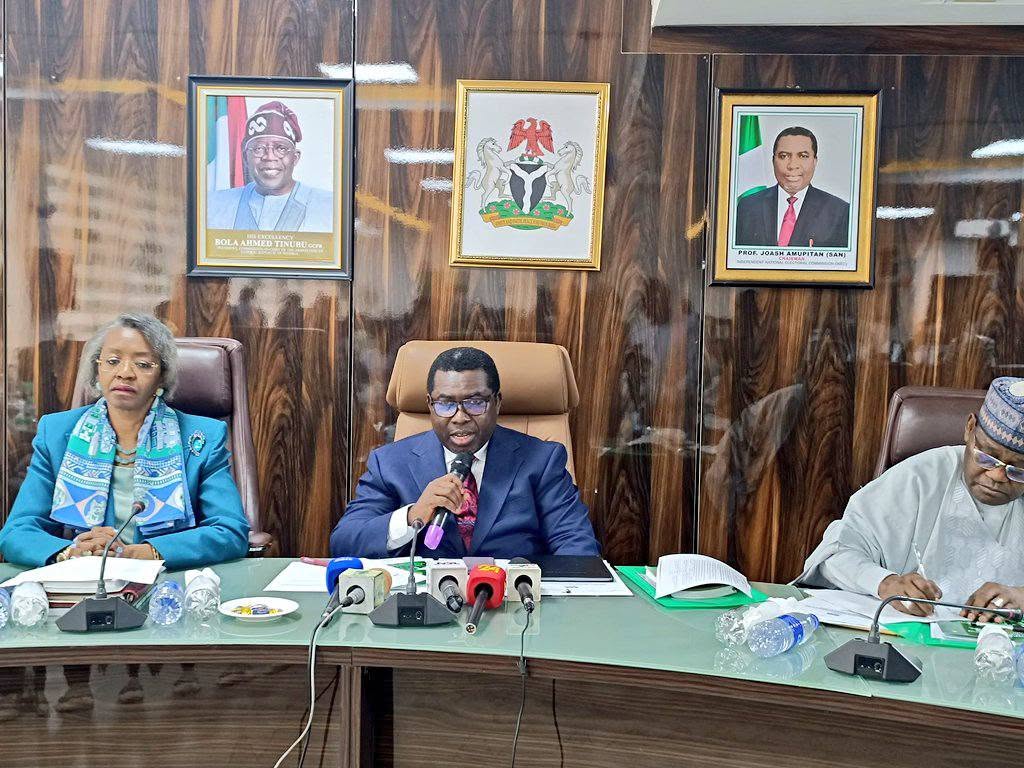
INEC Chairman, Prof. Joash Amupitan, SAN, gave the explanation on Tuesday, June 9, 2026, during the Second Quarterly Consultative Meeting with leaders of political parties held at the Commission’s headquarters in Abuja.
He said the appeals became necessary to obtain authoritative clarification from appellate courts on the scope of the Commission’s constitutional and statutory powers in designing and implementing electoral timelines.
According to him, the judgments in Suit No. FHC/ABJ/CS/517/2026 (Youth Party v. INEC), delivered on May 20, 2026, and Suit No. FHC/ABJ/CS/720/2026 (Social Democratic Party v. INEC), delivered on May 26, 2026, raised fundamental legal questions about INEC’s authority to regulate electoral activities and set binding timelines.
While one ruling questioned elements of the Commission’s timetable, the other affirmed INEC’s authority to issue electoral schedules but invalidated certain provisions relating to nomination and substitution of candidates.
“These judgments raise important legal questions concerning the extent of the Commission’s constitutional and statutory powers in coordinating and regulating electoral activities,” Prof. Amupitan said.
He stressed that electoral activities are interdependent operational processes that require harmonised scheduling to ensure orderly election management. He added that the absence of coordinated timelines could create administrative uncertainty and operational inefficiencies.
The INEC Chairman listed several key electoral functions not explicitly assigned statutory timelines under the Electoral Act, including party membership register submission and verification, monitoring of party primaries, pre-upload of primary results, printing of sensitive election materials, configuration of BVAS devices, and compliance with inspection provisions under Section 42 of the Electoral Act 2026.
He maintained that all electoral processes must be integrated within a coherent framework that guarantees transparency, efficiency, and equal treatment of political parties, while assuring that preparations for the 2027 General Election would continue in line with the Constitution and the Electoral Act despite ongoing litigation.
Preparations for Ekiti Governorship Election
Prof. Amupitan also provided an update on preparations for the Ekiti State Governorship Election scheduled for June 20, 2026, noting that the voter register for the poll now stands at 1,059,360 voters. This figure includes 66,664 new registrants added through Continuous Voter Registration, while 2,103 double registrations were removed to safeguard the integrity of the register.
He said logistics, technology deployment, and personnel training were progressing as planned, with INEC committed to simultaneous commencement of voting in all 2,445 polling units across 16 local government areas at 8:30 a.m. on election day.
He further disclosed that the Commission would also conduct bye-elections in six constituencies on the same day, covering Enugu North, Nasarawa North, Rivers South-East, Ondo South senatorial districts, as well as Dawakin Kudu/Warawa Federal Constituency in Kano State and Zuru State Constituency in Kebbi State.
Upcoming Elections and Candidate Nomination
The INEC Chairman noted that preparations were also ongoing for the Osun State Governorship Election scheduled for August 15, 2026, urging political parties to adhere strictly to electoral timelines and guidelines.
On candidate nomination for the 2027 general elections, he announced that access codes for the Candidate Nomination Portal would be issued on June 26, 2026, stressing that the system would close automatically at the end of the stipulated period without extension.
He urged political parties to ensure adequate ICT preparedness and compliance with submission deadlines, while also encouraging voter education and participation in the ongoing Continuous Voter Registration exercise.
Prof. Amupitan also expressed concern over unresolved internal disputes within some political parties, warning that such litigation could distract from electoral preparations and urging stakeholders to resolve leadership crises amicably.
IPAC Supports INEC Appeal, Calls for Electoral Reform
In his response, the National Chairman of the Inter-Party Advisory Council (IPAC), Dr. Yusuf Mamman Dantalle, supported INEC’s decision to appeal the court rulings, describing them as a source of confusion for political actors and stakeholders.
However, he called for urgent legislative review of the Electoral Act 2026, particularly Section 84(2), which limits political parties to direct and consensus primaries, excluding indirect primaries.
He argued that the provision had created operational difficulties during party primaries and, in some cases, forced aspirants into contested consensus arrangements that triggered internal disputes.
“Electoral laws should promote democratic participation, strengthen political institutions, and advance the national interest rather than create avoidable obstacles to effective political competition,” Dantalle said.
He also condemned recent incidents of political violence in Osun State and urged parties to adopt issue-based campaigns ahead of upcoming elections, warning that political ambition must not endanger lives or destabilise communities.