The Economic Community of West African States (ECOWAS) has called on stakeholders across the region to invest in eco-innovation and alternatives to plastic as part of efforts to curb escalating pollution levels.
At an event held in Abuja to mark World Environment Day, ECOWAS raised alarm over the sub-region’s mounting plastic crisis, warning that West Africa currently generates nearly eight million metric tonnes of plastic waste annually—a figure projected to rise by 52% within five years. Over 80% of that waste, according to the Commission, is poorly managed, threatening human health, ecosystems, and key economic sectors such as fishing and tourism.
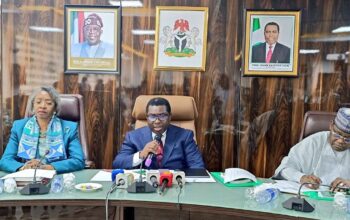
Speaking on behalf of the Commissioner for Economic Affairs and Agriculture, Massandje Toure-Litse, Acting Director of Environment and Natural Resources, Mr. Yao Bernard Koffi, emphasized the urgent need for coordinated regional action.
“Plastic pollution is a transboundary problem that requires a harmonized regional response,” Koffi said. “Tackling this issue is a test of our collective resolve—as governments, private sector players, civil society, and citizens.”
The Commissioner highlighted ECOWAS’s adoption of Regulation C/REG.17/12/23 in 2023, mandating member states to harmonize plastic management standards and promote best practices in waste handling.

She also commended progress in countries like Ghana and Nigeria for advancing circular economy models, and lauded Senegal and Côte d’Ivoire for instituting plastic bag bans and extended producer responsibility policies.
Looking ahead, Toure-Litse noted that ECOWAS is finalizing a draft regional plastics management plan with World Bank support and reaffirmed the Commission’s commitment to environmental sustainability under its Vision 2050 strategy.
“We call on all stakeholders to support community-led waste solutions, invest in eco-innovation, enforce environmental laws, and empower youth-led climate action,” she said.
Nigeria’s Minister of Environment, Balarabe Abbas Lawal, echoed the urgency, describing plastic pollution as both an environmental and public health crisis.
“Every minute, plastic waste ends up in our oceans and urban drainage systems, contributing to flooding and threatening biodiversity,” Lawal said. “In Nigeria, plastic sachets and microplastics have become a visible menace to communities and food safety.”

He outlined several national initiatives, including a National Policy on Plastic Waste Management, support for circular economy models, and the Extended Producer Responsibility (EPR) Programme, which compels producers to manage the full lifecycle of plastic products.
Lawal reaffirmed Nigeria’s readiness to partner with ECOWAS and other stakeholders to build a cleaner, greener, and more resilient environment in line with President Bola Tinubu’s Renewed Hope Agenda.
“As we celebrate World Environment Day, let us choose solutions over excuses and action over words,” he said.