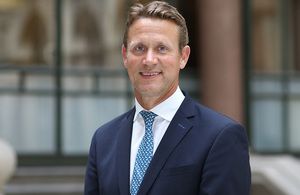
As the United Nations (UN) celebrates 80 years of promoting peace, human rights, and sustainable development, the Head of the United Nations Information Centre (UNIC) in Nigeria, Ronald Kayanji, has reaffirmed the organisation’s commitment to adapting to modern challenges and empowering young people to shape the world’s future.
Speaking at a commemorative event in Abuja, Kayanji reflected on the UN’s eight decades of global service, highlighting its five key pillars — maintaining international peace and security, protecting human rights, delivering humanitarian aid, advancing sustainable development, and upholding international law.
“If we don’t protect human rights, there’s no way we can have peace. Our work goes beyond the scenes to ensure that people live in peace, that conflicts don’t continue, and that justice prevails through international law,” Kayanji stated.
He noted that the UN’s role continues to evolve amid emerging global challenges such as climate change, artificial intelligence, and inequality — issues that were unimaginable when the organisation was founded in 1945.
To remain relevant, he said, the UN recently convened a Summit for the Future, which produced the Pact for the Future — a global action plan addressing pressing issues like AI governance, digital transformation, and youth empowerment.
“We now live in a world of over eight billion people — the largest population of young people in history. That’s why the Pact for the Future includes chapters on youth, future generations, and global governance. The UN is thinking about you — the young people who will frame the future,” he said.
Kayanji drew parallels between the post-war era of the UN’s founding and today’s rapidly changing world, citing new security dimensions shaped by drones, cyber technologies, and digital currencies.
“For the UN to stay relevant, we must review what is happening in the world and adjust to new realities,” he added.
He called on youth and civil society to engage actively with the UN in building a peaceful and sustainable world. “The UN is not for those who work here; it is for the people. We invite everyone, especially young people, to join in shaping the future we all want,” Kayanji said.
Highlighting the role of the Model United Nations (MUN) initiative, he noted that it aims not just to teach debate or diplomacy but to nurture global thinkers who understand international challenges.
“What we want them to understand is to think beyond their community, beyond their country — to think globally. Because it is these young people who will face those challenges in the future,” he explained.
Kayanji cited former UN Secretary-General Ban Ki-moon, whose early participation in MUN inspired a lifelong career in diplomacy, as an example of how the programme cultivates future leaders.
“One of the challenges in today’s world is that people think only about themselves, ignoring others’ suffering. By helping young people develop empathy and global awareness, we are building a better future,” he said.

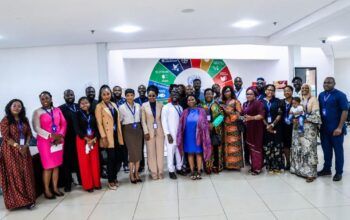
Students from across Nigeria participated in the Abuja International Model United Nations (AIMUN), held at the UN House, where they simulated diplomatic sessions and deliberated on global issues.
Fatima Ahmed Bello of Newgate University, Minna, described the event as “educative and inspiring,” while Dikko Divine Favour, a Law student from the University of Abuja representing Russia, said it offered “a great platform to understand how the UN works.”
Great Wisdom Wigwe, a 400-level student of Agricultural Economics representing the United States, said the experience deepened his passion for diplomacy. “Young people actually have a chance to change the world by being focused and intentional about what we do,” he remarked.
Through such initiatives, the UN continues to inspire a new generation of globally minded youth — the future diplomats, peacebuilders, and leaders of tomorrow.