The Nigerian Environmental Society (NES) has reaffirmed its dedication to advancing environmental professionalism, policy development, and sustainable climate action in Nigeria.
This commitment was restated on Thursday in Abuja during the society’s 40th anniversary celebration, which coincided with its National Conference and 35th Annual General Meeting.
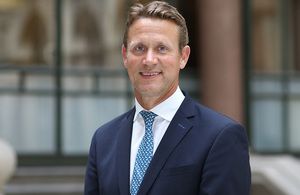
Delivering a virtual keynote address, the President and CEO of the Institute of Sustainability and Environmental Professionals (ISED), United Kingdom, Sarah Mukherjee, lauded the Nigerian Environmental Society as “a beacon of what can be achieved when a group of people come together with a vision and complete the hard work.”
Speaking on the theme “Nigeria’s Contribution to Global Climate Action,” Mukherjee commended NES for its four decades of environmental advocacy, policy influence, and capacity building. She applauded the society’s role in shaping national policies such as the National Policy on the Environment and the Environmental Impact Assessment Act, describing them as “landmark achievements.”
She further noted that many NES members have served on inter-ministerial committees, offered expert advice, and represented Nigeria at international environmental forums, contributing significantly to the nation’s environmental governance.
Drawing parallels between Nigeria’s environmental challenges and global realities, Mukherjee highlighted shared concerns such as waste management, pollution control, and energy efficiency. She emphasized the importance of shared learning, citing Copenhagen’s flood adaptation model as an example of innovative urban sustainability.
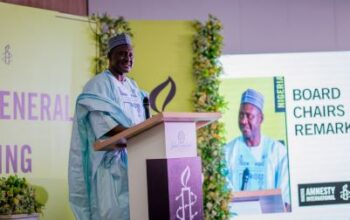
In his presidential address, Dr. Efegbidiki Okobia, NES National President, described the milestone as a defining moment in the society’s history.
“For the past 40 years, we have made giant strides in collaboration with government and private sector partners,” he said.
Dr. Okobia recounted the society’s humble beginnings with ten professionals—mainly from the oil and gas sector—and its growth to 35 chapters nationwide and one in the United Kingdom. He highlighted the passage of the Institute of Environmental Practitioners of Nigeria Act (2023) as a major breakthrough that solidified environmental practice as a recognized profession.
He also announced a new strategic partnership between NES and ISED to strengthen capacity building, professional accreditation, and technology exchange for Nigerian environmental practitioners.
Decrying the worsening waste management situation in the country, Dr. Okobia described it as “a national disaster,” calling for legislation to enforce waste segregation at source, alongside sustained public enlightenment and institutional reforms.
He further revealed plans to launch the Nigerian Environmental Outlook, a policy framework designed to track environmental indicators and guide evidence-based policymaking.
“This is the beginning of another 40 years,” he said. “Our focus will be on translating climate commitments into tangible grassroots action.”
In his goodwill message, Mr. Hamid Adekunle, one of the society’s founding members, expressed gratitude for witnessing NES’s growth and impact.
“There were ten of us who started the Nigerian Environmental Society. I thank Almighty God that I am alive to see 40 years of the seed we planted,” he said.
He urged the next generation of professionals to emphasize research, innovation, and local solutions that reflect Nigeria’s unique environmental realities.
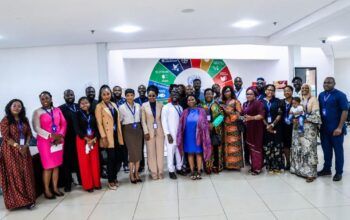
The 40th anniversary event attracted participants from government agencies, academia, civil society, and the private sector, all united in celebrating NES’s four decades of leadership in promoting environmental sustainability and professional excellence in Nigeria.