- Pate urges national consensus on prioritising healthcare funding
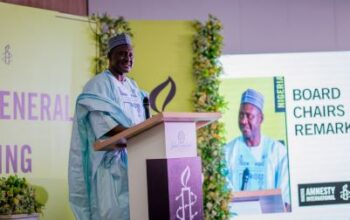
Kaduna State Governor, Senator Uba Sani, has reaffirmed his administration’s commitment to affordable and accessible healthcare for all Nigerians, stressing that no citizen should be pushed into poverty while seeking essential medical care.
Governor Uba stated this on Thursday in Abuja at a High-Level Health Media Dialogue with media executives, themed “Escalating Executive and Media Action for Health Accountability and Financing.”
He said: “We believe no Nigerian family should be pushed into poverty by seeking essential medical care. For us, equity is not rhetoric — it is a principle of governance and justice.”
The governor highlighted the significant progress recorded in Kaduna State’s healthcare infrastructure, noting that newly established facilities have reduced medical tourism and eased the financial and emotional burden on families.
He also disclosed that the state government has launched the Kaduna State Emergency Medical Services (KAD-EMS), a 24-hour ambulance system designed to ensure rapid response to medical emergencies.
According to him, “Our government has made it free for every emergency case in the first 24 to 48 hours. No patient pays a penny for emergency treatment within that period.”
In his remarks, the Coordinating Minister of Health and Social Welfare, Dr. Ali Pate, called for a national consensus on prioritizing healthcare as a fundamental political and developmental choice.
He noted that the affordability crisis in healthcare is not unique to Nigeria but remains a global challenge, adding that real progress requires both political commitment and social alignment.
“Half of the world’s population lacks access to basic healthcare services,” Pate said. “Fixing health is not just a technical issue — it is a political decision. When a country does not prioritize health or education, it fails to allocate and use resources effectively.”
Pate added that the ongoing tax reforms present an opportunity to adequately fund the health sector and move toward sustainable financing.
Also speaking, the Country Director of the Bill & Melinda Gates Foundation, Nigeria, Uche Amaonwu, emphasized that Nigeria’s human capital development depends on stronger investments in primary healthcare (PHC).
“The health of our mothers, children, and families — and by extension, Nigeria’s future — depends on what we do next for primary healthcare. The Gates Foundation remains committed to working with the government and partners to strengthen this system,” she said.
Earlier in her welcome remarks, the Executive Director of the International Society of Media in Public Health (ISMPH), Mrs. Moji Makanjuola, underscored the need for improved budgetary allocation to the health sector.
Citing the 2023 Nigeria Demographic and Health Survey (NDHS), she lamented that Nigeria still records one of the world’s highest maternal mortality ratios — 512 deaths per 100,000 live births — and an under-five mortality rate of 102 deaths per 1,000 live births.
“These figures translate to about 82,000 Nigerian women dying annually from pregnancy-related causes, and one in every ten children dying before the age of five,” Makanjuola said.
She stressed that these statistics should “inspire courage and action,” urging deeper reforms, stronger investments, and greater accountability to improve Nigeria’s health outcomes.
According to her, only 20% of the over 30,000 Primary Health Care Centres (PHCs) nationwide are fully functional. “When PHCs work, maternal and child mortality decline, immunization improves, productivity rises, and the cycle of poverty linked to ill health is broken,” she added.
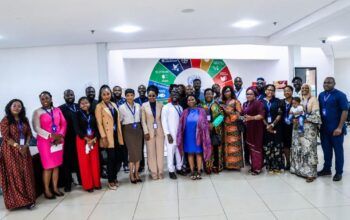
The event brought together senior government officials, health advocates, and media professionals to explore actionable strategies for financing and accountability in Nigeria’s healthcare system.