The Federal Government, ActionAid Nigeria, and the World Bank have renewed their joint commitment to eradicate poverty in Nigeria through inclusive growth, fiscal discipline, and citizen empowerment by 2030.
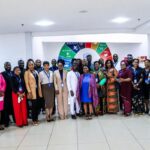
Speaking at a High-Level Dialogue on Rethinking Poverty Reduction Strategies in Nigeria held in Abuja, the Minister of Budget and National Planning, Senator Atiku Bagudu, said President Bola Tinubu’s administration is determined to build an economy that rewards hard work and protects the vulnerable.
“The biggest form of social protection is ensuring that hardworking Nigerians receive fair rewards for their efforts, while social transfers go to those genuinely disadvantaged,” Bagudu stated.
He reaffirmed the government’s resolve to eliminate poverty by 2030 under the Renewed Hope Development Plan, emphasizing productivity, innovation, and inclusion as key drivers. The minister also noted early signs of economic recovery, citing improved revenues, rising investor confidence, and new policy initiatives.
Describing President Tinubu’s reforms as “bold and forward-looking,” Bagudu appealed for public patience, assuring that ongoing reforms will soon yield visible improvements in people’s lives.
ActionAid Nigeria’s Country Director, Andrew Mamedu, called for a holistic review of poverty reduction strategies to ensure that economic growth translates into measurable human development. He observed that despite Nigeria’s budget rising from ₦300 billion in 1999 to ₦54.5 trillion in 2024, poverty levels remain high.
“This tells us we must do things differently,” Mamedu said. “Poverty can be eradicated only when government and citizens take shared responsibility and ensure accountability at all levels.”
Mamedu decried the poor state of infrastructure in some states despite increased allocations, urging greater transparency in resource use. He also advocated emulating models from China and India, where targeted investments in infrastructure, education, health, and social protection lifted millions out of poverty.

He warned that Nigeria loses about $18 billion annually to illicit financial flows, stressing that curbing leakages would provide much-needed funds for development. “We must ensure that resources are used efficiently and that spending translates to real benefits for citizens,” he added.
While commending the Federal Government’s plan to lift 100 million Nigerians out of poverty within a decade, Mamedu emphasized that success depends on consistency, accountability, and multi-sector collaboration.
Also speaking, Dr. Chris Uwadoka, Special Adviser to the Executive Chairman of the Fiscal Responsibility Commission, underscored the role of fiscal discipline in tackling poverty. “Fiscal responsibility is not just a technical framework but a people-centred philosophy rooted in transparency, accountability, and prudence,” he said.
He noted that while Nigeria’s fiscal indicators are stabilizing, the real challenge lies in translating macroeconomic gains into tangible welfare improvements. He urged state and local governments to strengthen public financial management to prevent leakages and ensure resources reach citizens.
A World Bank presentation delivered by Mr. Imole Ibukun from the National Economic Council Secretariat painted a concerning picture, revealing that 139 million Nigerians—about 61% of the population—currently live in poverty, up from 81 million in 2019. The report projects further increases unless urgent reforms are implemented.
The World Bank identified major poverty drivers, including high food inflation, stagnant wages, insecurity, oil dependence, poor infrastructure, and weak governance. It recommended expanding social safety nets, boosting agricultural productivity, investing in rural infrastructure, and improving governance to ensure that growth benefits ordinary Nigerians.
All stakeholders at the dialogue agreed that sustained poverty reduction will require shared responsibility, transparency, and an unwavering focus on inclusive economic growth.