A new national survey has revealed that Nigeria could generate about 17 million new jobs by investing in the care economy — a sector encompassing both paid and unpaid activities that provide essential support to individuals throughout their lives.
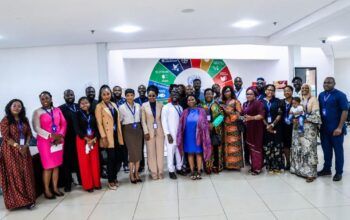
The finding was disclosed during the dissemination of the Nigeria Time Use Survey (NTUS) conducted by the National Bureau of Statistics (NBS) in partnership with UN Women Nigeria, held in Abuja on Wednesday to commemorate the International Day of Care and Support.
Head of Gender and Social Inclusion at the NBS, Ms. Caroline Faturoti, explained that the care economy, which includes childcare, healthcare, education, and social services, remains largely undervalued despite being fundamental to social and economic well-being.
She noted that most care work in Nigeria is performed by women, often unpaid or underpaid, adding that investing in the sector could help bridge the gender employment gap and improve household welfare.
According to Faturoti, “The Survey — the first of its kind in Nigeria — provides critical data on how women and men allocate their time between paid and unpaid work. It shows the immense contribution of care work to families and the economy.”
Speaking at the event, the Statistician-General of the Federation, Prince Adeyemi Adeniran, represented by the Director of Prices and Trade Statistics, Mr. Ishaku Maigida, said the NTUS offers valuable insight into how Nigerians spend their time, shedding light on the invisible labour that sustains homes and communities.
“The results are revealing,” Adeniran stated. “Women spend far more hours each day on unpaid care activities than men do — hours that sustain households but often go unrecognized in our economic indicators. With this data, we can finally give value to the work that keeps society functioning.”
He said the findings will guide evidence-based policies to reduce and redistribute unpaid care work through childcare services, care infrastructure, and social protection measures, advancing Nigeria’s progress toward Sustainable Development Goal 5.4.1 — the recognition and valuation of unpaid care and domestic work.
“Investing in care and support systems creates jobs, strengthens families, and unlocks the potential of millions, especially women, to participate fully in the economy,” he added.
UN Women Country Representative to Nigeria and ECOWAS, Ms. Beatrice Eyong, represented by Acting Deputy Country Representative, Ms. Patience Ekeoba, said the United Nations declared the International Day of Care and Support to emphasize that care is a universal human right and a cornerstone of sustainable development.
She highlighted that globally, women perform over 75 percent of unpaid care work, contributing an estimated $11 trillion — about 9 percent of global GDP — to the world economy annually.
“In Nigeria, this imbalance is even more pronounced,” Eyong said. “Women spend between 4.5 and 6 hours daily on unpaid care and domestic work, compared to 1.5 to 2 hours for men. This limits their participation in paid employment, education, and civic life.”
She urged policymakers to use the NTUS data to design gender-responsive policies and care systems that recognize and support the invisible labour sustaining families and communities.
This year’s International Day of Care and Support was marked under the theme: “Caring and Support for All – Addressing All Rights-Holders, Including Those Providing and Receiving Care and Support.”