Former Governor of Ekiti State, Dr. Kayode Fayemi, has called for far-reaching reforms within the Economic Community of West African States (ECOWAS), warning that the regional bloc, in its current form, lacks the capacity to effectively tackle poverty, inequality, governance failures, and insecurity across the subregion.
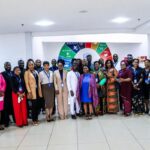
Fayemi made the call in Abuja at the second edition of the African Political Square and Experts’ Meeting on Alternative Futures for ECOWAS at 50, organized by the African Leadership Centre (ALC) in partnership with CODESRIA and Wathi.
He emphasized that ECOWAS must transform from an elite-driven institution into a citizen-centered community capable of addressing the everyday realities of West Africans. “The challenges of poverty, inequality, governance deficits, and insecurity cannot be effectively addressed by ECOWAS in its current form,” Fayemi said. “There is an urgent need for a new, citizen-centered approach that responds to the real concerns of ordinary West Africans, rather than focusing solely on the priorities of political leaders.”
The former governor, who is also the co-founder of the Amanda Institute for Policy and Leadership Advancement, urged ECOWAS to rethink its security architecture, noting that conventional military strategies alone have failed to address the region’s complex threats from insurgent and terrorist groups.
He stressed the need for a comprehensive human security strategy, one that combines intelligence-driven responses with efforts to alleviate poverty, reduce inequality, and strengthen governance — the very conditions extremist groups exploit. “While frustration with civilian governments is understandable, military rule is not a viable alternative,” Fayemi said. “History has shown that such regimes worsen insecurity and governance crises. In the three countries that have exited ECOWAS, terrorism and instability have actually increased since the coups.”
He urged ECOWAS to engage with the Alliance of Sahel States (AES) — comprising Burkina Faso, Mali, and Niger — through diplomatic and flexible mechanisms to prevent further regional fragmentation. “The challenge for ECOWAS is to engage these regimes while ensuring a pathway back to credible democratic governance,” he noted. “The goal should be to preserve regional cooperation and stability, not encourage divisions.”
According to him, ECOWAS at 50 must seize the moment for “deep reflection and bold reform” to rebuild citizens’ trust and renew its founding principles of integration, peace, and inclusive governance. “ECOWAS cannot continue business as usual. It must evolve to reflect current realities. The future of West Africa depends on the choices we make today,” Fayemi said.
In his remarks, President of the ECOWAS Commission, Dr. Omar Alieu Touray, represented by the Commissioner for Political Affairs, Peace and Security, Ambassador Abdufatah Musah, admitted that the regional bloc faces a “crisis of democracy and security.” “Manipulation of constitutions and exclusionary politics have become fashionable,” he said. “Democracy is in crisis, and insecurity has worsened. We must undertake deep introspection and honest self-assessment.”
Touray reflected on ECOWAS’s evolution — from its founding during the Cold War to the peacekeeping missions of the 1990s — warning that both internal weaknesses and external shocks now threaten its relevance. “The world is no longer bipolar; it is multipolar,” he stated. “West Africa must choose between people-centered democracy and authoritarian regression.”
He revealed that ECOWAS had begun “a series of introspections” to chart a 15-year reform strategy that places citizens at the heart of decision-making. “Every generation must discover its mission, fulfil it, or betray it,” he added. “For West Africa, this is that defining mission.”
Also speaking, Professor Funmi Olonisakin, Vice President (International Engagement) at King’s College London and Founding Director of the African Leadership Centre, said ECOWAS’s golden jubilee must provoke a “fundamental reinvention” of its purpose and structure. “Even without the current crises, a strong case exists for a reinvention of the West African integration project,” she said. “The transition from an ECOWAS of rulers to a community of the people has not happened as hoped.”
As ECOWAS marks its 50th anniversary, speakers at the event agreed that the bloc’s survival and relevance depend on its ability to evolve into a people-centered institution that genuinely advances democracy, development, and security across West Africa.