The National Agency for the Prohibition of Trafficking in Persons (NAPTIP), in partnership with the British High Commission Abuja, has intensified efforts to combat the growing trafficking of Nigerians into cyber-enabled scam centres across Southeast Asia.
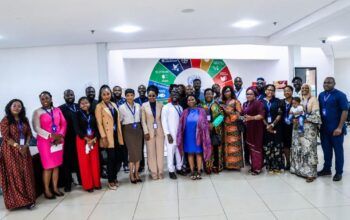
At a survivor-centred forum held Monday in Abuja under the theme, “Confronting the Global Scam Centre Crisis: Perspectives of Nigerian Survivors,” stakeholders highlighted the increasing trend of Nigerians being lured abroad with fraudulent job offers and coerced into organised online fraud networks.
The event featured testimonies from recently repatriated victims trafficked to Myanmar, Laos, Cambodia and Thailand, where they were reportedly forced to operate complex online scam schemes under exploitative and abusive conditions.
The forum followed a coordinated rescue operation involving NAPTIP, the Ministry of Foreign Affairs, the Nigerian Embassy in Bangkok, British non-governmental organisation EDEN, and the International Organization for Migration (IOM). The joint intervention — including cross-border coordination along the Thai–Myanmar frontier and welfare visits to detained Nigerians at Bangkok’s Immigration Detention Centre — facilitated the safe return of 23 survivors earlier this month.
Global data point to the scale of the crisis. A 2026 report by the Office of the United Nations High Commissioner for Human Rights (OHCHR), titled “A Wicked Problem,” estimates that at least 120,000 individuals are currently trapped in forced scam operations in Myanmar alone, with more than 300,000 affected across Southeast Asia. The report indicates that victims originate from at least 66 countries and that between 2020 and 2025, 74 per cent of identified victims trafficked into scam centres were taken to Southeast Asia after being promised lucrative employment.
Speaking at the forum, the UK Deputy High Commissioner to Abuja, Gill Lever, said the initiative was designed to prioritise survivors’ voices in shaping prevention and response strategies.
She said the UK was working closely with Nigerian authorities and other partners to ensure trauma-informed care, safe repatriation and strengthened safeguards against what she described as a rapidly evolving transnational threat.
Representing NAPTIP’s Director-General, the agency’s Director of Public Enlightenment, Mrs. Kehinde Akomolafe, described the survivors’ testimonies as a stark exposure of the brutality of modern trafficking networks.
She reaffirmed the agency’s commitment to protecting Nigerians from exploitation and deepening international collaboration to dismantle trafficking syndicates.
One survivor recounted being promised legitimate employment overseas but instead confined in a guarded facility and compelled to engage in online fraud under constant surveillance and threats.
Stakeholders at the forum called for expanded public awareness campaigns, tighter regulation of overseas recruitment processes, enhanced intelligence-sharing among Commonwealth partners and stronger victim-protection mechanisms.
As cyber-enabled trafficking networks continue to expand across borders, Nigerian and UK authorities signalled that survivor-led advocacy will remain central to disrupting scam syndicates and preventing further exploitation.