Nigeria has validated its Seventh National Report to the Convention on Biological Diversity, signalling a renewed national commitment to meeting global biodiversity targets by 2030.
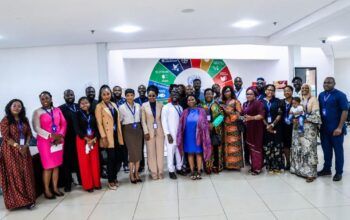
The validation was concluded at a high-level stakeholders’ workshop held in Abuja on Monday. The forum convened government officials, environmental experts, civil society organisations, researchers, development partners and community representatives to review and endorse the country’s latest biodiversity performance assessment.
Describing the exercise as a significant milestone for environmental governance, the Director of Forestry, Hajiya Halima Bawa-Bwari, said the report transcends routine international reporting obligations. According to her, it provides a comprehensive appraisal of Nigeria’s progress, existing gaps and strategic priorities in conserving its biological resources.
“The National Report is not just a statutory submission. It reflects our collective journey — our progress, our challenges and our aspirations in safeguarding our natural heritage,” she said.
Bawa-Bwari noted that biodiversity remains central to food security, climate resilience, livelihoods and cultural identity nationwide, warning that accelerating habitat loss, ecosystem degradation and climate pressures require coordinated and urgent responses. Represented by Ahmed Labaran, Assistant Director of Forestry, she commended ministries, research institutions, civil society groups, local communities and development partners for their contributions to the draft document, stressing that sustained collaboration and inclusivity are critical to conservation efforts.
Participants were urged to ensure that the final report aligns with the Kunming-Montreal Global Biodiversity Framework, which sets ambitious targets for halting and reversing biodiversity loss by 2030. She called for professionalism and integrity in validating the document, adding that biodiversity considerations must be integrated into national development planning and supported by adequate financial and technical resources.
In his remarks, the Minister of Environment, Malam Balarabe Lawal, described the report as timely, given increasing global and domestic environmental challenges. Represented by Tijani Ahmed, Deputy Director of Forestry, the minister said Nigeria’s revised National Biodiversity Strategy and Action Plan (NBSAP) remains the primary framework for translating global commitments into measurable national outcomes.
He stressed that the validation process must ensure the report is evidence-based, comprehensive and reflective of on-the-ground realities.
“The report must not end as an international filing exercise,” he stated. “Its findings should inform policy coordination decisions, guide resource mobilisation and strengthen accountability in implementing the NBSAP.”
The minister reaffirmed the Federal Government’s commitment to a whole-of-government and whole-of-society approach, advocating stronger inter-agency coordination, sustainable financing mechanisms, improved environmental data systems and inclusive participation by sub-national governments, indigenous communities, women, youth and the private sector.
Stakeholders expressed optimism that the finalised report would not only document Nigeria’s biodiversity gains but also define a more ambitious pathway toward achieving the 2030 global targets, reinforcing the country’s role in international biodiversity governance while strengthening domestic conservation efforts.