The Federal Government, in partnership with the World Bank, has commenced the appraisal and validation of nine Strategic Catchment Management Plans (SCMPs) aimed at addressing desertification, land degradation and water scarcity across Northern Nigeria and the Federal Capital Territory.
The initiative is being implemented under the Agro-Climatic Resilience in Semi-Arid Landscapes Project (ACReSAL), a climate resilience programme coordinated by the Federal Ministry of Environment with support from the World Bank.
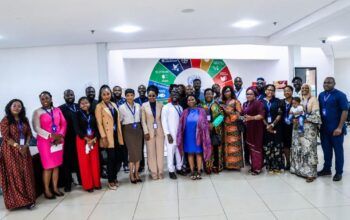
A validation workshop currently holding in Abuja has brought together representatives of federal and state agencies, technical experts and community stakeholders to review the plans and ensure they are inclusive, practical and capable of improving livelihoods while restoring degraded ecosystems.
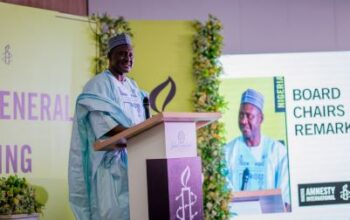
Speaking at the event, the Minister of Environment, Balarabe Abbas Lawal, warned that environmental degradation across Northern Nigeria has reached alarming levels, posing serious threats to food security and the stability of rural communities.
According to him, millions of residents in the 19 northern states and the Federal Capital Territory are already facing harsh environmental realities, including advancing desertification, erratic rainfall patterns, shrinking water bodies and declining farmland productivity.
“These are not abstract problems. They threaten the food on our tables, the income of our farmers and herders, and the stability of our communities,” the minister said.
Lawal explained that the ACReSAL project represents Nigeria’s strategic response to the growing environmental crisis. He noted that the Federal Ministry of Environment is collaborating closely with the Federal Ministry of Water Resources and Sanitation and the Federal Ministry of Agriculture and Food Security to restore degraded landscapes and promote sustainable management of natural resources.
He added that the Strategic Catchment Management Plans form the backbone of the intervention, providing a coordinated framework for identifying environmental hotspots, mobilising resources and aligning actions across multiple sectors.
Representing the Minister of Water Resources and Sanitation, Joseph Terlumun Utsev, the Director of Hydrology, Abohwo Ngozi, said the workshop would review the final nine catchment management plans developed under the ACReSAL framework.
She stressed that the plans are essential for strengthening integrated water and land management while addressing the growing environmental challenges confronting communities across Northern Nigeria.

Ngozi warned that desert encroachment, degraded farmlands and unpredictable rainfall patterns are already threatening agricultural productivity and the livelihoods of millions of farmers and pastoralists.
The National Coordinator of ACReSAL, Abdulhamid Umar, represented by Shettima Adams, said the nine plans are designed to guide targeted interventions in semi-arid landscapes to ensure sustainable water and land management.
He listed the catchments covered by the plans as Malenda, Oshin-Oyi, Gurara-Gbako, Aloma-Konshisha, Benue-Mada, Sarkin-Pawa-Kaduna, Zungur-Gongola, Gaji-Lamurde and Hawul-Kilange.
According to him, the catchment areas cut across several states including Adamawa, Bauchi, Benue, Borno, Gombe, Kaduna, Kano, Katsina, Kebbi, Kogi, Kwara, Nasarawa, Niger, Plateau, Taraba, Yobe and Zamfara, as well as the Federal Capital Territory.
Umar explained that the plans were developed through extensive consultations with local communities and stakeholders to capture key environmental challenges such as deforestation, soil erosion, shrinking water sources and overgrazing, while outlining practical solutions for long-term environmental restoration and climate resilience.