The Federal Government of Nigeria has launched a unified national framework, the One Humanitarian–One Poverty Response System (OHOPRS), aimed at addressing humanitarian crises and poverty through a coordinated and integrated approach.
The initiative, introduced under the Renewed Hope Agenda of Bola Tinubu, is designed to end fragmented interventions by aligning emergency assistance, social protection, and long-term poverty reduction strategies.
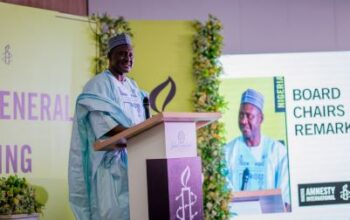
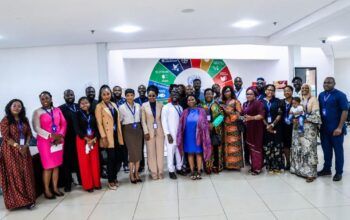
The framework was unveiled at a high-level stakeholders’ engagement involving federal and state institutions, development partners, humanitarian agencies, academia, and technical organisations. Participants underscored the need for a cohesive national system to tackle Nigeria’s growing humanitarian challenges and multidimensional poverty.
Speaking at the event, the Minister of Humanitarian Affairs and Poverty Reduction, Bernard M. Doro, described the initiative as a major shift from isolated interventions to a coordinated national architecture linking humanitarian response with recovery, resilience, and sustainable development.
He noted that Nigeria faces increasing pressures from climate-related shocks, displacement, food insecurity, and economic vulnerability, stressing that both poverty reduction and humanitarian response must be treated as national priorities.
According to the minister, OHOPRS will align institutions, resources, and data systems around measurable outcomes, while enabling vulnerable populations to transition from dependency to productivity.
International partners welcomed the initiative and pledged support for its implementation. The United Nations Development Programme described the framework as a systems-based reform that places resilience and inclusion at the core of development planning.
Similarly, the United Nations Office for the Coordination of Humanitarian Affairs said the initiative strengthens national ownership of humanitarian coordination and enhances alignment between humanitarian operations and government systems.
The UNICEF highlighted the potential to better support vulnerable children and families through integrated programming that connects emergency response with education, nutrition, child protection, and social protection services.
The World Bank also endorsed the framework, noting that improved data systems, measurable outcomes, and stronger institutional coordination are critical for sustainable poverty reduction.
Support was further expressed by the European Union, whose ambassador to Nigeria and ECOWAS emphasised the importance of transparency, evidence-based planning, and effective partnerships.
Humanitarian actors, including the European Civil Protection and Humanitarian Aid Operations and International Alert, stressed the need for improved coordination, accountability, and conflict-sensitive approaches, noting the interconnection between poverty, insecurity, and vulnerability.

Experts from academia and government institutions highlighted the importance of research and credible data. Contributions from Yakubu Gowon University and the National Bureau of Statistics emphasised the need for robust data systems to support planning, targeting, and monitoring.
State governments are expected to play a central role in implementing the framework by aligning their programmes with the national system to ensure more effective service delivery.
A key component of OHOPRS is the establishment of an integrated data and monitoring ecosystem to track needs, interventions, funding, and outcomes across all levels of government and partner organisations.
Officials said the initiative represents a comprehensive systems reform rather than a standalone programme, aimed at transforming how Nigeria supports vulnerable populations. By linking humanitarian action with long-term poverty reduction, the government seeks to move communities from recurring crises toward resilience and economic opportunity.
The Federal Government called on ministries, state authorities, development partners, civil society, academia, and the private sector to align with the framework, stressing that addressing humanitarian vulnerability and poverty requires coordinated leadership and sustained collaboration.