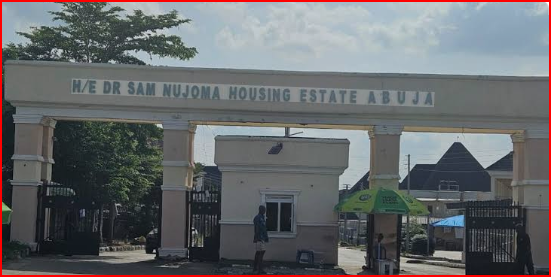
El Salem Nigeria Limited has rejected allegations of intimidation, extortion, assault and security threats levelled against it by a group of homeowners in the Dr. Sanujoma Housing Estate, Galadimawa, Abuja, describing the claims as baseless and part of a coordinated campaign to tarnish the company’s image.
Addressing journalists in Abuja, a representative of the firm, Michael Onyebuchi, faulted recent reports in which some residents appealed to the Minister of the Federal Capital Territory, Nyesom Wike, to intervene in what they described as persistent disputes with the estate developer.
Onyebuchi argued that the company was not contacted for its response before the publication of the allegations, resulting in what he described as a one-sided portrayal of a dispute that has lingered for several years.
He maintained that El Salem’s authority to manage the estate is founded on contractual agreements signed by homeowners before acquiring their properties. According to him, the agreements clearly outline obligations relating to infrastructure contributions, service charges and estate management responsibilities.
The company explained that service charges collected from residents are used to fund security services, infrastructure maintenance and environmental management within the estate, noting that such arrangements are standard practice in privately managed residential developments.
El Salem traced the roots of the disagreement to attempts by some members of the residents’ association to assume control of the estate’s management, a move it said conflicts with existing contractual obligations.
The developer further disclosed that the dispute has been the subject of litigation since 2021, stressing that many of the issues currently being discussed in the public domain are already before competent courts.
“The courts remain the appropriate platform for resolving these disputes,” Onyebuchi stated, urging all parties to allow the judicial process to take its course rather than seeking resolution through media engagements.
During the briefing, the company also accused some past and current leaders of the residents’ association of taking actions that allegedly contributed to tensions within the estate, including the introduction of unauthorized security arrangements.
To support its position, El Salem presented documents it described as evidence, including court records, police reports and official correspondence linked to investigations and legal proceedings involving certain members of the association.
The company alleged that the dispute intensified following efforts by some residents to remove security personnel engaged by the developer and replace them with alternative security arrangements, which it said created concerns over safety and order within the estate.
A significant portion of the briefing focused on the company’s interactions with the Legal Services Secretariat of the Federal Capital Territory Administration. El Salem said it had complied with invitations from investigators regarding complaints filed against it but questioned the rationale for conducting parallel investigations into matters already before the courts.
The firm also disclosed that it had petitioned the Independent Corrupt Practices and Other Related Offences Commission (ICPC), alleging abuse of office by certain officials and seeking a review of actions taken in relation to the dispute. It said it is awaiting the outcome of the petition.
Highlighting its relationship with the African University of Science and Technology, the developer described the estate as part of a broader academic community that accommodates university staff, researchers and students.
According to the company, the university continues to support its management role and has not expressed concerns regarding its performance under the existing agreements.
Responding to claims concerning land ownership documentation, El Salem insisted that all property buyers were informed that the estate operates under a global Certificate of Occupancy framework. The company explained that homeowners are entitled to deeds of sublease and related title documents rather than individual Certificates of Occupancy.
It added that several residents have already received their title documents and accused critics of misrepresenting the ownership structure agreed upon at the time of purchase.
Despite the ongoing disagreement, the developer reiterated its commitment to dialogue and peaceful engagement. It recalled previous reconciliation efforts, including the establishment of a joint management structure and a jointly operated bank account aimed at improving transparency in estate administration.
However, the company said disagreements over the operation of those arrangements eventually reignited tensions among stakeholders.
Reaffirming its position, El Salem called on all parties to respect contractual obligations and judicial processes, insisting that the courts remain the most appropriate avenue for resolving the dispute.
“The rule of law must prevail,” the company stated, expressing confidence that the judicial process would ultimately deliver a fair and lasting resolution.