The Economic Community of West African States (ECOWAS) has launched an ambitious initiative aimed at ending the region’s long-standing dependence on imported rice and achieving self-sufficiency in rice production by 2035.
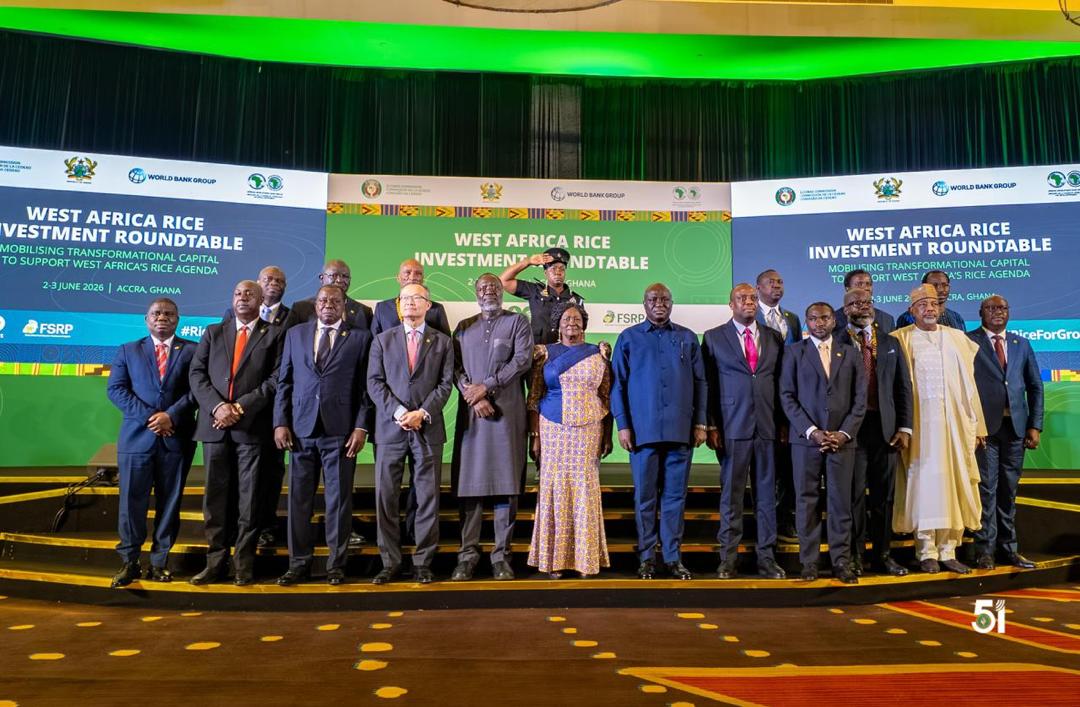
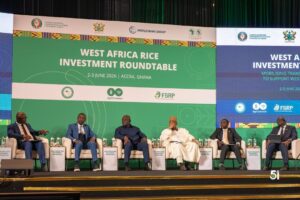
The drive took centre stage at a high-level Regional Round Table on Investment in the Rice Sector held in Accra, Ghana, where policymakers, development partners, financial institutions and private sector stakeholders gathered to mobilise investments and chart a roadmap for transforming the region’s rice industry.
The two-day meeting, organised by ECOWAS through its Department of Economic Affairs and Agriculture with support from the World Bank and the African Development Bank (AfDB), is focused on attracting public, private and blended financing needed to implement national and regional rice development programmes.
The initiative comes at a time when rice remains a staple food for millions of people across West Africa, yet domestic production continues to fall short of demand, forcing countries to spend billions of dollars annually on imports.
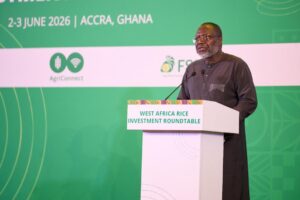
Speaking on behalf of Ghanaian President John Dramani Mahama, Vice President Jane Naana Opoku-Agyemang described the pursuit of rice self-sufficiency as a critical component of the region’s broader economic transformation agenda.
She noted that reducing dependence on imported food is essential for strengthening regional integration, enhancing economic resilience and safeguarding the continent against global supply disruptions.
“Beyond rice, this meeting is about economic transformation, regional integration and Africa’s capacity to achieve self-sufficiency with dignity,” she said.
For decades, West African countries have grappled with the paradox of possessing vast arable land, favourable climatic conditions and a large agricultural workforce while remaining heavily reliant on imported food. Recent global shocks, including the COVID-19 pandemic, supply chain disruptions, geopolitical tensions and rising food prices, have further exposed the risks associated with external food dependence.
Addressing participants, ECOWAS Commission President Omar Alieu Touray described the initiative as a pivotal step toward strengthening food sovereignty across the region.
He reaffirmed the regional bloc’s commitment to building competitive, inclusive and sustainable agri-food systems capable of generating employment, creating wealth and ensuring long-term food security.
“Our ambition is to establish competitive, inclusive and sustainable agri-food systems that strengthen food sovereignty, create jobs and promote shared prosperity while achieving regional self-sufficiency in rice by 2035,” Touray said.
He emphasised that the roundtable must deliver tangible outcomes by catalysing investments and practical actions that will transform the rice value chain across ECOWAS member states.
The event also featured contributions from Ghana’s Minister of Food and Agriculture, Eric Opoku; Deputy Finance Minister Thomas Nyarko Ampem; World Bank Vice President for Global Environment, Guangzhe Chen; and AfDB Director of Agricultural Finance and Rural Development, Richard Ofori-Mante.
A major highlight of the meeting was the presentation of the “Vision for Rice Self-Sufficiency in West Africa by 2035” by agricultural expert Kalilou Sylla. The strategy outlines key interventions aimed at boosting rice production, improving seed systems, expanding irrigation infrastructure, strengthening mechanisation, enhancing processing capacity and improving market access throughout the region.
Experts at the forum noted that achieving rice self-sufficiency will require substantial investments in agricultural infrastructure, research, climate-smart farming technologies and value-chain development. They also stressed the need for stronger collaboration among governments, development institutions and private investors.
The initiative is expected to complement existing regional agricultural frameworks while addressing persistent challenges that have constrained productivity and competitiveness within the rice sector.
For millions of farmers across West Africa, the programme offers prospects for higher incomes, expanded market opportunities and improved livelihoods. Governments, meanwhile, stand to benefit from reduced import bills, increased foreign exchange savings and stronger economic resilience.
As deliberations continue in Accra, stakeholders maintain that food security has become both an economic necessity and a strategic priority. The roundtable is therefore being viewed not merely as a financing platform but as a significant step toward securing West Africa’s food future.
If successfully implemented, the 2035 rice self-sufficiency agenda could emerge as one of the most transformative agricultural programmes in the region’s history, reshaping food systems and advancing West Africa’s broader goals of economic integration and sustainable development.