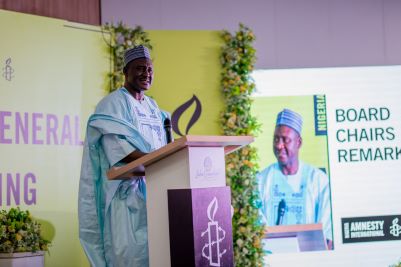
The Chairman of the Board of Trustees of Amnesty International Nigeria, Auwal Musa Rafsanjani, has called for enhanced accountability, stronger grassroots participation, and renewed commitment to human rights advocacy as the organisation held its second Membership Annual General Meeting (AGM).
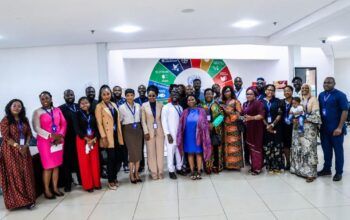
Addressing members, partners, volunteers, and delegates from Ghana, Kenya, and Germany, Rafsanjani described the gathering as a pivotal moment for the organisation, providing an opportunity to review achievements, address challenges, and chart a course for future growth.
He noted that the AGM represented a significant milestone for Amnesty International Nigeria following its recognition as a full section of the global Amnesty movement. According to him, the status reflects years of dedication and institutional development, while also imposing greater responsibilities in terms of governance, transparency, and impact.
Rafsanjani acknowledged the difficult human rights landscape in Nigeria, citing insecurity, poverty, abuse of power, and the shrinking civic space as major concerns. Despite these challenges, he said Amnesty International Nigeria has remained steadfast in defending the rights of vulnerable and marginalised communities across the country.
Highlighting key achievements recorded over the past year, he referenced the organisation’s advocacy under the #EndTigerBase campaign, which he said contributed to reforms aimed at addressing allegations of human rights violations. He also pointed to the release of Adamu Oseni after years of wrongful imprisonment, describing it as a notable outcome of sustained advocacy efforts.
The Amnesty Nigeria chairman further cited the organisation’s intervention in a child protection case in Plateau State, which facilitated access to medical care, legal assistance, and accountability measures. He also highlighted the publication of the report, A Decade of Impunity, which examined insecurity in Nigeria’s South-East and contributed to national discussions on justice, accountability, and institutional reform.
Rafsanjani stressed the need to expand Amnesty International Nigeria’s membership base and strengthen state-level structures to better reflect the country’s diversity. He also advocated increased youth participation and the strategic use of technology to broaden engagement and enhance the organisation’s reach.
He emphasized that organisational growth must remain anchored on the principles of fairness, inclusion, accountability, and respect for differing viewpoints.
On governance reforms, Rafsanjani observed that the current AGM structure may become increasingly difficult to manage given the organisation’s expanding network of more than 4,000 volunteers and over 200,000 supporters nationwide.
To address this challenge, he proposed a representative model under which each state would be represented by selected delegates through a transparent process. The proposed “one state, one vote” system, he explained, would promote fairness, improve sustainability, and encourage stronger participation at the state level.
He concluded by urging members to remain united despite differences of opinion, reaffirming Amnesty International’s commitment to the principle that no individual should suffer injustice in silence.
Rafsanjani also called for stronger collaboration, improved institutional structures, and sustained dedication to the promotion and protection of human rights across Nigeria.