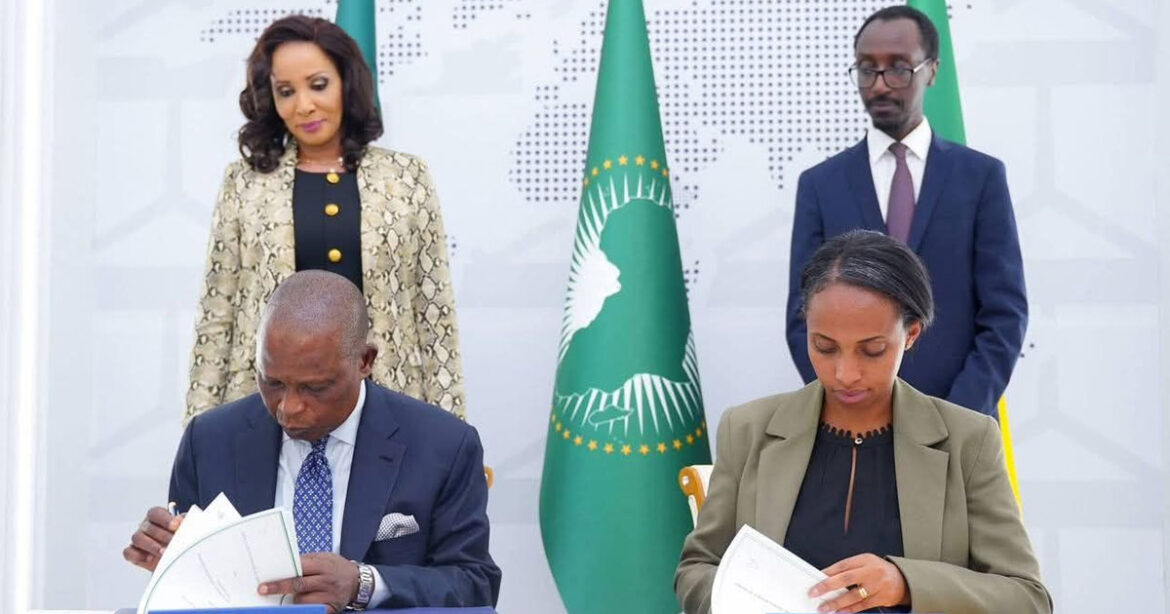
The Federal Government has defended its recent prisoner transfer agreement with Ethiopia, stating that the arrangement is designed to allow Nigerian citizens serving prison sentences in the East African nation to complete their terms in Nigeria under more humane conditions.
Minister of Foreign Affairs, Bianca Odumegwu-Ojukwu, said the agreement is in line with the citizen diplomacy policy of President Bola Ahmed Tinubu, which prioritises the welfare and protection of Nigerians abroad.
The minister also dismissed as false a list circulating on social media claiming that 136 Nigerians were incarcerated in Ethiopia, describing both the figures and the alleged offences attributed to the inmates as fabricated.
According to her, the transfer arrangement applies to 98 Nigerian prisoners currently held in Ethiopia’s maximum-security correctional facilities.
Odumegwu-Ojukwu explained that negotiations leading to the agreement had spanned several years due to challenges in determining the actual number of Nigerians detained in Ethiopian prisons, particularly at the Kaliti and Aba Samuel maximum-security facilities.
She noted that many of the inmates had repeatedly appealed to the Nigerian government for assistance in returning home, citing harsh prison conditions, inadequate healthcare, poor feeding, limited access to legal services, language barriers and restrictions on family visits.
The minister revealed that four Nigerian inmates died while discussions on the transfer agreement were ongoing, highlighting the urgency of the humanitarian intervention.
She described many of the prisoners as young and vulnerable Nigerians who had fallen prey to criminal networks and made poor decisions, stressing that they remained entitled to humane treatment despite their convictions.
Addressing concerns that the inmates could be released upon their return to Nigeria, Odumegwu-Ojukwu clarified that the Memorandum of Understanding governing the transfer expressly prohibits the granting of pardon or amnesty without the consent of Ethiopia, the sentencing country.
She also rejected attempts to portray the inmates as belonging predominantly to a particular ethnic group, insisting that criminal activity should not be viewed through an ethnic lens.
“A lot of them are from the South-East. There are also those from the South-West and South-South. At the end of the day, crime has no ethnicity. All these people are Nigerian citizens in a foreign jail,” she said.
The minister reaffirmed the Federal Government’s commitment to pursuing similar interventions for Nigerians facing legal and humanitarian challenges in other countries, adding that the protection of citizens abroad remains a key pillar of the administration’s Renewed Hope foreign policy agenda.