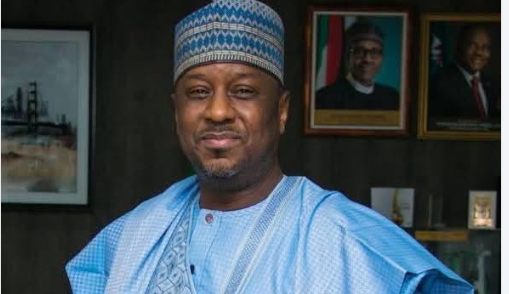
The arraignment of former Managing Director of the Port Harcourt Refining Company (PHRC), Ahmed Adamu Dikko, on allegations of laundering over N1.32 billion has intensified scrutiny of the management of funds earmarked for the rehabilitation of Nigeria’s state-owned refineries, a project that has consumed billions of dollars over the years with limited returns.
The Economic and Financial Crimes Commission (EFCC) on Wednesday brought Dikko before Justice Inyang Ekwo of the Federal High Court in Abuja on a 12-count charge bordering on alleged money laundering, marking one of the most high-profile prosecutions arising from ongoing investigations into the refinery rehabilitation programme.
Dikko, who headed the Port Harcourt Refining Company between 2020 and 2024, pleaded not guilty to all the charges.
Also named in the suit, marked FHC/ABJ/CR/360/2026, is Masterpiece Projects & Investment Limited, which the anti-graft agency listed as the second defendant.
Allegations
The EFCC alleged that Dikko laundered N1,322,839,112.70, funds it claims were proceeds linked to contractors engaged by the Nigerian National Petroleum Company Limited (NNPC Ltd.) for the rehabilitation of the Port Harcourt refinery.
According to the Commission, the alleged offences involved cash purchases of properties, concealment of funds through third parties, retention of undisclosed sums in bank accounts and unauthorized foreign currency conversions, contrary to the provisions of the Money Laundering (Prevention and Prohibition) Act, 2022.
Among the allegations, prosecutors claimed Dikko made a cash payment equivalent to N218.375 million for the purchase of a property in Katampe Extension, Abuja, without using a financial institution as required by law.
The EFCC further alleged that he concealed the origin of N328.71 million paid into the account of Masterpiece Projects & Investment Limited through transactions involving allocations of Vacuum Gas Oil for export.
Another count accused the former refinery boss of converting a total of $77,080 between October 2022 and May 2025 through a third party, alleging that the funds could not be traced to his legitimate earnings as a public official.
Bail Granted
Following his plea, defence counsel, Okechukwu Ajunwa (SAN), applied for bail pending trial, while the prosecution, led by Ekele Iheanacho (SAN), opposed the application.
Justice Ekwo granted Dikko bail in the sum of N150 million with one surety resident within the court’s jurisdiction and possessing landed property valued at not less than the bail amount.
Pending the fulfilment of the bail conditions, the court ordered that the defendant remain in EFCC custody.
The case was adjourned until October 12, 13 and 14, 2026 for the commencement of trial.
Why the Case Matters
Beyond the individual charges against Dikko, the prosecution represents a significant development in the federal government’s efforts to establish accountability in the management of Nigeria’s refinery rehabilitation programme.
The Port Harcourt refinery rehabilitation has been one of the country’s most expensive energy infrastructure projects, attracting sustained public attention because of repeated delays, escalating costs and questions over value for money.
Over the years, successive administrations have approved substantial funding for the rehabilitation of the nation’s refineries as part of efforts to reduce dependence on imported petroleum products and restore domestic refining capacity.
The EFCC’s case suggests investigators are now examining not only the execution of rehabilitation contracts but also the movement and utilisation of funds connected with the programme.
Broader Investigation
Dikko’s prosecution is understood to be part of a wider EFCC investigation into the alleged diversion and laundering of funds released for the turnaround maintenance and rehabilitation of Nigeria’s government-owned refineries.
While the charges remain allegations that must be proved in court, the outcome of the trial is expected to serve as an important test of the government’s commitment to transparency and accountability in the management of strategic public assets.
Legal analysts say the proceedings could also have wider implications for ongoing reforms in Nigeria’s oil and gas sector, particularly efforts to strengthen corporate governance, improve oversight of public enterprises and reassure investors that financial misconduct in critical national projects will be vigorously investigated and prosecuted.
For now, the former PHRC managing director maintains his innocence, and the court will determine the merits of the allegations when trial begins in October.