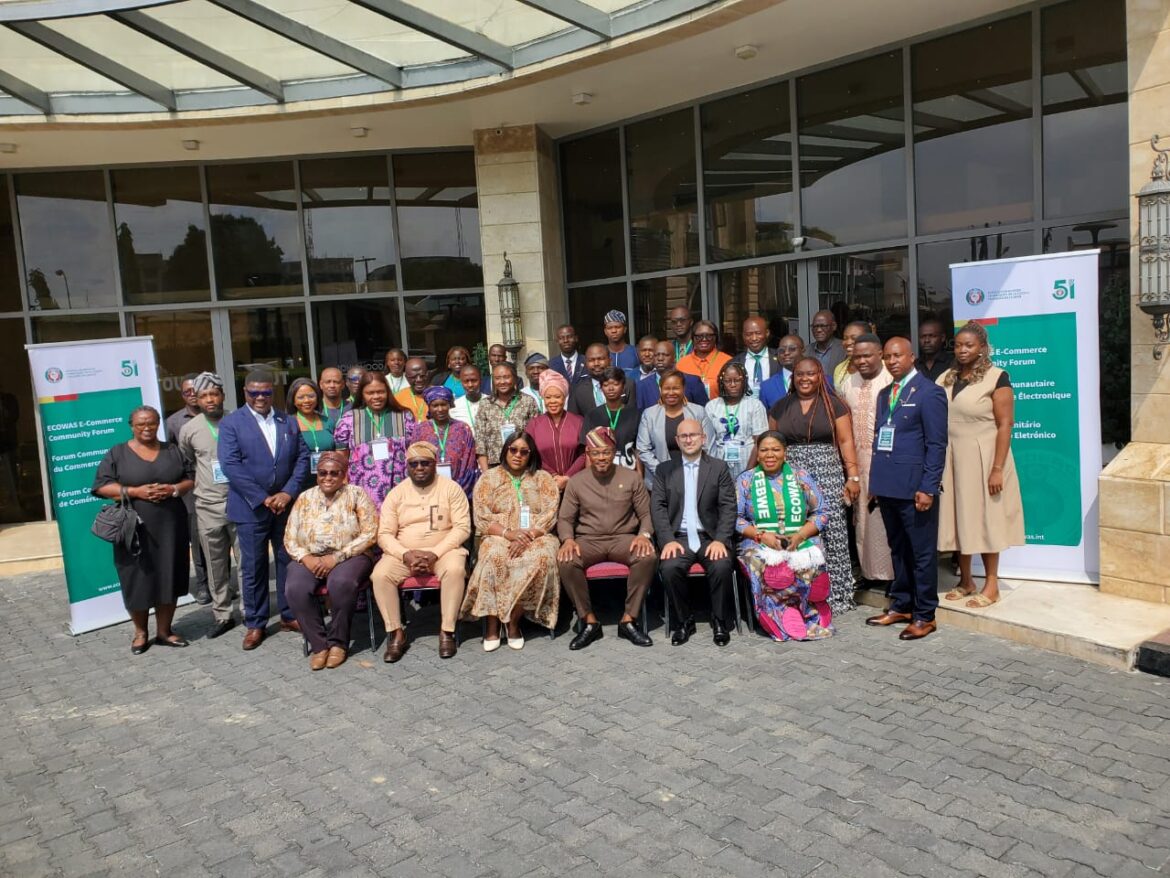
The Economic Community of West African States (ECOWAS) has identified e-commerce as a key driver of regional economic integration, targeting an increase in intra-regional trade from below 15 per cent to between 30 and 35 per cent.
The initiative is also aimed at expanding market access for women, young people, persons with disabilities and small businesses across West Africa.
The Director of ECOWAS’ Directorate of Trade, Kolawole Sofola, disclosed this on Tuesday at the E-Commerce Community Forum organised by the ECOWAS Commission in Abuja.
Sofola said the meeting was convened to assess progress in implementing the region’s e-commerce strategy and identify additional interventions to make digital trade more inclusive.
He explained that digital commerce could dismantle longstanding barriers to trade by enabling entrepreneurs to sell their products across national borders without incurring the high costs of renting physical shops or maintaining conventional business premises.
“We believe e-commerce will open up many doors. It will certainly bring the barriers to trade down,” he said.
According to him, digital platforms would allow entrepreneurs to operate from their homes, reach customers beyond their immediate communities and access markets across the region at relatively lower costs.
He noted that the approach could particularly benefit micro and small enterprises, which often struggle to compete with larger businesses because of limited capital, inadequate infrastructure and restricted access to customers.
By connecting buyers and sellers through online platforms, e-commerce could also improve access to product information, facilitate business partnerships and help traders identify commercial opportunities beyond their countries of residence.
Sofola, however, cautioned that the benefits of digital commerce would remain limited unless governments and regional institutions addressed the infrastructure and affordability challenges preventing many people from participating in the digital economy.
He identified reliable internet connectivity and the cost of digital services as significant obstacles, particularly for entrepreneurs and communities in rural areas.
He stressed the importance of regional programmes to improve broadband infrastructure and expand internet access, noting that digital commerce must be accessible to ordinary citizens rather than remain the preserve of businesses and individuals with better digital resources.
The ECOWAS initiative also seeks to promote economic inclusion by creating opportunities for women, young people and persons with disabilities to participate more actively in regional commerce.
For these groups, online platforms could provide alternative routes into entrepreneurship by reducing the need for expensive commercial premises and facilitating connections with customers and suppliers.
Sofola said the forum would examine implementation gaps, assess achievements under the existing e-commerce strategy and develop recommendations to expand participation in digital trade.
Beyond supporting individual businesses, ECOWAS considers e-commerce a potential instrument for strengthening regional economic integration by making cross-border transactions and commercial relationships easier to establish.
Sofola observed that intra-regional trade had historically remained below 15 per cent, although the figure did not fully capture informal cross-border transactions, which account for a significant proportion of commercial activities in West Africa.
He expressed optimism that digital commerce could improve regional trade by connecting businesses with wider markets, making product information more accessible and creating additional channels for transactions among member states.
The bloc’s longer-term ambition is to raise intra-regional trade to between 30 and 35 per cent, with targets for 2035 and 2050 expected to inform its broader regional development objectives.
He also emphasised the need to evaluate progress made over the past five decades of regional cooperation and identify further measures to deepen economic integration.
However, achieving the proposed trade expansion will require more than adopting digital platforms. Affordable internet access, reliable infrastructure, effective policy implementation and improved digital skills among small businesses will be critical to translating the strategy into measurable economic gains.
The ongoing review is therefore expected to help ECOWAS strengthen regional commercial links, widen access to digital markets and ensure that more people and businesses benefit from the opportunities offered by the region’s growing digital economy.