The Environmental Investigation Agency (EIA), a London-based environmental watchdog, has raised concerns over the persistence of organised wildlife trafficking in West and Central Africa, warning that criminal networks continue to exploit corruption and weaknesses in law enforcement despite increased arrests and seizures.
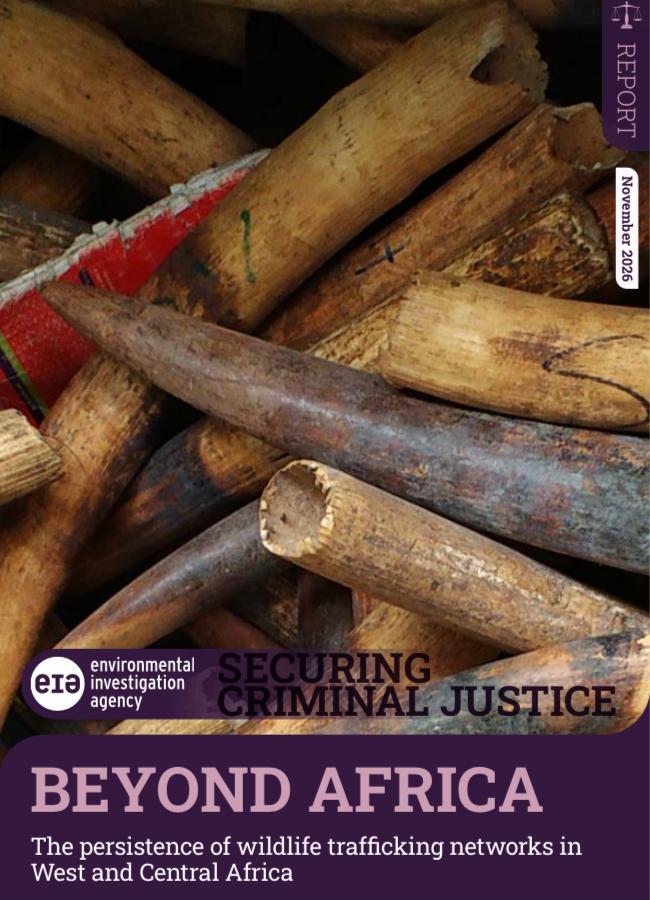
The agency identified Nigeria as a major consolidation and export hub for illegally sourced elephant ivory and pangolin scales destined largely for Asian markets, with traffickers adopting new strategies to evade law enforcement.
In its latest report, Beyond Africa: The Persistence of Wildlife Trafficking Networks in West and Central Africa, released on Thursday, EIA said six years of undercover investigations had exposed the resilience of wildlife trafficking networks sustained by corruption across the supply chain.
The findings build on the agency’s 2020 report, which identified West and Central Africa as a major centre of ivory and pangolin scale trafficking to Asia.
EIA’s Securing Criminal Justice Programme Lead, Justin Gosling, said the warnings raised in the earlier report had not been adequately addressed, allowing criminal networks to adapt rather than being dismantled.
He said the networks had consistently demonstrated their ability to circumvent enforcement pressure instead of being deterred by arrests and seizures.
The report acknowledged improvements in wildlife law enforcement in Nigeria and other countries in the region since 2020, including increased detection, arrests and prosecutions.
It also highlighted Nigeria’s Endangered Species Conservation and Protection Bill, which has passed the National Assembly and is awaiting presidential assent, describing it as the most significant overhaul of the country’s wildlife protection framework in nearly four decades.
However, Gosling said increased enforcement activities had not translated into the dismantling of major trafficking networks.
According to the report, traffickers have shifted export operations from Lagos to Port Harcourt and Enugu, where they perceive law enforcement presence to be weaker.
They have also modified concealment techniques, used legitimate products to disguise illegal wildlife consignments and increasingly relied on bank transfers and underground banking systems for financial transactions amid the depreciation of the naira.
The report identified a significant gap between arrests and successful convictions, noting that fewer than 10 convictions were recorded among 58 wildlife crime incidents documented in Nigeria between January 2021 and February 2026.
Across West and Central Africa, the arrest-to-conviction rate stood at just 16 per cent, with enforcement efforts largely targeting low-level operatives caught with illegal wildlife products.
It observed that corrupt officials, logistics coordinators and financial beneficiaries operating at higher levels of trafficking networks frequently escaped prosecution.
EIA identified corruption as a structural feature of the illegal wildlife trade, alleging that bribery occurred at various stages of the supply chain, including road checkpoints, port scanning facilities and among senior officials.
The investigation reportedly uncovered cases in which major wildlife traders maintained high-level contacts who facilitated bribes across relevant government agencies before shipments were moved.
It also alleged that container scanners introduced at Onne Port in 2021 to improve the detection of illegal consignments were being circumvented through bribery of officers operating the equipment.
Beyond wildlife trafficking, the agency warned that the criminal networks were increasingly linked to drug trafficking, money laundering and other financial crimes.
According to the report, some criminal groups were simultaneously involved in synthetic drug trafficking and illegal wildlife trade, with proceeds channelled through real estate investments and informal value transfer systems.
The organisation called for a broader, multi-agency response focused on tracing financial transactions and dismantling the criminal structures behind wildlife trafficking rather than concentrating mainly on seizures and arrests.
Gosling stressed that Nigeria could not tackle the trade in isolation, explaining that ivory and pangolin scales were sourced from several countries, including Cameroon, the Central African Republic, Chad, the Republic of the Congo, the Democratic Republic of the Congo and Gabon, before being consolidated in Nigeria for export.
He called for stronger regional cooperation through joint investigations, intelligence sharing and reciprocal enforcement measures.
Despite the challenges, Gosling expressed cautious optimism over the proposed wildlife protection legislation, changing financial practices that could provide new intelligence opportunities and growing recognition of the links between wildlife trafficking and other organised crimes.
He, however, warned that sustained political commitment and international support were necessary to reverse the trend.
“The threatened species involved cannot wait indefinitely and determined traffickers are not standing still,” he said.
EIA said its findings highlighted the resilience of trafficking networks, inadequate follow-up investigations, weak transnational cooperation, low conviction rates, entrenched corruption and the growing convergence of wildlife crime with drug trafficking and money laundering.
The organisation investigates and campaigns against environmental crimes, including illegal wildlife trade, deforestation, illegal logging and pollution, using undercover investigations and advocacy to promote stronger legislation and enforcement.