The Movement for the Transformation of Nigeria (MOT!ON), ActionAid Nigeria and other civil society organisations have condemned the increasing attacks on opposition politicians and their supporters, warning that political intimidation threatens the credibility of the 2027 general elections.
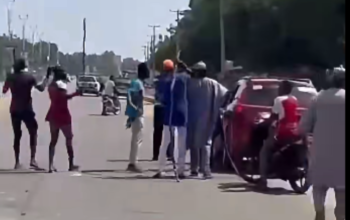
The organisations specifically cited the attacks involving the African Action Congress (AAC) presidential candidate, Omoyele Sowore, in Ado-Ekiti on October 30, and the assault on the convoy of Peter Obi of the Nigeria Democratic Congress (NDC) in Calabar on November 4.
They also expressed concern over the reported obstruction of Obi’s movement in Benue State and alleged intimidation and attacks involving members of the African Democratic Congress (ADC) in Sokoto.
In a joint statement issued in Abuja on Thursday and signed by MOT!ON, ActionAid Nigeria, CentreLSD and the Abuja School of Political and Social Thoughts, the organisations described the incidents as growing threats to political freedom and democratic participation ahead of the 2027 elections.
They warned that Nigeria could not conduct free, fair and credible elections if opposition parties and candidates were denied the freedom to organise, campaign, engage communities and mobilise supporters without fear of violence.
According to the statement, Sowore and members of his team sustained injuries and were hospitalised following the Ekiti incident, while 11 suspects were arrested.
It added that suspected attackers armed with dangerous objects damaged vehicles in Obi’s convoy in Calabar, with the police confirming an arrest.
While acknowledging the arrests as important first steps, the organisations insisted that investigations must go beyond identifying immediate perpetrators to establish whether the attacks were organised, sponsored or facilitated by political actors or public officials.
They also demanded investigations into allegations of possible involvement or complicity of security personnel.
The groups cited Sections 95 to 97 of the Electoral Act 2026, arguing that the provisions placed an obligation on the police to protect political gatherings.
They maintained that repeated attacks raised serious questions about the discharge of that responsibility.
According to them, electoral freedom goes beyond allowing candidates to appear on ballot papers, as political actors must also be able to travel, hold rallies, engage communities and mobilise supporters without intimidation.
“When a candidate cannot enter a community, when supporters are frightened away from a meeting, or when access to public facilities depends on political connections, the choices available to citizens are already being restricted,” the statement said.
The organisations described political violence as an attack not only on individual candidates but also on citizens’ constitutional right to freely choose their leaders.
They linked the growing concerns to prevailing economic hardship, insecurity and declining public trust, which they said had further weakened democratic participation.
Citing Yiaga Africa’s National Voting Intentions Survey (NVIS 3.0), the organisations said 84 per cent of Nigerians were likely or very likely to vote in the 2027 elections, while 61 per cent indicated that fear of violence could discourage them from participating.
They also referenced figures from the National Peace Committee, which reportedly documented 60 election-related incidents between August 19 and September 19, 2026, including attacks on political activities, intimidation, threats and other forms of political violence.
Describing the situation as an institutional test of Nigeria’s democracy, the groups called on trade unions, student bodies, professional associations, community groups and civil society organisations to resist the normalisation of political intimidation through peaceful and organised action.
They clarified that defending the democratic rights of opposition politicians did not amount to endorsing their political programmes or shielding them from legitimate criticism.
The organisations insisted that the same democratic protections must apply to every political candidate, party, journalist, trade unionist, activist and ordinary citizen, regardless of political affiliation.
Among their demands, they urged the Inspector-General of Police to ensure comprehensive investigations into the Ekiti and Calabar incidents, including possible sponsors, financiers, organisers and official complicity.
They called for the preservation of relevant CCTV footage, communications, medical reports and eyewitness accounts, alongside regular public updates on the investigations, subject to due process and witness protection.
The groups also urged President Bola Tinubu, state governors, the police leadership and the Department of State Services (DSS) to publicly reaffirm the political neutrality of security institutions and ensure that protection was not determined by allegiance to the ruling party.
They further called on the Independent National Electoral Commission (INEC), working through the Inter-Agency Consultative Committee on Election Security (ICCES), to establish transparent and non-discriminatory procedures for protecting political meetings, campaign movements and access to lawful venues.
The organisations proposed the establishment of a regularly updated public record of reported incidents, investigations, arrests and prosecutions.
They also urged the National Human Rights Commission and civil society organisations to monitor alleged abuses involving opposition candidates, political organisers, protesters and affected communities, while providing accessible reporting channels for victims and witnesses.
The groups called on all political parties, including the ruling All Progressives Congress (APC) and opposition parties, to reject the mobilisation, financing or protection of violent groups and ensure that anyone implicated was investigated regardless of political influence or status.
They urged Nigerians to document credible incidents, preserve evidence, support victims and defend the right of citizens with opposing political views to participate freely in the democratic process.