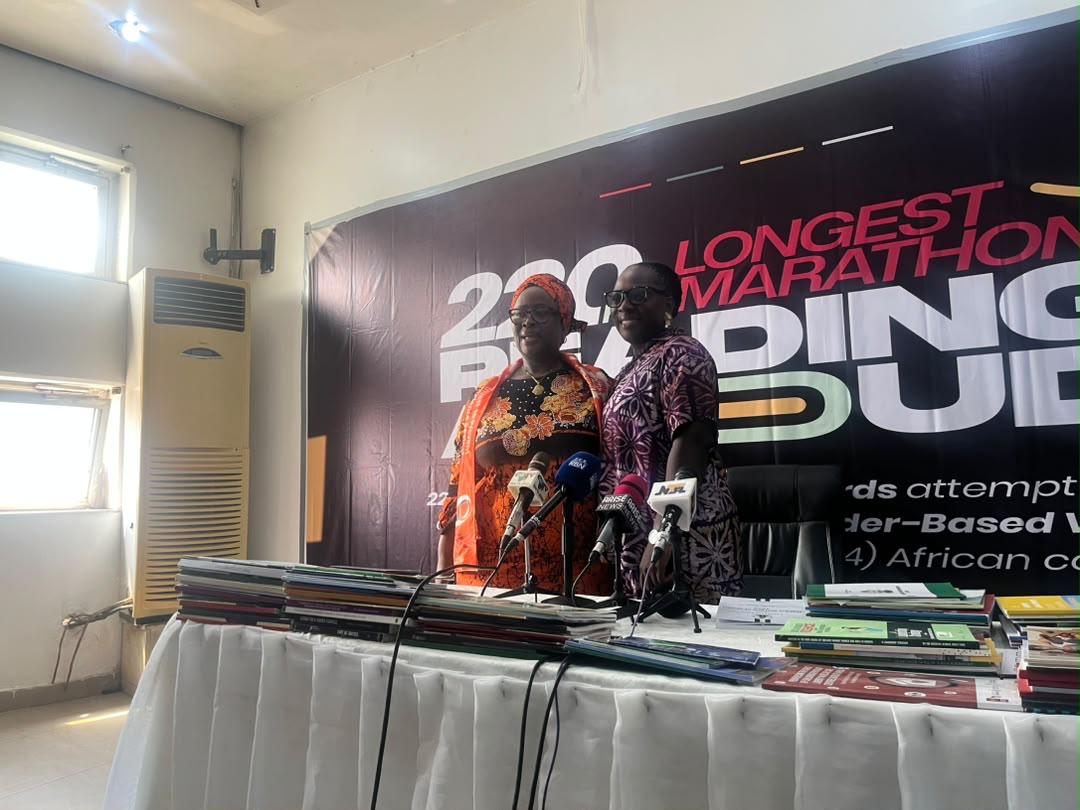
The United Nations Entity for Gender Equality and the Empowerment of Women (UN Women) and disability rights advocates have endorsed a 220-hour reading marathon aimed at raising awareness of sexual and gender-based violence (SGBV) and strengthening access to justice for women and girls across Nigeria and 14 other African countries.
The initiative, organised by Olubunmi Uluba, seeks to raise public awareness of existing laws, human rights instruments and survivor protection frameworks through a nine-day, four-hour marathon reading aloud. It also aims to set a Guinness World Record for the longest marathon reading aloud.
Speaking at a press conference, UN Women Country Representative to Nigeria and the Economic Community of West African States (ECOWAS), Beatrice Eyong, described the initiative as an important platform for transforming legal knowledge into public education, human rights advocacy and social change.
Eyong said the campaign against gender-based violence must go beyond statistics, policies and legislative reforms to address the experiences of survivors and the challenges they encounter in seeking justice.
She identified the disconnect between existing legal protections and public awareness as a major obstacle to tackling SGBV, noting that many women and girls remain unaware of their rights, available safeguards and where to seek assistance when their rights are violated.
According to her, the marathon will bring relevant legal provisions and human rights instruments from 15 African countries closer to the people they are designed to protect.
She explained that every hour devoted to reading could help someone understand their rights, recognise different forms of violence, appreciate the importance of consent and identify available support services.
Eyong emphasised that knowledge was critical to preventing violence, protecting vulnerable populations and improving access to justice.
She also linked the initiative to the United Nations Sustainable Development Goals, particularly Goal 5 on gender equality, Goal 4 on quality education and Goal 16 on peace, justice and strong institutions.
The UN Women representative called for collective action involving governments, traditional and religious institutions, civil society organisations, the media, families, men and boys to challenge harmful social norms and promote accountability.
She commended Uluba for her determination, describing the marathon as an example of how individual commitment and public advocacy could inspire broader movements for social transformation.
Also speaking, Founder and President of the Network of Women with Disabilities, Hon. Lois Auta, highlighted the additional challenges confronting women and girls with disabilities who experience sexual and gender-based violence.
Auta said survivors with disabilities frequently encounter inaccessible police stations, a shortage of sign language interpreters, inadequate medical facilities and discriminatory practices within the justice system.
She warned that these barriers often discourage survivors from reporting abuse, accessing medical attention and pursuing justice, thereby allowing perpetrators to escape accountability.
The disability rights advocate stressed that the existence of laws protecting women and persons with disabilities would have little impact if survivors could not access the institutions responsible for enforcing them.
She called for legal information to be made available in Braille for visually impaired persons, simplified formats for individuals with intellectual and learning disabilities, and sign language interpretation for people with hearing impairments.
Auta also urged governments to domesticate, adequately fund and enforce disability rights legislation, while strengthening the capacity of police officers, healthcare workers and judicial personnel to handle cases involving survivors with disabilities.
She specifically called for police stations, hospitals and courts to be made physically and institutionally accessible to persons with disabilities.
Invoking the disability rights principle, “Nothing about us without us”, she insisted that women with disabilities must be actively involved in designing, implementing and evaluating programmes affecting their safety, rights and welfare.
She further appealed to the media to sustain coverage throughout the nine-day exercise rather than concentrating attention on its opening ceremony.
Both Eyong and Auta emphasised that legislation alone could not eliminate gender-based violence without sustained public education, effective enforcement, accessible support services and changes in societal attitudes.
While Eyong stressed the importance of equipping women and girls with knowledge of their legal rights, Auta drew attention to the institutional and physical barriers that prevent persons with disabilities from benefiting from existing protections.
The organisers said the broader objective of the 220-hour marathon extends beyond securing a Guinness World Record to breaking the silence surrounding gender-based violence and promoting a society where every woman and girl can live with dignity, safety and freedom from abuse.