The Economic Community of West African States (ECOWAS) has intensified efforts to tackle electoral disinformation and strengthen information integrity across West Africa, training more than 500 journalists in 12 member states over the past year.
The Commission disclosed this at a two-day capacity-building workshop for journalists and Wikipedia editors themed, “Strengthening Electoral Information Integrity through Responsible Journalism, Fact-Checking and Open Knowledge.”
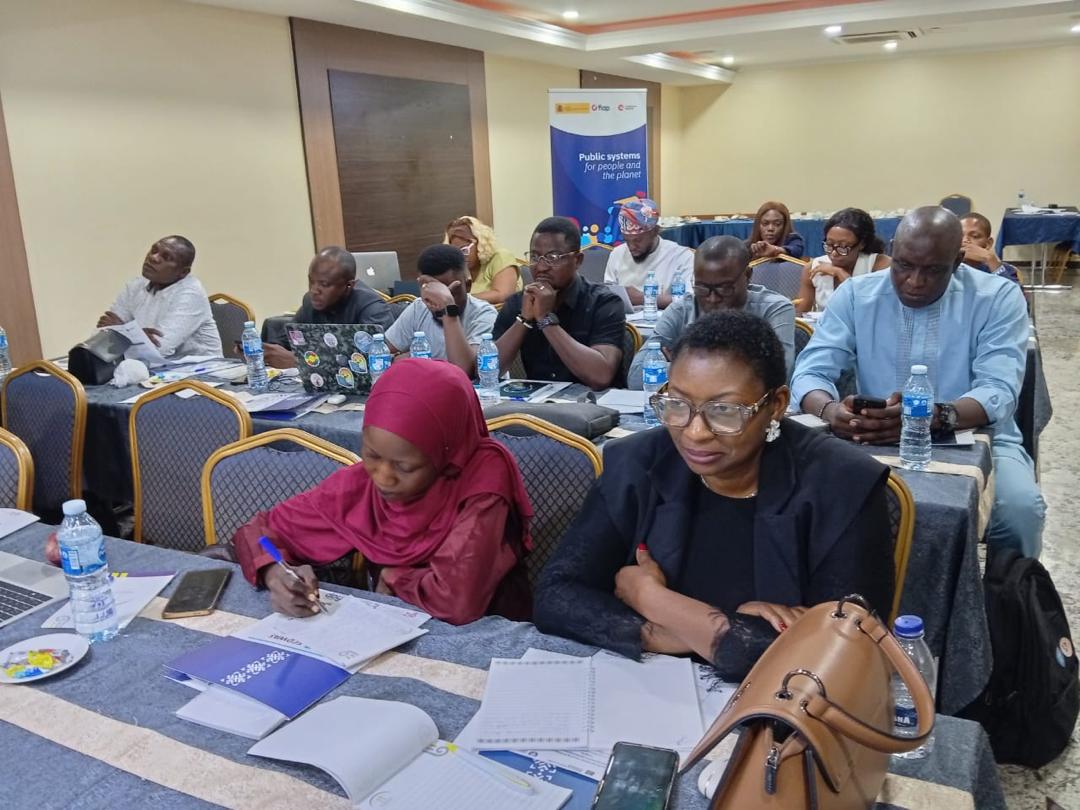
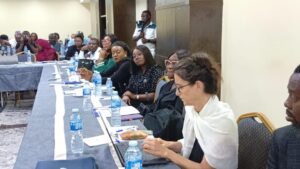
The workshop brought together media practitioners, members of the Wikipedia and Wikimedia communities, and stakeholders in the information integrity sector to strengthen professional capacity in fact-checking, digital verification and responsible information dissemination.
Speaking on behalf of the Director of Communication of the ECOWAS Commission, Mr Joel Ahofodji, Chukuemeka Ezekiel said information integrity had become a strategic necessity for democracy, public trust, peace and security in the region.
He expressed ECOWAS’s appreciation to the European Union for its continued support through the EU Support to ECOWAS in Peace, Security and Governance (EPSG) Project, while commending FIAP for its collaboration in advancing the initiative.
Ahofodji noted that although digital technologies had expanded access to information and public participation, they had also created new vulnerabilities through misinformation, deliberate disinformation, hate speech and manipulated digital content.
He warned that the emergence of generative artificial intelligence (AI) had further complicated the situation by making it easier to produce convincing but fabricated images, videos, audio recordings and narratives capable of misleading the public.
According to him, electoral periods are particularly vulnerable to such threats, as false information can distort public perceptions, undermine confidence in electoral institutions, deepen political divisions and potentially trigger violence.
He said protecting information integrity was therefore inseparable from ECOWAS’s mandate to promote democracy, good governance, peace and security across West Africa.
Highlighting the Commission’s interventions, Ahofodji identified the ECOWAS Disinformation Working Group as a major mechanism for strengthening regional coordination and developing a unified response to information disorder.
He disclosed that the group’s second meeting, held in Accra, Ghana, from October 15 to 16, 2026, focused on institutional coordination, capacity development, partnership alignment and the ECOWAS Information Integrity Roadmap 2026–2030.
The Commission, he added, had also expanded capacity-building programmes for journalists and media practitioners across member states, covering fact-checking, open-source intelligence, digital verification, digital safety, conflict-sensitive reporting, peace journalism and media literacy.
He said ECOWAS had trained more than 500 journalists across 12 member states in the past year to improve their ability to counter misinformation and disinformation and address their implications for regional peace and stability.
Ahofodji further identified support for the establishment of national response mechanisms as a key component of the regional strategy, citing the National Misinformation and Disinformation Response Centre in The Gambia, which received ECOWAS’s strategic support and was inaugurated in April 2026.
The centre provides a platform for real-time fact-checking, early warning and media and information literacy.
He also highlighted the ECOWAS Inter-Institutional Communication Strategy 2026–2030 and the Information and Communication Policy, finalised in February 2026, as frameworks designed to improve institutional coordination, promote coherent communication and strengthen public engagement and trust.
The Commission, he said, was equally deepening partnerships with the European Union, the German Government, GIZ, FIAP and regional media organisations to promote fact-checking, information sharing and collaborative initiatives.
However, he cautioned that efforts to combat disinformation must respect fundamental human rights, freedom of expression, media independence and access to information.
He stressed that countering false information should not become an excuse for censorship or the suppression of legitimate public debate, noting that the ultimate objective was to empower citizens with credible information to make informed decisions.
Addressing participating journalists, the ECOWAS representative described the media as strategic partners in communicating the activities of the regional organisation and helping citizens understand developments in democracy, peace, security and regional integration.
He urged journalists to go beyond reporting official activities by providing accurate context, challenging false narratives and strengthening public understanding of critical regional issues.
He identified credibility as journalism’s greatest asset, warning that reporting without verification and sensationalism without context could erode public confidence and have serious consequences, particularly during elections and political transitions.
He therefore called on media practitioners to make verification an uncompromising professional standard by scrutinising sources, examining digital content and exercising caution when reporting electoral and security developments.
On the participation of Wikipedia and Wikimedia editors, Ahofodji said collaboration between professional journalists and the open-knowledge community would improve access to reliable, properly sourced information about ECOWAS and democratic developments in West Africa.
He explained that while journalism provides credible and timely reporting, responsible Wikipedia editing helps preserve and disseminate verified knowledge to wider audiences.
He urged participants to use the two-day workshop to exchange experiences, strengthen professional networks and develop practical action plans that would translate the knowledge acquired into improved newsroom practices, stronger fact-checking initiatives and responsible public information activities.
Ahofodji maintained that the fight against information disorder required collective action involving governments, electoral institutions, journalists, civil society organisations, technology platforms, researchers, fact-checkers and citizens.
He reaffirmed ECOWAS’s commitment to working with regional and international partners to build a resilient information environment that promotes democratic governance, strengthens public trust and advances the aspirations of the Community under ECOWAS Vision 2050.
He urged participants to regard themselves not merely as beneficiaries of the training but as indispensable partners in advancing the regional information integrity agenda.
He emphasised that truth, verification, professional ethics and public interest must remain central to their work, describing information integrity as fundamental to democratic stability, the preservation of peace and the future of West Africa.