The Attorney-General of the Federation and Minister of Justice, Prince Lateef Fagbemi, SAN, has urged state governments to commit more financial and operational resources to combating human trafficking, warning that the responsibility cannot be left to the Federal Government alone.
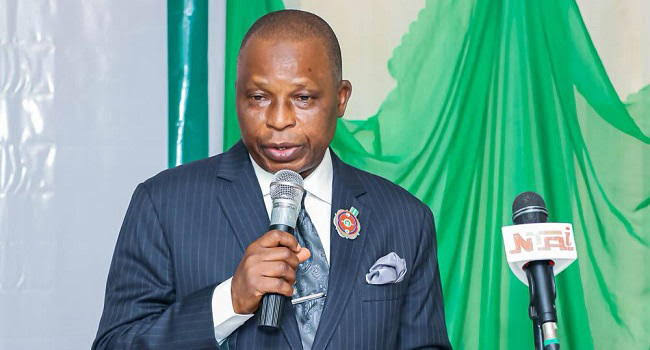
Fagbemi spoke through the Acting Director, Citizens Rights Department, Mr Haliru Kabiru, at the opening of the 29th National Stakeholders’ Consultative Forum (NSCF) on Human Trafficking in Nigeria, held in Abuja on Tuesday.
The call came as the Director-General of the National Agency for the Prohibition of Trafficking in Persons (NAPTIP), Binta Lami Adamu Bello, disclosed that the agency had rescued and supported 28,762 victims since its establishment and secured 857 convictions against human traffickers.
Fagbemi said available data from NAPTIP and development partners showed that no state was immune to human trafficking, stressing that young people and other vulnerable citizens continued to fall victim to organised trafficking networks.
He challenged state governments to strengthen their anti-trafficking task forces, improve coordination among relevant institutions and incorporate targeted interventions into their annual budgets.
According to him, every victim and perpetrator has a connection to a state, making it imperative for state governments to take ownership of efforts to prevent trafficking and protect their populations.
The minister said the Federal Government’s commitment to addressing the menace was reflected in reforms under President Bola Tinubu’s Renewed Hope Agenda, particularly initiatives targeting poverty reduction, economic empowerment, digital literacy, social protection and access to justice.
He explained that trafficking thrived on socio-economic vulnerabilities, making youth empowerment, skills acquisition, entrepreneurship development, financial inclusion and social investment critical to prevention efforts.
Fagbemi also called for stronger prosecutorial capacity, intelligence sharing, mutual legal assistance and extradition arrangements to dismantle transnational trafficking networks and ensure that perpetrators were brought to justice.
He commended NAPTIP and its development partners for strengthening intelligence-led investigations, expanding victim protection and rehabilitation services, improving cross-border cooperation and deploying technology-driven interventions, including the National Human Trafficking Dashboard.
The Attorney-General noted that the National Action Plan on Human Trafficking in Nigeria (2022–2026), scheduled to expire in December, required a comprehensive and evidence-based review to assess its achievements, implementation gaps and lessons for the next five-year framework covering 2027–2031.
He urged ministries, departments and agencies, state task forces and development partners to provide accurate reports, performance data and candid feedback to guide the review.
According to him, the successor framework must have clearly defined objectives, measurable indicators, realistic targets, designated institutional responsibilities and effective monitoring and evaluation mechanisms, backed by adequate funding and resource mobilisation strategies.
Fagbemi further raised concerns over the increasing use of digital platforms for deceptive recruitment, fraudulent employment offers and online exploitation, calling for stronger collaboration among law enforcement agencies, technology companies, telecommunications operators, financial institutions and digital service providers.
He emphasised the importance of public enlightenment and community engagement, urging parents, teachers, traditional and religious institutions, youth groups and community leaders to play active roles in identifying and preventing trafficking schemes.
The minister acknowledged the financial and technical contributions of development partners, including the United Nations Office on Drugs and Crime (UNODC), International Organization for Migration (IOM), International Centre for Migration Policy Development (ICMPD), Expertise France, FIAP, the governments of Switzerland and the Netherlands, and the European Union.
He said the forum was expected to deliver four major outcomes: an evidence-based assessment of the outgoing National Action Plan, identification of achievements and implementation gaps, practical recommendations for improving coordination and accountability, and agreed priorities for developing the 2027–2031 framework.
Speaking at the event, NAPTIP Director-General, Binta Bello, disclosed that the agency recorded 1,508 cases of human trafficking and related offences between August 2025 and November 2026, resulting in 1,434 arrests.
She said the arrested suspects comprised 52 per cent males and 48 per cent females.
Bello added that the agency received and rehabilitated 2,700 victims during the period, with females accounting for 72 per cent and males 28 per cent. Children represented 48 per cent of the victims, while adults accounted for 52 per cent.
She further disclosed that NAPTIP initiated 65 cases involving 85 accused persons in court and secured 74 convictions involving 97 offenders.
She clarified that the convictions included some cases instituted before the 2025 stakeholders’ forum but concluded after the meeting.
The NAPTIP boss described the agency’s cumulative record of rescuing and supporting 28,762 victims and securing 857 convictions as a significant achievement, considering the clandestine nature of human trafficking and the difficulties associated with investigating and prosecuting the crime.
She said the agency had intensified intelligence gathering and surveillance to identify and dismantle trafficking networks operating both physically and online, particularly those involved in cyber-enabled trafficking, deceptive online recruitment and digital exploitation.
Bello explained that NAPTIP’s victim-centred interventions included rescue, rehabilitation, reintegration and protection services, alongside psychosocial counselling, vocational training, family tracing and reunification, legal assistance and economic empowerment.
On its nationwide operational coverage, she announced that NAPTIP had established a new state command in Kogi State, leaving Delta as the only state without a dedicated command.
She appealed to the Delta State Government to facilitate the establishment of a command in Asaba within the next few months, explaining that the absence of a state office had increased operational costs for the Benin Zonal Command, which currently oversees the state, and delayed emergency responses.
Bello also announced the establishment of a State Task Force on Human Trafficking in Abia State, bringing the number of states with such structures to 25.
She described the National Human Trafficking Dashboard as an important tool for monitoring the implementation of the outgoing National Action Plan, improving reporting and coordination, and strengthening accountability among implementing institutions.
The NAPTIP director-general further disclosed that Nigeria’s TIPVAP Strategy document, developed under the ECOWAS TIP+ framework, had recently been validated in Lagos by stakeholders, including representatives of state governments.
While commending the European Union, UNODC and IOM for their financial and technical support, Bello urged state governments to demonstrate stronger commitment by adequately supporting NAPTIP commands and state task forces and implementing measures to reduce citizens’ vulnerability to trafficking.
She stressed that the fight against human trafficking remained far from over, noting that every victim rescued, trafficking network dismantled and offender prosecuted represented significant progress towards building a Nigeria free from human trafficking.