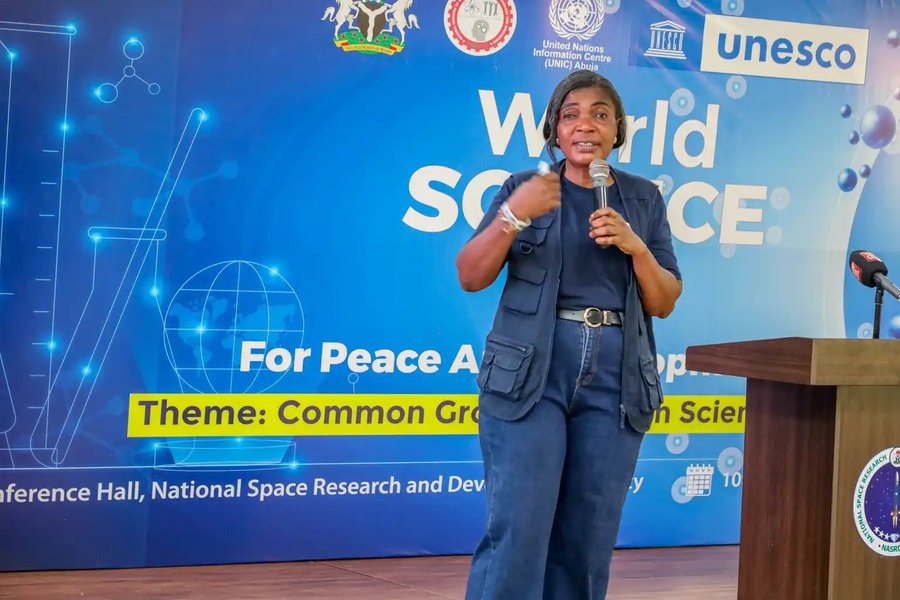
The United Nations Educational, Scientific and Cultural Organization (UNESCO) has called for stronger scientific collaboration and science diplomacy among nations to address global challenges, promote peaceful relations and advance sustainable development.
The call was made during the 2026 World Science Day for Peace and Development celebration organised by the UNESCO Abuja Office, the United Nations Information Centre (UNIC), Abuja, and the Federal Ministry of Innovation, Science and Technology.
The event was held under the theme, “Common Ground Through Science Diplomacy.”
Speaking on behalf of the UNESCO Country Representative to Nigeria, Dr. Isaías Barreto da Rosa, the Head of UNESCO’s Science Sector in Nigeria, Ms Moma Enang, said science had the potential to connect nations, inspire innovation, drive development and provide solutions to shared global challenges.
She described science diplomacy as the application of scientific knowledge and international cooperation to strengthen relationships among countries and promote collective responses to common concerns.
Enang emphasised that science diplomacy was anchored on human rights, equity, inclusion, transparency and open science, noting that these principles were essential for building trust and advancing the global common good.
She identified climate change, flooding, biodiversity loss and food insecurity among the pressing challenges requiring stronger scientific cooperation and coordinated international responses.
UNESCO, she said, remained committed to supporting Nigeria in developing science diplomacy strategies, promoting evidence-based policymaking, strengthening research partnerships and advancing open science initiatives.
In his remarks, the Permanent Secretary of the Federal Ministry of Innovation, Science and Technology, Mr Mukhtar Muhammad, highlighted the importance of science, technology and innovation in national development, economic diversification and job creation.
He reaffirmed the ministry’s commitment to strengthening innovation, skills development, research commercialisation and partnerships across the country.
Muhammad noted that science diplomacy could facilitate the exchange of knowledge and ideas, deepen mutual understanding and promote peaceful relations among nations.
The celebration also featured an exhibition of technological innovations and inventions by students from schools across the Federal Capital Territory, providing an opportunity to showcase young people’s creativity and interest in scientific advancement.
World Science Day for Peace and Development is observed annually to highlight the importance of science in society and encourage the application of scientific knowledge and innovation to address contemporary challenges and achieve sustainable development.