West Africa is currently grappling with formidable challenges as it contends with the ramifications of population growth, as highlighted by the Economic Community of West African States (ECOWAS).
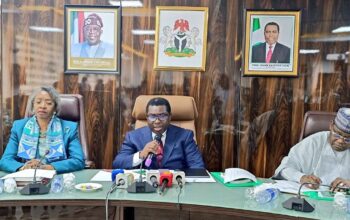
Expressing concern during the Stakeholders’ Consultation Workshop on ECOWAS Regional Resilience Strategy for West Africa in Abuja, Professor Fatou Sow Sarr, ECOWAS Commissioner on Human Rights and Social Affairs, underscored the strain placed on member states by the exponential increase in population. This surge exacerbates demands for essential resources such as housing, transportation, basic services, food, employment, and urban infrastructure. Such pressing issues further compound the region’s ability to recover, as member states grapple with the multifaceted challenges emanating from population growth.
This pivotal workshop, spanning three days in Abuja, signifies a significant milestone in the collective endeavor to fortify regional stability, peace, and development in West Africa. The overarching objective is to convene key technical stakeholders to deliberate on the formulation of a comprehensive Regional Resilience Strategy. This strategy aims to bolster the collective capacity to confront the intricate challenges confronting the region.
Highlighting the gravity of the situation, it was lamented that West Africa’s population, estimated at 446,452,019, equivalent to 5.47% of the global populace, faces a plethora of vulnerabilities and exposures to hazards, with anticipated escalations over the ensuing decade. Climate change exacerbates these vulnerabilities, manifesting in extreme weather events such as devastating floods and droughts. Moreover, the region contends with a spectrum of complex challenges, including conflicts, terrorism, extreme poverty, governance deficits, and high levels of food insecurity, leading to malnutrition.
Furthermore, the region grapples with forced displacement, outbreaks of epidemics such as cholera, Ebola, and COVID-19, alongside economic losses and infrastructural damage. Despite the formulation of policies and strategies, the region continues to witness a surge in disasters, profoundly impacting key sectors and livelihoods.
Strategies have been implemented to bolster good governance, peace, and security, enhance macroeconomic resilience, ensure equitable access to basic services, promote sustainable livelihoods, gender sensitivity, social inclusion, and address climate change and disaster risk reduction.

Addressing the gathering, Ms. Elsie Attafuah, Resident Representative of the United Nations Development Programme (UNDP) Nigeria, emphasized the profound demographic, social, economic, environmental, and political transformations unfolding in the West African region. With the population projected to surpass 900 million by 2050, and over 64% below the age of 25, innovative approaches are imperative to cater to the needs of the youthful demographic. Despite the region’s abundant natural resources, equitable distribution remains a challenge, compounded by environmental degradation and governance deficits.
The workshop, lauded by Mustapha Ahmed, Director General of the National Emergency Management Agency (NEMA), is deemed timely amid prevailing regional and global crises, providing a platform to develop resilience strategies crucial for sustainable development.
In conclusion, the intricate dynamics of West Africa necessitate concerted efforts to mitigate disaster risks and build resilience, aligning with global and continental initiatives such as the Sustainable Development Goals (SDGs) 2030, the Sendai Framework for Disaster Risk Reduction (SFDRR) 2015-2030, the African Agenda 2060, the African Union Program of Action (AUC-PoA), and the African Continental Free Trade Agreement (AfCFTA) treaty.