The Federal Government has renewed efforts to strengthen disability inclusion and enforce the rights of persons with disabilities through the implementation of regional human rights instruments and existing disability-related laws.
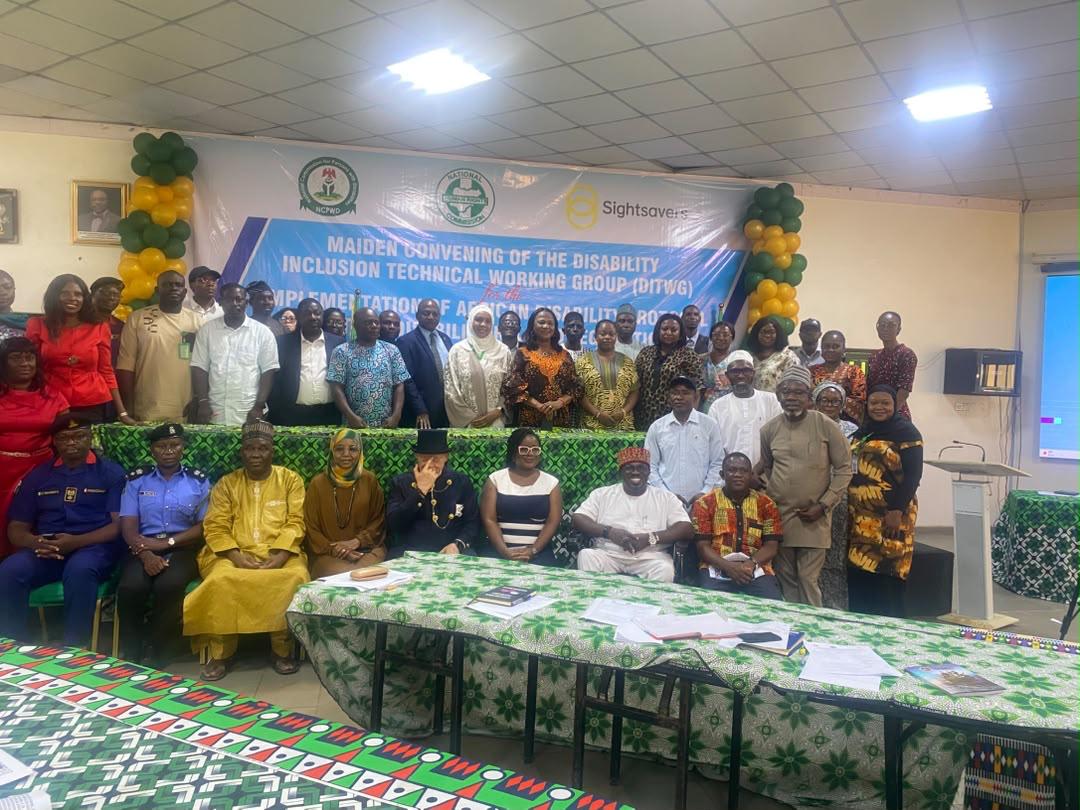
The commitment was reaffirmed on Wednesday at the maiden convening of the Disability Inclusion Technical Working Group (DITWG), held at the headquarters of the National Human Rights Commission (NHRC) in Abuja.
The meeting brought together stakeholders to advance the implementation of the Protocol to the African Charter on Human and Peoples’ Rights on the Rights of Persons with Disabilities in Africa, popularly known as the African Disability Protocol (ADP), alongside other relevant disability-related laws and policies.
Lanre Oloyede, representing the Senior Special Assistant to the President on Special Needs and Equal Opportunities, Hon. Mohammed Abba Isa, and Rabi Anwar, representing the Executive Secretary of the NHRC, Dr. Tony Ojukwu, addressed participants at the gathering.
In his address, Ojukwu recalled that the DITWG was inaugurated on September 10, 2026, to strengthen coordination among government institutions and other stakeholders and accelerate the implementation of disability rights commitments.

Nigeria signed the African Disability Protocol in February 2023 and ratified it in October of the same year, signalling its commitment to promoting and protecting the rights of persons with disabilities.
The working group is expected to establish functional subcommittees and develop a comprehensive work plan for 2027, outlining clear priorities, measurable indicators, achievable activities and realistic implementation timelines.
The proposed subcommittees will identify gaps in the implementation of disability-related laws and policies, recommend targeted interventions and provide technical expertise in their respective areas of responsibility.
Priority areas include non-discrimination, accessibility, inclusive education, employment opportunities, access to justice, social protection and the protection of children with disabilities.
The initiative is also designed to improve access to essential services, eliminate barriers to participation and ensure that persons with disabilities can contribute fully to Nigeria’s social, economic and political development.
Ojukwu reaffirmed the NHRC’s commitment to coordinating stakeholder engagement and monitoring the activities and recommendations of the subcommittees to ensure that agreed measures translate into tangible improvements in the lives of persons with disabilities.

He added that the working group would contribute, where appropriate, to the preparation of periodic reports for submission to the African Commission on Human and Peoples’ Rights, thereby supporting accountability for Nigeria’s regional human rights obligations.
The NHRC urged members of the working group to participate actively in its deliberations and develop practical, coordinated strategies for strengthening accountability and ensuring effective enforcement of disability-related legislation.
The initiative comes amid continued efforts to translate legal commitments on disability rights into concrete action, particularly in addressing discrimination, improving access to public services and expanding equal opportunities.
With the establishment of the DITWG and the proposed 2027 work plan, stakeholders are expected to deepen institutional collaboration and promote a more coordinated approach to disability inclusion, equal opportunities and the protection of human dignity across Nigeria.