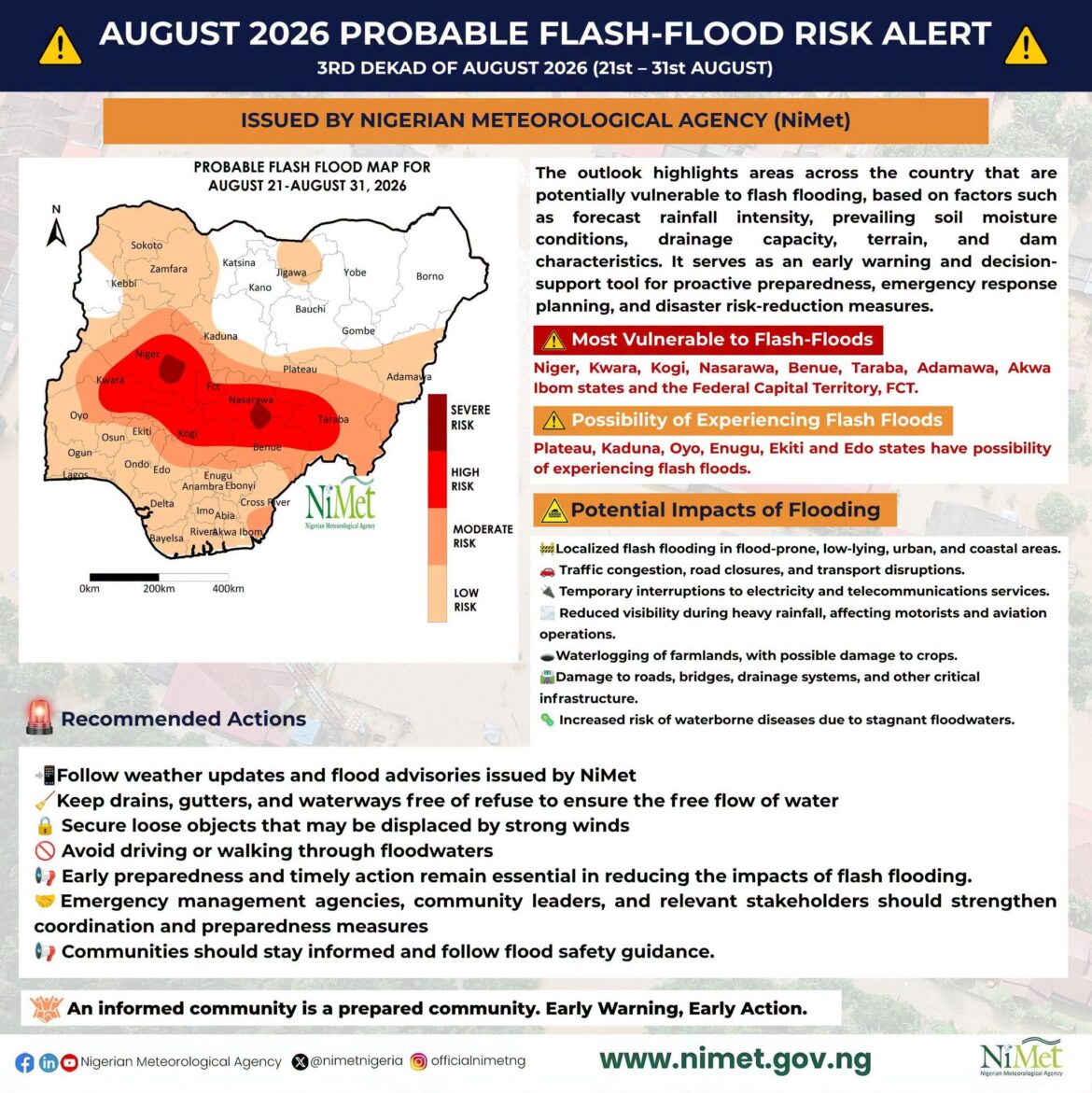
The Nigerian Meteorological Agency (NiMet) has warned residents and authorities in several parts of the country to prepare for possible flash flooding between August 21 and 31, 2026.
The agency, in its third-decade August flash flood risk alert, identified Niger, Kwara, Kogi, Nasarawa, Benue, Taraba, Adamawa, Akwa Ibom and the Federal Capital Territory (FCT) as areas most vulnerable to flash flooding during the period.
Plateau, Kaduna, Oyo, Enugu, Ekiti and Edo states were also identified as areas with a possibility of flash flooding.
NiMet said the outlook was developed based on factors including forecast rainfall intensity, prevailing soil moisture conditions, drainage capacity, terrain and dam characteristics.
It described the advisory as an early-warning and decision-support tool designed to support proactive preparedness, emergency response planning and disaster risk reduction.
According to the agency, possible impacts include localised flash flooding in flood-prone, low-lying, urban and riverside communities, as well as traffic congestion, road closures and transport disruptions.
Heavy rainfall could also cause temporary interruptions to electricity and telecommunications services, while reduced visibility during intense rainfall may affect motorists and aviation operations.
NiMet warned that farmlands could experience waterlogging, potentially damaging crops and livestock, while roads, bridges, drainage systems and other critical infrastructure could also be affected.
The agency further cautioned that stagnant floodwaters could increase the risk of waterborne diseases in affected communities.
NiMet urged residents to monitor weather forecasts and flood advisories issued by the agency and relevant emergency management authorities.
It advised motorists and pedestrians to avoid flooded roads, bridges and fast-flowing water, while residents were encouraged to keep drains, culverts and waterways clear to facilitate the free movement of stormwater.
People living in floodplains, riverbanks, low-lying and poorly drained areas were advised to remain vigilant and relocate to safer locations when necessary.
The agency also called on emergency management authorities to heighten surveillance, pre-position response teams and strengthen emergency preparedness in identified risk areas.
Farmers were advised to improve drainage on their farms and move livestock, machinery and harvested produce away from flood-prone locations.
NiMet urged authorities to prioritise the identified risk zones for impact-based monitoring, public sensitisation and rapid dissemination of warnings.
The agency stressed that preparedness should be maintained even in areas with relatively lower flood probability, noting that flash floods can develop rapidly during periods of intense rainfall.