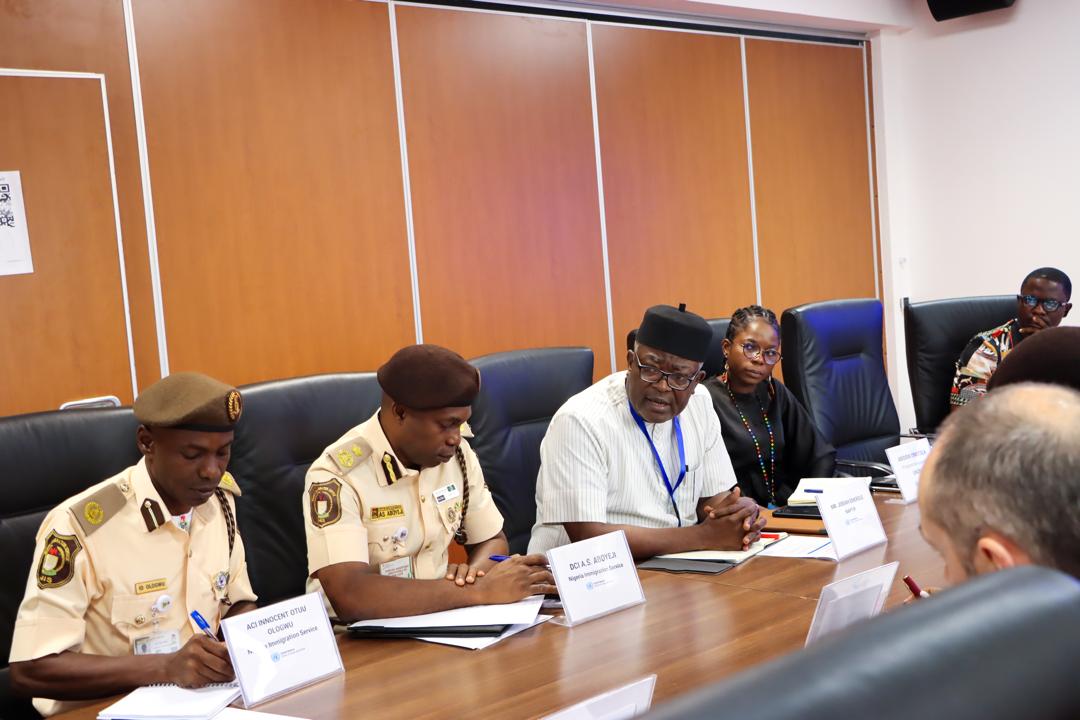
The Nigeria Immigration Service (NIS), the United Nations Office on Drugs and Crime (UNODC) and the Italian Government have launched an 18-month intervention aimed at strengthening Nigeria’s border surveillance and control amid growing threats from irregular migration, human trafficking, migrant smuggling and transnational organised crime.
The initiative, unveiled in Abuja, includes the deployment of 30 operational vehicles and 60 computers to immigration personnel across the country, particularly in remote and high-risk border locations.
The project is being implemented by UNODC with funding from the Italian Government through the Ministry of the Interior’s Department of Public Security – Central Directorate for Immigration and Border Police.
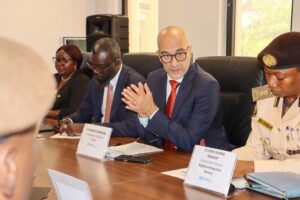
Speaking at the flag-off ceremony at the United Nations House, Abuja, Comptroller-General of Immigration, Kemi Nandap, said the intervention would address critical mobility and technological gaps affecting immigration operations.
Nandap said the equipment would enhance the Service’s mobility, surveillance capabilities, digital infrastructure and overall operational effectiveness.
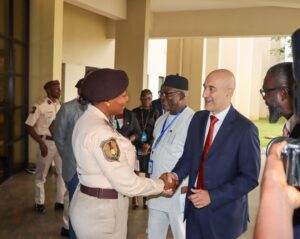
She expressed appreciation to the Italian Government and UNODC for their continued support towards strengthening the operational capacity of the NIS.
The Italian Ambassador to Nigeria, Roberto Mengoni, reaffirmed Italy’s commitment to supporting Nigeria’s efforts to improve border management and institutional capacity.
UNODC Country Representative, Cheikh Toure, said the high-level participation at the ceremony underscored the importance attached to strengthening Nigeria’s border-management architecture.
He said the intervention was designed to help close existing mobility and technology gaps within the system.
The NIS pledged to ensure the judicious deployment of the equipment to strengthen border management, national security and safe, orderly and regular migration.
The intervention comes against the backdrop of the operational challenges posed by Nigeria’s extensive land, air and maritime borders.
The NIS Border Management Directorate oversees land control posts and patrols, airport control and aerial patrols, seaport control and marine patrols, while other directorates are responsible for migration, investigation and compliance, intelligence and surveillance, and ICT and cybersecurity.
The latest initiative builds on other international partnerships aimed at strengthening Nigeria’s border-management capacity.
Earlier in 2026, the NIS, in partnership with the International Centre for Migration Policy Development and with support from the Netherlands Government, launched a Mobile Teams project to improve rapid-response capabilities in high-risk and hard-to-reach border areas.
That initiative focused on strengthening responses to irregular migration, migrant smuggling, trafficking in persons and emerging security threats.
The Italy-UNODC project adds another layer to these efforts, combining enhanced physical mobility with improved digital capacity.
The 60 computers are expected to strengthen the ability of immigration personnel to collect, process and share information, complementing physical patrols and surveillance.
Effective border management increasingly depends on electronic identity processing, biometric data, searchable databases and information-sharing systems to identify suspicious movements and strengthen coordination among security agencies.
The deployment of vehicles and computers is therefore expected to improve access to difficult border corridors while enhancing the capacity of officers to process information and respond more rapidly to potential threats.

The initiative also has wider implications for Nigeria’s efforts to combat cross-border criminal networks, trafficking and other forms of organised crime while facilitating lawful movement of people.
The success of the 18-month intervention, however, will depend on effective deployment, maintenance and utilisation of the equipment, particularly in locations where operational gaps are most acute.
For the NIS, the ultimate measure of the intervention will be whether the additional resources translate into stronger surveillance, faster response, improved information-sharing and more effective management of Nigeria’s borders.