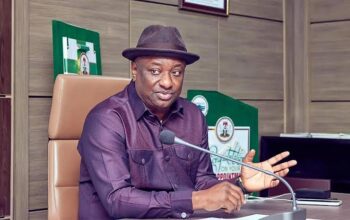
The reported attack on the campaign team of former Deputy Senate President, Senator Ovie Omo-Agege, in Uduere, Ughelli North Local Government Area of Delta State, has renewed concerns over political violence, the safety of opposition candidates and the credibility of Nigeria’s electoral process ahead of the 2027 general elections.
According to a statement issued by Sunny Areh, Media Adviser to Omo-Agege, armed men allegedly opened fire on the senator and members of his entourage during a campaign tour of the community. The statement described the incident as a targeted assassination attempt, claiming that the attackers specifically identified Omo-Agege as their target.
The campaign organisation reported that four people were killed, including two of the senator’s aides, identified as Moses Anaughe and Akima Efemena Umukoro. Four other persons, namely Chief Evance Ivwurie, Chuks Erhire, Tobore Agba and Ayodo Wanogho, were reportedly wounded and taken for medical treatment.
Although Omo-Agege reportedly escaped unharmed, the alleged loss of lives and injuries sustained by members of his campaign team raise serious questions about the security arrangements surrounding political activities in the state.
Beyond the immediate tragedy, the incident exposes the dangers of allowing political competition to degenerate into armed confrontation. Elections are fundamentally about competing ideas, policies, leadership records and the consent of voters. When political campaigns become scenes of gunfire and bloodshed, the democratic space is threatened, and ordinary citizens become unwilling victims of struggles for political power.
The development is particularly troubling because Nigeria is approaching another general election cycle. The 2027 elections should provide an opportunity for political parties and candidates to engage voters through peaceful campaigns, issue-based debates and transparent electoral processes. Instead, the reported attack in Uduere has brought the question of political security back into national discourse.
Political violence has consequences beyond the immediate casualties. It creates fear among opposition candidates, discourages grassroots participation, weakens public confidence in democratic institutions and can turn political disagreements into cycles of retaliation. It also raises concerns about whether citizens can freely support candidates of their choice without risking their lives.
The allegations made by the Omo-Agege Campaign Organisation against Ughelli North Local Government Chairman, Barrister Jaro Egbo, and Governor Sheriff Oborevwori are particularly serious. The organisation alleged that the council chairman led the attackers on the governor’s instructions. However, these accusations remain allegations and must not be treated as established facts without credible evidence.
Egbo has reportedly denied involvement, while calling for a thorough investigation. The Delta State Government has also condemned the violence and ordered a curfew across Ughelli North Local Government Area from 6 p.m. to 6 a.m. daily until further notice.
The Delta State Police Command has announced a full-scale investigation and intensified security operations in the affected area. The police have assured the public that anyone found culpable will face the law, irrespective of political affiliation or status.
One of the most important issues arising from the incident is the responsibility of security agencies to protect political actors and citizens, regardless of party affiliation.
The campaign organisation has accused police officers deployed to the venue of failing to prevent the attack despite their alleged presence. It has consequently called on the Inspector-General of Police to personally take over the investigation, citing a lack of confidence in the Delta State Police Command.
While this demand reflects the campaign organisation’s position, the appropriate response should be an independent, transparent and professionally conducted investigation capable of establishing what happened, identifying the perpetrators and determining whether there was any security failure or political involvement.
The investigation should establish the identities of those who organised and executed the attack, the weapons used, the circumstances surrounding the security deployment and whether any public official or political actor financed, facilitated or encouraged the violence.
Equally important is the need to protect witnesses, preserve forensic evidence and ensure that the investigation is not influenced by political considerations.
The attack also places a responsibility on the Independent National Electoral Commission (INEC), political parties, civil society organisations and other democratic institutions to pay closer attention to the security of political campaigns ahead of 2027.
Political parties must discourage the recruitment and sponsorship of armed groups, political thuggery, intimidation and the use of violence to settle electoral disagreements. Political office holders must also recognise that public authority carries a responsibility to protect every citizen, including political opponents.
The government must ensure that the curfew does not become a substitute for justice or an instrument for restricting legitimate political activities. Lawful campaigns and freedom of political association must remain protected.
Most importantly, supporters of all political parties must resist calls for revenge. Retaliatory violence would only deepen the tragedy, increase casualties and further destabilise the affected communities.
The reported killings in Uduere are a painful reminder of the human cost of political intolerance. Four lives have reportedly been lost, others are battling gunshot injuries, and a political candidate has allegedly escaped an assassination attempt.
For the families of the deceased, no political explanation can compensate for the loss of their loved ones. Their demand for justice deserves urgent attention.
The central issue is not whether Senator Ovie Omo-Agege belongs to the NDC, whether his political opponents support another party or who controls the political structure in Delta State. The fundamental issue is the right of every Nigerian to participate in the democratic process without fear of assassination, intimidation or violence.
The credibility of the 2027 elections will depend not only on the conduct of INEC but also on the ability of governments and security agencies to guarantee a peaceful environment in which every political party can campaign freely.
Delta State must not become a theatre of political bloodshed, and Nigeria must not allow the pursuit of political power to become a licence for violence. Democracy is sustained by the ballot, not the bullet.
The investigation into the Uduere attack must therefore go beyond public statements and assurances. Nigerians deserve answers, accountability and justice for the victims.