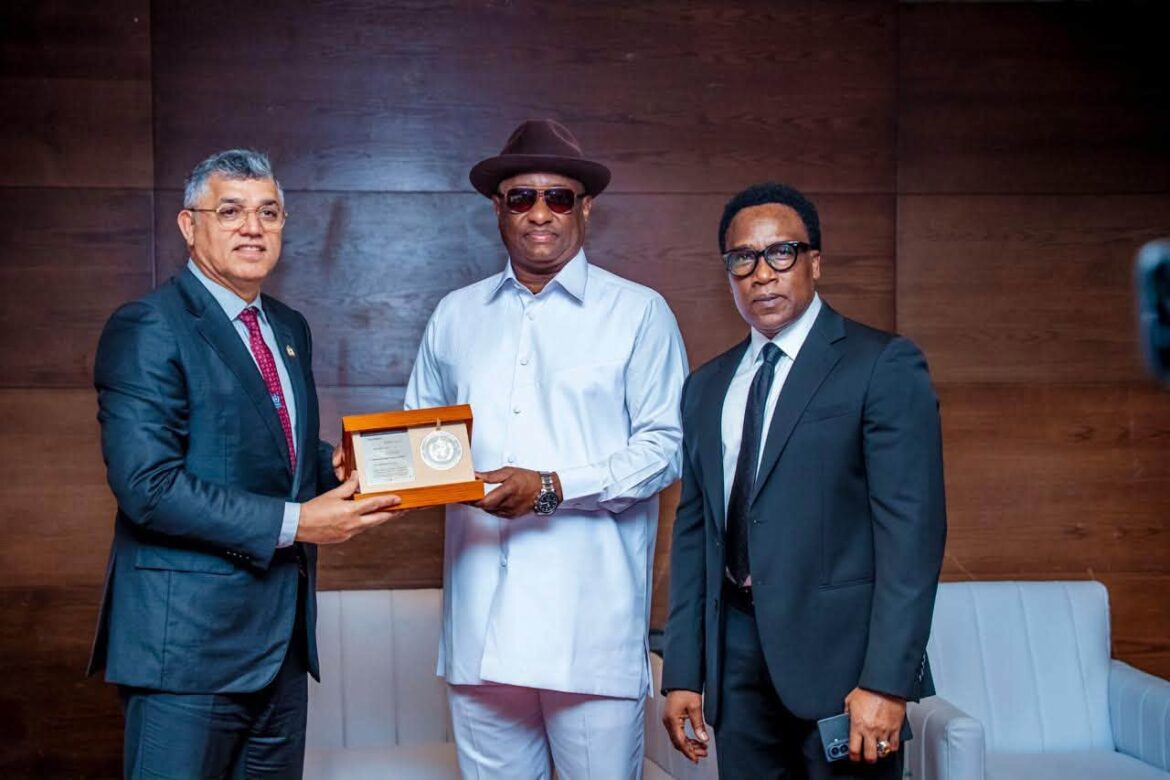
- Nigeria cites ₦83.2bn flood intervention, targets $500m climate investment as experts warn of critical shortages in weather-observation infrastructure
The World Meteorological Organization (WMO) and the Federal Government have called for increased public and private-sector investment in weather, water and climate services to address Africa’s critical hydrometeorological infrastructure gaps and strengthen resilience against extreme weather events.
The call was made at the 2026 Annual Meeting of the Alliance for Hydromet Development, which opened at Eko Hotel & Suites, Lagos, on Tuesday and will run until October 15.
Hosted in Africa for the first time, the meeting, themed “Partnerships, Innovation and Sustainable Investment in Weather, Water and Climate Services,” brought together governments, development partners, international financial institutions, climate-finance organisations, scientists and private-sector leaders to develop strategies for closing hydrometeorological capacity gaps by 2030.
WMO President, Dr Abdulla Ahmed Al Mandous, warned that extreme weather events were intensifying while many national meteorological and hydrological services lacked the basic infrastructure and resources required to issue life-saving warnings and support economic development.
He said the Alliance, launched at the United Nations Climate Change Conference, COP25, in Madrid in 2019, had made progress through initiatives such as the Country Hydromet Assessment, Hydromet Gap Reports and the Systematic Observations Financing Facility, which provides long-term support for essential weather observations, particularly in least developed countries.
Al Mandous identified Nigeria as an example of regional leadership, noting that the country had participated in piloting the Country Hydromet Assessment and had progressed from receiving technical support to sharing expertise with other African countries, including Burkina Faso.
He cited investments in Nigeria’s weather and climate services under the ECOWAS Hydromet Initiative, which he said generated an estimated economic return of 19 to one.
The WMO president said the United Nations’ Early Warnings for All initiative, which seeks to ensure that everyone on Earth is protected by multi-hazard early-warning systems, would remain central to the Alliance’s work and the implementation of the forthcoming WMO Strategic Plan for 2028–2031.
He outlined four priorities for the period leading to 2030: increased investment in national meteorological and hydrological services; stronger legislation, governance and institutions; deeper partnerships across agriculture, water, energy, transport and health; and expanded regional cooperation to enable African institutions to share expertise and lead locally driven solutions.
FG: Weather Services Critical to National Development
Minister of Aviation and Aerospace Development, Festus Keyamo, said reliable weather, water and climate information should be treated as critical national development infrastructure rather than merely as forecasting services.
He reaffirmed the Federal Government’s commitment to strengthening the institutional, technical and operational capacity of the Nigerian Meteorological Agency (NiMet), citing improvements in staff welfare, digital transformation, institutional reforms and the agency’s 2026–2030 Strategic Plan.
Keyamo said Nigeria was shifting from reactive disaster response towards anticipatory action by using forecasts and early-warning information to mitigate the effects of flooding and other climate-related hazards before they occur.
He cited the Anticipatory Action Task Force on Floods, established in 2025 with support from NiMet’s Seasonal Climate Prediction, as an example of efforts to strengthen preparedness and reduce disaster impacts.
The minister also disclosed that the National Economic Council approved ₦83.2 billion in June 2026 for interventions against flooding and other climate-related emergencies.
On climate finance, Keyamo said the Nigeria Climate Investment Platform was targeting $500 million to support climate-resilient infrastructure, adaptation and other priority investments.
He added that the government had approved a National Carbon Market Framework and the operationalisation of the Climate Change Fund, while exploring green bonds and other financing mechanisms to mobilise additional resources.
According to him, climate finance must translate into practical projects capable of delivering measurable results, with NiMet playing a central role in identifying climate risks, defining adaptation requirements and preparing credible investment proposals.
The minister stressed that government funding alone could not meet the scale of investment required to expand Nigeria’s weather and climate infrastructure.
He therefore called for stronger private-sector participation in aviation, satellite technology, insurance, agriculture, energy, telecommunications, data analytics and financial services.
Citing the Hydromet Gap Report 2024, Keyamo said investments in hydrometeorological services across ECOWAS countries could generate returns ranging from $4 to $19 for every dollar invested.
He added that investments in early-warning systems and climate intelligence could save up to $15 for every dollar spent.
Africa Accounts for 30% of Global Observation Gap
NiMet Director-General and Chief Executive Officer, Professor Charles Anosike, warned that Africa accounted for approximately 30 per cent of the global weather-observation deficit and possessed only about one-eighth of the minimum weather-station density recommended by the WMO.
He said compliance rates across 53 countries, including least developed countries and small island developing states, stood at seven per cent for surface land stations and nine per cent for upper-air stations.
Anosike explained that Nigeria’s extensive landmass, combined with limited public funding, had left many rural, agricultural and remote border communities without adequate weather-observation infrastructure.
He urged development banks, climate funds, philanthropic organisations and private investors to complement government budgets by financing weather radar systems, remote sensing, advanced analytics, high-performance computing, digital communications and data platforms that meet international standards.
According to him, inadequate observation networks weaken forecasting capacity and limit the ability of governments, businesses and communities to prepare for extreme weather events.
The NiMet chief highlighted the agency’s contributions to aviation safety, agriculture, maritime operations and disaster-risk management through aeronautical meteorological services, seasonal climate predictions, agrometeorological advisories, maritime forecasts, impact-based forecasts, flash-flood risk maps, heavy-rainfall forecasts and severe-weather alerts.
He said the agency was also moving beyond simply producing weather information towards co-developing practical services with end users.
These include climate-smart agriculture tools, digital advisory services and weather-index insurance designed to help farmers and other vulnerable groups manage weather-related risks.
Anosike maintained that meteorological information delivered its greatest economic and social value when linked to decisions, financial instruments and concrete action.
He said stronger climate services would help protect lives, improve agricultural productivity, enhance aviation safety and reduce economic losses.
The NiMet director-general commended President Bola Ahmed Tinubu and Keyamo for supporting the agency’s workforce development and institutional strengthening.
WMO Seeks Sustainable Financing, Technology Partnerships
Speaking on behalf of WMO Secretary-General, Professor Celeste Saulo, Daniel Kull said national meteorological and hydrological services continued to face unpredictable funding, ageing infrastructure, operational and maintenance challenges, and shortages of skilled personnel.
He identified three priorities for the Alliance’s next phase: strengthening collective action and investment; harnessing artificial intelligence, satellite observations, digital technologies and cloud computing through stronger partnerships; and embedding long-term sustainability in investments while safeguarding the authoritative public role of national meteorological and hydrological services.
Kull said the Alliance could help countries translate identified infrastructure and technical needs into credible investment priorities and project pipelines suitable for consideration by ministries of finance and planning, climate funds, development banks, bilateral partners and philanthropic organisations.
He also highlighted the Weather, Climate and Water Intelligence Commons, a pooled financing mechanism intended to support the global backbone of weather observations, data exchange, prediction, early warning and climate services.
The mechanism complements initiatives such as the Systematic Observations Financing Facility and the Climate Risk and Early Warning Systems initiative.
According to Kull, stronger partnerships and innovative financing arrangements are essential to ensuring that investments in weather infrastructure remain operational and deliver benefits over the long term.
Meeting Targets Practical Investment Commitments
Al Mandous urged participants to move beyond assessments and declarations towards concrete financing commitments that would strengthen national institutions and improve protection for vulnerable populations.
He called on governments, development partners and private investors to turn assessments into investments, investments into lasting institutional capacity, and early warnings into early action capable of saving lives and livelihoods.
The Lagos meeting is expected to produce stronger partnerships, innovative financing proposals and practical commitments towards closing hydrometeorological capacity gaps in Nigeria, Africa and other developing regions.
The deliberations come as governments face mounting pressure to strengthen preparedness for floods, droughts, storms and other climate-related hazards, while ensuring that reliable weather information reaches communities, businesses and public institutions that need it most.
Participants are expected to explore how public funding, private capital, technology and regional cooperation can be combined to build more reliable observation networks, improve forecasting and expand access to timely early-warning services ahead of the 2030 global target.