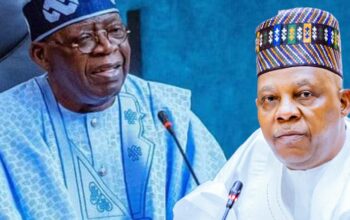
In an attempt to address concerns raised during the #EndBadGovernance protests, President Bola Ahmed Tinubu, during a live broadcast, highlighted the achievement of 50% of the 2024 revenue generation target as a key accomplishment of his administration.
According to the President, aggregate government revenues have more than doubled, reaching over ₦9.1 trillion in the first half of 2024 compared to the same period in 2023. He attributed this increase to efforts in blocking leakages, introducing automation, and mobilizing funding creatively.
The 2024 budget, dubbed the “Budget of Renewed Hope,” outlined an aggregate expenditure of ₦27.5 trillion, with non-debt recurrent expenditure set at ₦9.92 trillion, debt servicing projected at ₦8.25 trillion, and capital expenditure at ₦8.7 trillion. Of the total budget, ₦18.3 trillion was expected to be generated from internal sources, leaving a deficit of ₦9.18 trillion.
This achievement marks a positive departure from previous administrations, which consistently failed to meet revenue targets and instead increased the deficit, relying heavily on borrowing to fund the budget.
However, despite the impressive revenue generation by the Tinubu administration, there is a noticeable absence of tangible evidence pointing to developmental progress or improvements in the livelihoods of Nigerians as a result of this revenue windfall.
The substantial funds generated were expected to be allocated through budget releases to Ministries, Departments, and Agencies (MDAs) for the execution of critical infrastructure projects and programs under the Renewed Hope agenda. Unfortunately, there is a lack of visible evidence of projects undertaken by most MDAs.
Many MDAs have cited the non-release of budgeted funds as a barrier to implementing approved capital projects. Meanwhile, as hunger and economic hardship continue to plague Nigerian families due to the removal of fuel subsidies, the President had promised to use the budget to restore hope to Nigerians.
Among President Tinubu’s promises were the implementation of massive social security programs, critical infrastructure projects, poverty reduction initiatives, and boosting food production and security in farming areas. He also pledged investments in renewable energy.
However, these promises have yet to materialize meaningfully. Infrastructure across the country remains in a dire state, with key roads like the East-West Road and the route between Lokoja in North Central Nigeria and the South East still largely unmotorable. Regarding social security programs such as the Presidential Conditional Grant Scheme, where promises were made to reach one million businesses in the 774 local government areas, there is a disturbing lack of transparency and accountability in the selection of beneficiaries.
Nigerians remain skeptical of the current social register used to identify the poorest of the poor due to past corruption scandals associated with its use. There is no evidence that the register has been cleaned up or replaced with a more reliable system.
Additionally, despite the President presenting up to three supplementary budgets to the National Assembly since taking office, there are no visible projects aimed at alleviating the effects of subsidy removal on Nigerians. Only recently did the President launch 33 CNG-powered buses, despite the high demand for CNG-powered vehicles in Nigeria.
Nigerians had hoped that by now, the Federal Government would have established partnerships with investors to set up numerous CNG assembly plants across the country and facilitate the importation of CNG-powered vehicles for distribution at subsidized rates.
Furthermore, there was an expectation that funds would be allocated to rehabilitate the country’s dilapidated refineries, bringing them to optimal capacity to end the importation of refined petroleum products.
Most concerning is the failure of the Budget Office of the Federation (BOF) to upload budget implementation reports on its website, with the last available report being for the third quarter of 2023. The absence of a full-year implementation report for the 2024 budget makes it difficult for Nigerians to assess the President’s performance based on his claims about revenue realization.
In conclusion, as Nigeria strives to achieve its fiscal targets, it is imperative that these resources are transparently allocated in a way that results in visible improvements in the social well-being and developmental outcomes for all Nigerians.
Victor Emejuiwe is the Monitoring Evaluation/Strategic Communication Manager at the Centre for Social Justice, Abuja. Contact: 08068262366