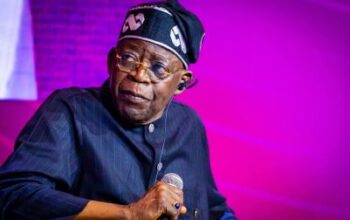
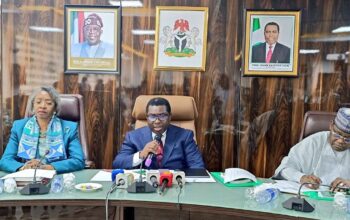
Former Nigerian President, Dr. Goodluck Jonathan, has identified the struggle for power as the primary cause of conflicts across Africa. He made this assertion during a programme organized by the Institute for Peace and Conflict Resolution (IPCR) in Abuja, marking the International Day of Peace.
Jonathan, who was honored as a Fellow of the Institute at the event—becoming the second individual to receive this recognition after former Head of State, Gen. Yakubu Gowon—emphasized that many African countries, including Nigeria, are grappling with conflicts rooted in leadership contests.
“Globally, 10 countries are in conflict, with three located in sub-Saharan Africa. In most cases, the underlying cause is leadership struggles and contestation for power,” Jonathan remarked. “By the time you analyze deeply, you’ll find that leadership issues are at the heart of these conflicts.”
Jonathan also criticized the notion that politics is inherently dirty, stating that it is the attitude of the players, not the game itself, that tarnishes its reputation. Citing former President Olusegun Obasanjo’s remarks, he added, “Politics is not dirty, but those who come into it with corrupt minds make it so.”

He urged Africans to adopt a culture of peace, stressing that without this, political conflicts would continue to plague elections and governance across the continent. “Until we develop the culture of peace in our daily lives, Africa and Nigeria will remain prone to political conflicts,” he said.
Reflecting on the role of technology in Nigeria’s electoral process, Jonathan warned that while technology might aid in election transparency, it cannot replace ethical leadership. “If the human mind is corrupt, even technology will be manipulated,” he cautioned.
Dr. Samuel Iroye, Head of Peace and Conflict Studies at the National Open University of Nigeria, echoed Jonathan’s call for peace, emphasizing the need for youth engagement and reforms in the education system to foster a culture of peace. Similarly, IPCR Director-General, Dr. Joseph Ochogwu, called for greater investment in peacebuilding, noting that while everyone desires peace, few are willing to invest in creating it.
Ochogwu praised Jonathan for his peace-first ideology, particularly recalling his famous statement that “nobody’s life is worth sacrificing for any personal political interest.”