The National Agency for the Prohibition of Trafficking in Persons (NAPTIP) has received over 200 Nigerian victims of human trafficking rescued by Ghanaian authorities during a major operation targeting organized criminal networks.
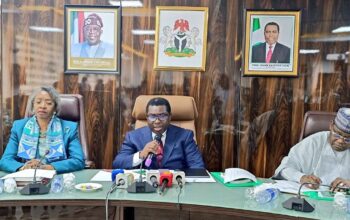
Speaking at the NAPTIP Lagos Command Office in Ikeja, Director General Binta Adamu Bello, represented by Lagos State Commander Mrs. Comfort Agboko, reaffirmed the agency’s commitment to strengthening collaboration with regional and international partners to dismantle human trafficking syndicates operating across West Africa.
The victims—227 males and four females aged between 15 and 18—were rescued during a search operation conducted by Ghana’s Economic and Organized Crimes Office (EOCO) in the Kumsark Estate area of Oyarifa, a suburb of Accra. According to EOCO’s report, criminal groups—mostly Nigerian nationals—had taken control of nearly 30 houses in the estate, where young men were trafficked and forced into cybercrime and sexual exploitation.
The Ghanaian authorities had earlier requested NAPTIP’s assistance in screening the victims for possible prosecution in Nigeria, following evidence that many were trafficked from Nigeria and coerced into illegal activities.
“This latest development is alarming. Ghana and neighboring countries are becoming hubs for trafficking, particularly cybercrime-related exploitation,” Bello said. “We have commenced discussions with our counterparts in Ghana, Côte d’Ivoire, Mali, Gambia, and other countries to restructure our strategy and dismantle these organized crime networks.”
Bello also revealed that NAPTIP has begun profiling the returnees to assess their medical, psychological, and vocational needs and to provide comprehensive victim support services.
She noted that the relocation of criminal activities to Ghana is likely a direct consequence of NAPTIP’s intensified crackdown on cybercrime networks in Nigeria, which has led to several recent arrests.
“With the support of our partners, including EOCO and immigration services, we will continue to pursue these criminals across borders,” she said. “Suspects identified among the group will be thoroughly investigated and prosecuted under the Trafficking in Persons (Prohibition) Law Enforcement and Administration Act.”
Bello thanked the EOCO, Nigeria’s Diaspora Commission, the Nigeria Immigration Service, the Ministry of Foreign Affairs, and other agencies for their continued support and cooperation, assuring that all suspects will be held accountable.