ActionAid Nigeria has sharply criticised the Federal Government for its failure to address the country’s worsening poverty crisis, describing the situation as a “national disgrace.”
Reacting to the World Bank’s April 2025 Africa’s Pulse report—which projects a 3.6 percentage point rise in Nigeria’s poverty rate by 2027—ActionAid said the warning only confirms long-standing concerns raised by citizens, civil society organisations, and development experts.
“The deepening poverty in Nigeria is no mystery,” the organisation stated, blaming the crisis on deliberate policy choices, systemic governance failures, and a weak accountability framework that has entrenched corruption at all levels of government.
The World Bank report classifies Nigeria as a resource-rich but fragile state, with over 106 million people living on less than $2.15 a day—nearly 15% of the world’s extreme poor. ActionAid described these figures as a “national shame,” particularly for a country with abundant resources that continues to favour a few at the expense of the majority.
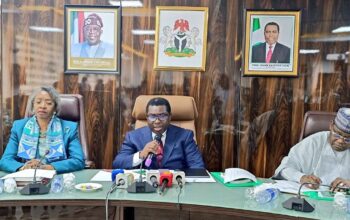
Speaking in Abuja, ActionAid Nigeria’s Country Director, Andrew Mamedu, said: “Governance remains Nigeria’s greatest obstacle. The World Bank has highlighted our poor performance on governance indicators like government effectiveness, accountability, and political stability. Public institutions fail to deliver basic services, while government officials prioritise luxury spending over citizens’ welfare.”
Mr. Mamedu criticised the federal and state governments, as well as the National Assembly, for approving billions in budgets for new SUVs and office renovations while poverty deepens. He also condemned the Tinubu administration’s “superficial” social protection initiatives, calling for meaningful structural reforms.
“The civic space is shrinking. Citizens and activists who speak out face intimidation and detention,” Mamedu warned. “Women, youth, people with disabilities, and conflict-affected communities are bearing the brunt of this hardship.”
ActionAid also pointed to Nigeria’s rampant insecurity—banditry, terrorism, and communal violence—as a major factor worsening poverty and displacing communities, warning that without urgent action, the country risks becoming the global capital of extreme poverty.
In its statement, ActionAid Nigeria urged citizens to hold leaders accountable, stating that claims of economic progress mask the widening gap between the rich and poor.
The organisation made several urgent demands of the Federal Government, including:
-
Strengthening and expanding social protection systems, such as universal cash transfers and food support.
-
Supporting smallholder farmers by addressing insecurity and improving market access.
-
Scrapping non-essential public spending and redirecting funds to education, healthcare, and job creation.
-
Implementing transparent, people-centred fiscal and monetary policies.
-
Protecting civic space and ensuring citizens’ voices are heard.
-
Ensuring safe, accessible education, especially in rural and conflict-affected areas.
-
Investing in infrastructure and industries that promote inclusive and sustainable employment.
“The time to remain silent has passed,” ActionAid declared.