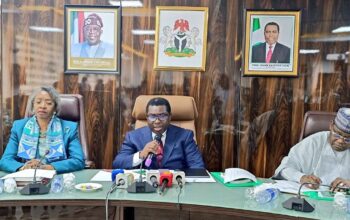
Médecins Sans Frontières (MSF), also known as Doctors Without Borders, has unveiled new community-focused healthcare strategies in Bauchi State aimed at improving access to medical services and tackling child malnutrition in remote areas.
Speaking to journalists in Bauchi, the outgoing Head of Mission, Adam Ousmane Ngari, said MSF has implemented the Integrated Community Case Management (iCCM) approach in eight villages within Ganjuwa Local Government Area. The strategy trains community health workers (CHWs) to diagnose and treat common childhood illnesses—malaria, pneumonia, and diarrhoea—at the local level.
In addition, MSF introduced the “family-led MUAC” initiative, which empowers parents to screen their children for malnutrition at home using a mid-upper arm circumference (MUAC) tape. “This early detection tool enables caregivers to identify signs of malnutrition and seek treatment promptly,” Ngari explained.
Ngari noted that late hospital presentation remains a major challenge, as many children admitted to MSF facilities arrive with complications such as kwashiorkor, respiratory infections, or malaria, complicating treatment outcomes. “Early detection is critical, as malnutrition remains a leading cause of child mortality,” he added.
MSF operates a 250-bed inpatient feeding centre in Kafin Madaki, which can scale up to 350 beds during peak malnutrition periods. The organisation also runs three outpatient clinics in Kafin Madaki, Kafin Liman, and Miya, in partnership with the Bauchi State Ministry of Health.
From January to April 2025, MSF treated 27,868 malnourished children in Bauchi—an increase of 34.5% from the same period in 2024. Despite the spike in outpatient numbers, hospital admissions declined by 4.8%, indicating early detection may be helping reduce severe cases.
MSF runs nutrition programmes in seven Nigerian states—Borno, Bauchi, Katsina, Kano, Sokoto, Zamfara, and Kebbi—operating 10 inpatient centres and over 30 outpatient feeding sites nationwide.