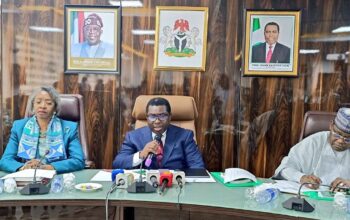
A broad coalition of civil society organisations and legal experts has voiced strong support for His Royal Majesty, King Bubaraye Dakolo, Agada IV of Ekpetiama Kingdom, in his landmark lawsuit aimed at halting Shell’s proposed divestment of onshore oil assets in the Niger Delta.
The case, currently before the Federal High Court in Yenagoa, challenges Shell, the Minister of Petroleum Resources, the Nigerian Upstream Petroleum Regulatory Commission (NUPRC), and the Attorney General of the Federation. The plaintiffs argue that Shell must not be allowed to exit the region without first fulfilling its legal obligations to decommission obsolete infrastructure, remediate decades of environmental damage, and compensate affected communities.
King Dakolo, who also serves as Chairman of the Bayelsa State Council of Traditional Rulers, contends that Shell’s operations in the Gbarain oil fields have caused extensive environmental degradation—polluting rivers, destroying farmlands, and undermining local livelihoods through years of oil spills and gas flaring.
Lead counsel for the plaintiffs, Barrister Chuks Uguru, maintains that Shell’s divestment without accountability constitutes a violation of both the Nigerian Constitution and the African Charter on Human and Peoples’ Rights, which guarantee the right to a clean and healthy environment. He also accuses federal regulators of failing to enforce statutory protections for host communities.
The plaintiffs are seeking court orders to:
-
Declare Shell’s proposed divestment unlawful without proper environmental remediation and decommissioning;
-
Compel the NUPRC and other regulatory bodies to fulfil their statutory responsibilities;
-
Affirm the constitutional rights of impacted communities;
-
Prevent the transfer of assets to successor companies without legal and environmental accountability.
The lawsuit references findings from the 2023 Bayelsa State Oil and Environmental Commission (BSOEC), which documented the devastating impact of oil exploration on the region. Key findings include:
-
Over 1.5 million residents exposed to hazardous hydrocarbon pollution;
-
Contaminated water sources exceeding international safety limits;
-
Fish stocks reduced by more than 70%, severely affecting food security;
-
Persistent failure by oil companies, including Shell, to decommission infrastructure or clean up polluted sites.
The case has drawn support from organisations such as Social Action Nigeria, Health of Mother Earth Foundation (HOMEF), HEDA Resource Centre, and the International Working Group on Petroleum Pollution and Just Transition (IWG), all of whom describe the case as a pivotal test of environmental justice and corporate accountability in Nigeria.
“This case goes beyond Ekpetiama. It’s about justice for all host communities in the Niger Delta,” said Dr. Isaac Asume Osuoka, Director of Social Action. HOMEF’s Executive Director, Rev. Nnimmo Bassey, added: “Shell must not be allowed to walk away from the devastation it has caused without first restoring the environment and compensating victims.”
International observers also view the lawsuit as a critical precedent for global energy transition policy. “There can be no just transition without clean-up, community consent, and corporate responsibility,” stated Professor Engobo Emeseh of the University of Bradford, representing the IWG’s Legal and Justice Committee.
The coalition has called on the Federal High Court to:
-
Restrain Shell from completing any asset sale until full compliance with environmental and human rights obligations is demonstrated;
-
Ensure that regulators enforce the Petroleum Industry Act to protect host communities;
-
Affirm the rights of indigenous Niger Delta peoples to a safe, sustainable environment and meaningful consultation.
“This is a defining moment for environmental justice in Nigeria,” said Olanrewaju Suraju, Director of HEDA Resource Centre. “The judiciary has an opportunity to affirm that no corporation is above the law.”