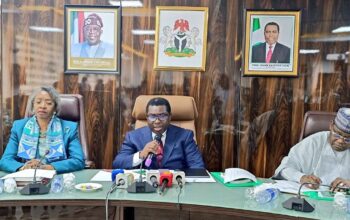
The Economic Community of West African States (ECOWAS) has renewed its commitment to promoting, respecting, and protecting human rights across the region, while calling for stronger collaboration to address both historical and ongoing injustices.
Speaking at the opening of a three-day Regional Consultation of National Human Rights Institutions (NHRIs) in West Africa, ECOWAS Commissioner for Political Affairs, Peace and Security, Ambassador Abdel-Fatau Musah, emphasized the urgent need for a society where dignity, justice, peace, and development are not mere aspirations but lived realities.
The consultation, themed “Justice for Africans and People of African Descent Through Reparations: The Role of NHRIs,” was jointly organized by the ECOWAS Commission, the UN Office of the High Commissioner for Human Rights (OHCHR), and the UN Office for West Africa and the Sahel (UNOWAS).
Musah noted that while reparations must acknowledge historic injustices such as slavery, colonialism, apartheid, and genocide, equal attention must be paid to present-day human rights violations in the region. “This calls for a human rights-based approach to reparatory justice for both past and present wrongs,” he said.
Nigeria’s Attorney General and Minister of Justice, Lateef Fagbemi (SAN), represented by NHRC Chairperson, Salamatu Sulaiman, urged stakeholders to use the forum to reaffirm their commitment to justice and reconciliation in West Africa. “NHRIs are pivotal actors in this pursuit. Our shared responsibility is to ensure reparations restore dignity and foster unity across the region,” she stated.
Executive Secretary of Nigeria’s National Human Rights Commission (NHRC), Dr. Tony Ojukwu, marking the NHRC’s 30th anniversary, outlined progress made by the Commission, including expansion from one to 38 offices nationwide, handling an average of two million complaints annually.
He said: “Despite our gains, we must remain vigilant. The rise in human rights violations, coups, terrorism, and climate-induced displacement demands urgent, united action.”
Ojukwu stressed that this is a critical time for solidarity among NHRIs, as democratic backsliding and shrinking civic space continue to threaten human rights across the subregion. “Our collective challenges are great, but so is our shared resolve,” he concluded.