Rwanda’s High Commissioner to Nigeria, Christophe Bazivamo, has reaffirmed his country’s commitment to strengthening bilateral ties with Nigeria, focusing on trade, aviation, and Information and Communication Technology (ICT).
Bazivamo made the remarks in Abuja on Friday during the commemoration of the 31st anniversary of Rwanda’s Liberation Day, known as Kwibohora, which marks the end of the 1994 Genocide Against the Tutsi.
He described trade collaboration as a key pillar for advancing mutual economic growth, adding that recent steps taken by both countries, including the signing of a landmark Double Taxation Avoidance Agreement (DTAA) on June 27, 2025, would help eliminate fiscal barriers and unlock investment opportunities.
“This is more than a legal agreement—it is a commitment to build bridges, not borders,” Bazivamo stated.
The High Commissioner noted that Rwanda is equally committed to enhancing cooperation with Nigeria in the aviation sector to foster better connectivity, business, and tourism. He also highlighted the untapped potential of ICT collaboration in driving innovation and digital transformation across the continent.
According to Bazivamo, these efforts reflect a broader vision to collectively build a more prosperous Africa.
Touching on Rwanda’s development trajectory, the envoy credited the country’s strides in technology, gender equality, and economic growth to strategic decisions and a shared national vision. He reiterated Rwanda’s Vision 2050, which aims to achieve upper-middle-income status by 2035 and transform the nation into a high-income, knowledge-based economy by 2050.
“This is not a dream; it is a strategic plan anchored on inclusivity, sustainability, and innovation,” he said.
Bazivamo also referenced Rwanda’s recent peace efforts with the Democratic Republic of Congo as part of its ongoing commitment to regional stability.
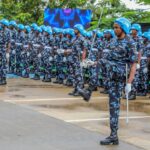
Liberation Day, celebrated annually on July 4, commemorates the end of the genocide and the victory of the Rwandan Patriotic Front (RPF), symbolising national unity, healing, and reconstruction. The event features cultural displays, patriotic reflections, and military parades to honour those who fought for Rwanda’s rebirth.