The Democratic Republic of Congo (DRC) has strongly criticised the international community’s muted response to what it describes as an ongoing genocide driven by foreign-backed exploitation of its natural resources.
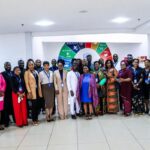
Speaking in Abuja during the commemoration of GENOCOST — a national remembrance day observed annually on August 2 — DRC Ambassador to Nigeria, Pascaline Gerengbo Yakivu, lamented the prolonged suffering of millions of Congolese citizens, attributing it to the aggression of neighbouring countries and the world’s failure to act decisively.
GENOCOST, which stands for Genocide for Economic Purposes, was officially designated by the Congolese government through Law No. 22/065 of December 26, 2022. The day marks the beginning of the country’s second major war on August 2, 1998, a conflict that ushered in widespread violence, displacement, and the occupation of Congolese territory by foreign forces.
“The armies of these neighbouring countries — particularly Rwanda — have for decades supported terrorist groups like M23/AFC, which continue to commit atrocities, occupy vast swathes of eastern Congo, and plunder our resources,” Ambassador Yakivu stated. “If this situation continues unchecked, entire communities in eastern Congo face extermination or permanent displacement.”
She described the humanitarian crisis as catastrophic, with over seven million people currently displaced. Citing independent research, including findings from UN reports and international observers, the ambassador said more than 10 million people have died as a result of the conflicts triggered by these invasions. She referenced a recent massacre in Komanda, Ituri Province, where civilians were killed during a Catholic mass by armed groups linked to the Rwandan Defence Forces (RDF).
“How long will the world ignore the mass killings of Congolese people?” she asked. “Imagine what 10 million deaths mean — some entire nations don’t even have that population.”
Ambassador Yakivu expressed deep frustration over the perceived indifference of the international community, warning that failure to act amounts to complicity. “The so-called ‘civilised world’ cannot continue to turn a blind eye while innocent civilians are being slaughtered for economic gain,” she said.
She called on global institutions to recognise the genocide, impose sanctions on the perpetrators, and ensure reparations for victims, stating that only such actions could restore justice and peace.
“It is time for the international community to summon the courage to acknowledge and respond to the genocide in Congo with the same seriousness it has accorded other global atrocities,” she said. “Only then can we honour the collective memory of our victims and affirm their humanity on the world stage.”