The Network of Anti-Corruption Institutions in West Africa (NACIWA) has re-elected the Executive Chairman of the Economic and Financial Crimes Commission (EFCC), Mr. Ola Olukoyede, as its President, while adopting the ECOWAS Guidelines on Borderless Investigation, Asset Tracing, Recovery, and Management.
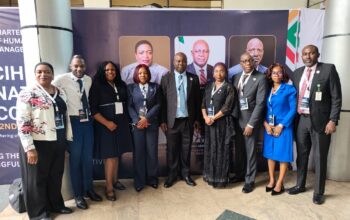
The decision was announced in a communiqué issued at the end of NACIWA’s 7th Annual General Assembly (AGA), held on Wednesday, October 15, 2025, in Abuja, and endorsed by representatives of all ECOWAS member states present.
Olukoyede and other members of the NACIWA Executive Committee were unanimously returned for another three-year term, following what delegates described as “outstanding leadership and performance” in promoting cross-border cooperation against economic and financial crimes. “Member States note with satisfaction the adoption of the ECOWAS Guidelines on Borderless Investigations, Asset Tracing, Recovery, and Management, and call on all States to integrate them into national frameworks for harmonized implementation,” the communiqué stated.
The Assembly reaffirmed its commitment to the 2001 ECOWAS Protocol on the Fight Against Corruption, the United Nations Convention Against Corruption (UNCAC), and the African Union Convention on Preventing and Combating Corruption (AUCPCC). It also underscored the need for stronger regional collaboration in asset recovery, mutual legal assistance, and intelligence sharing among law enforcement bodies and financial intelligence units.
This year’s meeting, which coincided with the 50th anniversary of ECOWAS, was described as a milestone for regional unity and renewed dedication to anti-corruption efforts. Member institutions were urged to domesticate and operationalize ECOWAS anti-corruption frameworks within their national systems.
The communiqué further emphasized the importance of partnerships with civil society organizations (CSOs), youth groups, and the media to deepen public engagement and advocacy in the fight against corruption.
Delegates expressed appreciation to President Bola Ahmed Tinubu for declaring the Assembly open and for his continued support for regional anti-corruption initiatives.
While addressing delegates at the opening session on October 14, President Tinubu called on ECOWAS to classify resource theft, illegal mining, and mineral smuggling as international crimes, warning that such activities threaten peace and economic stability in the subregion. “The time has come for ECOWAS to designate resource theft and illegal mining as international crimes that endanger our region’s prosperity and stability,” Tinubu said.
The Assembly also admitted new member institutions, including Nigeria’s Code of Conduct Bureau (CCB), and welcomed CPC Cabo Verde as the newest participant in the regional network.