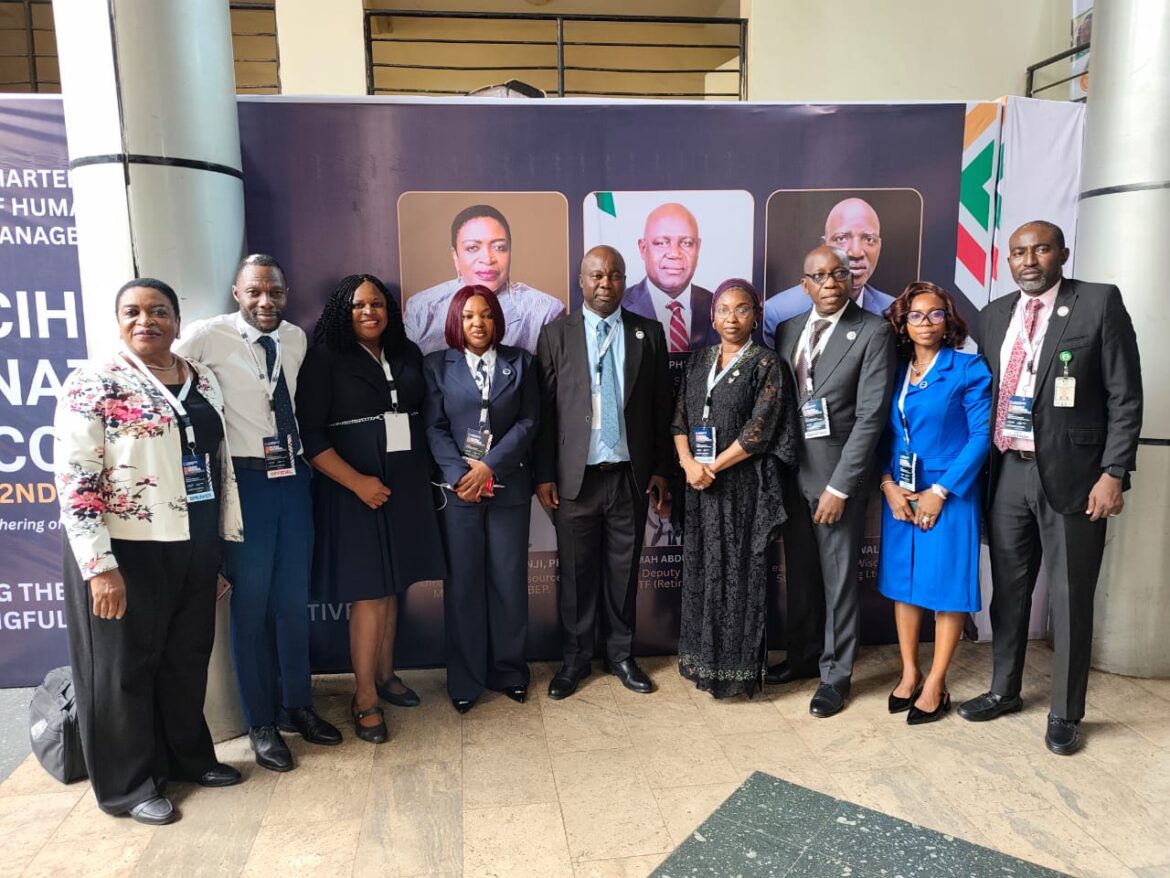
The Chartered Institute of Human Resources Management of Nigeria (CIHRM) has urged human resource professionals to put people at the centre of technological transformation while harnessing data and digital innovation to drive organisational growth and workplace performance.
President and Chairman of the Governing Council of CIHRM, Olufemi Omoyele, gave the charge on Thursday at the opening of the institute’s two-day 2026 National Conference in Abuja.
The conference, which brought together HR professionals, policymakers and industry leaders, is themed: “Shaping the Future of Meaningful Work: HR Imperative.”
Omoyele said the rapid evolution of artificial intelligence (AI), digitalisation and changing workforce expectations had placed HR professionals at the centre of the transformation taking place in the world of work.
He noted that widening generational differences, particularly the changing expectations of Generation Z, were redefining employees’ perceptions of purpose and meaning in the workplace, while AI was increasingly automating routine tasks across industries.
He also identified the growing adoption of hybrid work arrangements and the increasing demand for upskilling and reskilling as major trends reshaping the labour market.
“The world of work is changing faster than ever, and achieving meaningful work is becoming more complex,” Omoyele said.
He added that work had become a critical factor in attracting, retaining and enhancing employee performance, placing HR professionals at the heart of organisational transformation.
Omoyele stressed that although technology would continue to redefine workplaces, organisations that successfully combined digital innovation with human-centred leadership would achieve stronger employee engagement, improved productivity and sustainable growth.
In his welcome address, CIHRM Registrar, Abiodun Oni, described the conference as a platform for learning, collaboration and professional networking, providing participants with an opportunity to examine emerging trends shaping the future of work.
Oni said the theme reflected the expanding responsibility of HR professionals to move beyond traditional personnel administration and become architects of meaningful workplaces.
“Meaningful work is where purpose meets performance. As human resources professionals, we are not just custodians of people policies,” he said.
“We are architects of the future workforce and stewards of human potential.”
He maintained that the future of work would not be determined by technological advancement alone but by the quality of leadership guiding its deployment.
According to him, HR professionals must ensure that productivity is balanced with purpose, innovation with inclusion, and organisational success with human dignity.
Also speaking, the Permanent Secretary of the Ministry of Defence, Andrew Adejo, represented by the Director of Reform Coordination and Service Improvement, Ogidi-Paul, described effective human resource management as a critical driver of national development.
She commended CIHRM for convening the conference, stressing that a high-performing public service was essential to achieving national development objectives.
Ogidi-Paul advocated competence-based recruitment aligned with organisational needs, rather than relying solely on academic qualifications.
She said effective HR management contributes directly to economic growth by developing the knowledge, leadership capacity and values required to deliver national priorities.
She further called for stronger alignment among people, technology and incentives with measurable performance outcomes, saying this would boost productivity, foster innovation and strengthen institutional trust, continuity and sustainable development.
The conference is taking place amid growing workplace disruption from AI, automation, talent shortages and changing employee expectations, developments that have increasingly elevated human resource management from a traditional support function to a strategic driver of organisational resilience and competitiveness.