The RECONNECT Project — Reintegration and Empowerment for Connecting and Nurturing Opportunities of Vulnerable Populations and Returning Migrants — has graduated 120 participants in Abuja, most of whom are Nigerian returnees from irregular migration journeys.
The three-month intensive skill acquisition programme was designed to make participants self-reliant and capable of becoming employers of labour.
Speaking at the graduation ceremony, Country Director of ActionAid Nigeria, Mr. Andrew Mamedu, said the initiative supports the economic and social reintegration of vulnerable groups, including returned migrants, internally displaced persons (IDPs), persons with disabilities (PWDs), and survivors of gender-based violence (GBV), through vocational training and business start-up support.
Mamedu noted that the project, funded by the International Organisation for Migration (IOM), German Development Cooperation (GIZ), and GOPA, in collaboration with the National Commission for Refugees, Migrants and Internally Displaced Persons (NCFRMI), has trained 400 individuals across Abuja, Lagos, and Benin.
According to him, the beneficiaries were equipped with market-driven skills such as fashion design, hairdressing, catering and hotel management, baking and confectionery, textile and adire making, and shoemaking.
“Today, we celebrate not only the completion of a training programme for the 120 participants in Abuja but also the beginning of new ventures, livelihoods, and hope for these Nigerians,” Mamedu stated.
He explained that the participants underwent hands-on training and entrepreneurial development through the Inspire, Create, Start and Scale (ICSS) module, which equips them to lead, innovate, and create opportunities for others.
“The RECONNECT Project goes beyond reintegration. It embodies the fight against poverty and inequality. By equipping young Nigerians with practical skills and entrepreneurial knowledge, we are tackling the structural causes of poverty and unemployment,” he added.
Mamedu urged the Federal Government to create better conditions that will discourage irregular migration, stressing that “no Nigerian should feel compelled to risk their life through irregular migration in search of survival. The solution lies in empowerment, education, and inclusive development.”
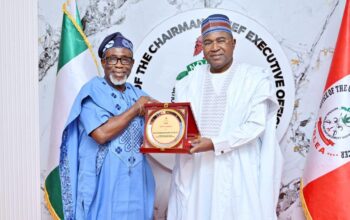
In his remarks, the Federal Commissioner of the NCFRMI, Alhaji Aliyu Tijani Ahmed, who presented certificates to the graduates, charged them to remain in Nigeria and apply their newly acquired skills.
“I am sure that after your graduation, none of you will be found on the streets begging because of the training and starter funds you have received. This is about empowerment and integration. Please remain in Nigeria and contribute to national development,” he urged.