The destruction of multiple ISWAP terrorist detention facilities deep inside the Timbuktu Triangle marks a decisive inflection point in the counter-insurgency campaign across Nigeria’s North East, signalling a sustained shift in momentum in favour of government forces.
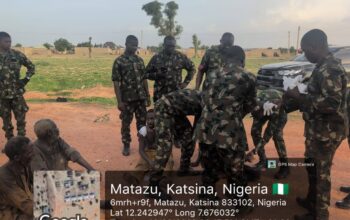
According to Media Information Officer Headquarters Joint Task Force North East Operation HADIN KAI Lieut. Col. Sani Uba, troops of the Joint Task Force North East, Operation HADIN KAI (OPHK), recorded the breakthrough after a series of carefully coordinated, intelligence-driven operations conducted over the past two weeks. Acting under Operation DESERT SANITY V, advancing forces penetrated areas of the forested Timbuktu Triangle in Gujba Local Government Area long regarded as core ISWAP sanctuaries, forcing terrorists to abandon critical infrastructure.
Between 21 January 2026 and date, troops uncovered and destroyed three major detention facilities concealed within the Triangle, a vast forest corridor spanning parts of Borno and Yobe States. Preliminary assessments indicate the camps had the capacity to hold up to 300 detainees, underscoring their central role in ISWAP’s coercive and revenue-generating architecture.


Beyond the physical destruction of the sites, the operation delivered immediate humanitarian and operational dividends. Sustained offensive pressure reportedly triggered the escape of more than 70 civilians previously held captive by the terrorists. Several of the escapees later resurfaced in communities including Goniri, Buratai and Mandaragirau, providing independent corroboration of the military’s claims.
One such escapee, Malam Jidda Ba Jidda, a native of Kufi village near Buratai in Biu Local Government Area, said he fled during a gun battle between ISWAP fighters and advancing troops after his abduction on 22 December 2025.
The engagements also imposed significant losses on ISWAP. Military sources confirmed that at least 32 fighters were neutralised, including two Qaids and three Munzirs, while several others sustained serious injuries. These losses are notable, as they degrade not only manpower but also command and control within the group.
Following comprehensive clearance operations, the three detention facilities were deliberately demolished to prevent reoccupation. The successful execution of the mission without incident highlights what the military describes as improved resilience, professionalism and combat effectiveness among OPHK troops.


Strategically, the implications extend beyond a single battlefield success. The dismantling of ISWAP’s detention infrastructure weakens its internal enforcement mechanisms, disrupts its ability to detain civilians for ransom, and erodes its psychological grip on local populations. The mass escape of detainees further deprives the group of a key funding stream, while potentially generating valuable intelligence through survivor testimonies.
While the wider security environment in the North East remains calm but volatile, military authorities say troop morale and operational efficiency remain high. The Armed Forces have reiterated their commitment to sustaining pressure on terrorist elements, denying them safe havens, and consolidating gains aimed at restoring lasting peace and security across the region.
— Analysis based on operational briefings from Headquarters, Joint Task Force North East, Operation HADIN KAI, dated 3 February 2026.