Russia has reiterated its commitment to a multipolar global order grounded in international law, sovereign equality and civilisational diversity, declaring that the era of unipolar dominance is over and that emerging powers, particularly in Africa, are reshaping global governance.
The position was articulated in a diplomatic briefing titled “Russia in a Multipolar World Order: African Perspective,” delivered to commemorate Russia’s Diplomatic Service Day, an annual event celebrating the country’s diplomatic heritage.
According to the briefing, global power is steadily shifting away from a Western-led unipolar system toward a more distributed framework marked by new economic and political centres across Asia, Africa and Latin America. These regions, described as the “world majority,” were said to account for most global population growth and a rising share of economic output.
Russia argued that attempts to impose a “rules-based order” outside the framework of international law have undermined global stability through unilateral actions and sanctions. It maintained that durable international security can only be achieved through adherence to the principles of sovereignty, non-interference and equal, indivisible security for all states.
Central to Moscow’s position is the United Nations Charter, which it described as the constitutional foundation of international relations. Russia called for strengthening the UN’s central role while reforming its institutions, including expanded representation for Africa, Asia and Latin America in the UN Security Council to reflect contemporary geopolitical realities.
The briefing emphasised civilisational diversity as a defining characteristic of the emerging world order, rejecting the notion that any single political or economic model can be universally applied. Multipolarity, it argued, entails not merely a redistribution of power but the coexistence of multiple development paths shaped by history, culture and national choice.
Africa featured prominently as a rising force in global affairs. Russia highlighted growing continental coordination through the African Union, the African Continental Free Trade Area and Agenda 2063, describing the continent as a future pole of global growth alongside Asia and the West.
Moscow commended African states for asserting independent positions on major international issues, including maintaining neutrality during global crises and resisting pressure to align with sanctions or military blocs. It also welcomed Africa’s expanding role in mediation and peace initiatives.
Reaffirming its support for Africa’s demand for permanent representation on the UN Security Council, Russia referenced the Ezulwini Consensus and the Sirte Declaration as legitimate expressions of the continent’s collective position.
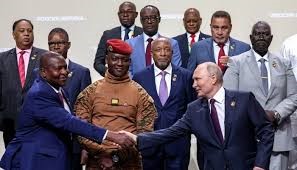
On bilateral ties, the briefing described Russia–Africa relations as anchored on equality, mutual benefit and non-interference. It cited expanding cooperation in education, energy, food security, healthcare and security. More than 32,000 African students are currently studying in Russia, supported by increased scholarship quotas, according to the statement.
Special emphasis was placed on Nigeria, which Russia characterised as a strategic partner and a leading power on the continent. The briefing pointed to Nigeria’s demographic strength, economic scale and political influence within ECOWAS and the African Union, describing the country as a potential global centre of influence in a multipolar system.
Russia expressed support for Nigeria’s aspirations to assume a larger role in global governance, including possible representation in a reformed UN Security Council in line with Africa’s common position.
Bilateral cooperation between Moscow and Abuja was said to be entering a new phase, with expanding engagement in education, energy, industrial development, military-technical collaboration and healthcare. Russia also acknowledged Nigeria’s backing of several Russian-sponsored initiatives at the United Nations, including resolutions against the glorification of Nazism and neo-Nazism.
Concluding the briefing, Russia maintained that multipolarity is no longer theoretical but an objective reality driven by economic, demographic and political shifts. It called for an international system free from domination, racism and neo-colonial practices, urging Africa and other emerging powers to play a central role in shaping a more balanced and inclusive global order.