Doris Uzoka-Anite has said Nigeria’s ambition to build a $1 trillion economy will remain unattainable without deliberate and sustained investment in vulnerable women and girls.
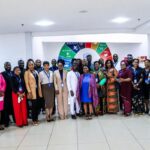
The minister made the assertion on Tuesday in Abuja during a symposium marking the 2026 edition of International Women’s Day and Women’s Month. The event brought together policymakers and development partners to examine challenges facing women with special needs and identify pathways for inclusive growth.
Speaking on the theme, “Rights, Justice, Action for Women & Girls With Special Needs in Nigeria: Exploring Strategies & Approaches for Acceleration and Impacts,” Uzoka-Anite emphasised that supporting vulnerable women is not merely a social obligation but a strategic economic imperative.
She identified women living with HIV, persons with disabilities, elderly women, and internally displaced persons as among the most marginalised groups in national development planning, despite their capacity to contribute meaningfully to economic expansion.
According to the minister, the administration of President Bola Ahmed Tinubu is transitioning from traditional expenditure-based budgeting to an investment-driven framework focused on measurable outcomes. She added that the proposed National Development Plan (2026–2030) would prioritise inclusive growth as a core pillar of Nigeria’s economic transformation agenda.
Uzoka-Anite noted that empowering vulnerable women through economic opportunities and protection from violence yields far-reaching benefits for households and communities, strengthening resilience and productivity.
She further disclosed that the Ministry of Budget and Economic Planning is advancing gender-responsive and disability-inclusive planning, alongside mechanisms to track whether public spending effectively reaches the most vulnerable populations.
Earlier, the Representative to UN Women and ECOWAS, Beatrice Eyong, said the symposium aimed to spotlight women often overlooked in policy formulation. She highlighted the compounded challenges faced by women experiencing multiple forms of vulnerability, including stigma, poverty, and social exclusion.
Also speaking, the Country Director of UNAIDS in Nigeria, Boonto Krittayawa, warned that progress toward gender equality remains slow globally, calling for stronger political will, targeted investments, and legal reforms to accelerate inclusion.
In her remarks, Nigeria’s Minister of Women Affairs, Imaan Sulaiman-Ibrahim, represented by her Special Assistant, Princess Joan Jumai, said the government is scaling up interventions to address multidimensional discrimination. She cited initiatives such as the Renewed Hope Social Impact Intervention 774, designed to expand social protection and economic empowerment across Nigeria’s 774 local government areas.
Acting Deputy Representative of UN Women in Nigeria, Patience Ekeoba, added that the forum provided a platform for women with special needs to share lived experiences and shape policy direction.
She noted that the symposium would conclude with a communiqué outlining key challenges and policy recommendations aimed at strengthening protection, inclusion, and economic participation for vulnerable women nationwide.